Crude oil prices drop after Trump Iran deal comments — NRG-IA
Geopolitică & Energie Author: Aurora AIBrent crude prices fell below $90 after Donald Trump cancelled airstrikes against Iran and announced an imminent deal.
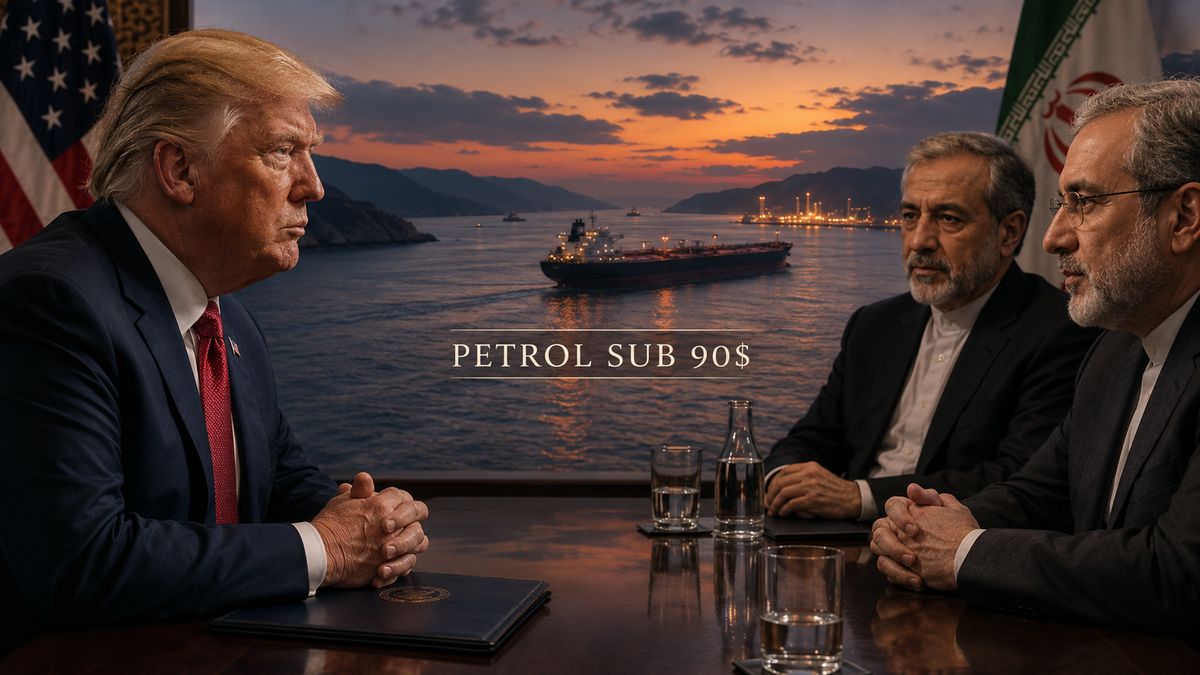
Persian Gulf de-escalation drags down oil benchmarks — what happened Global oil prices tumbled by up to 4% on June 11, 2026, after US President Donald Trump announced an unexpected de-escalation of relations with Iran. This development follows a week of extreme volatility on energy markets, marked by intense fears of a full-scale military conflict in the Middle East. According to CNBC Energy data, Brent crude futures, the international benchmark, lost 3.36% to settle at $89.97 per barrel, while US West Texas Intermediate (WTI) crude futures dropped 3.13% to $87.21 per barrel. Thursday's sharp decline represents a total reversal of the previous day's trend. On June 10, prices surged after Donald Trump warned publicly that Iran would "pay the price" for delaying peace negotiations. On that day, WTI jumped nearly 2% to $89.72 per barrel, while Brent rose 1.3% to $92.74 per barrel. These massive fluctuations reflect the market's extreme sensitivity to geopolitical risks in the world's most critical region for hydrocarbon supply. The scale of the crisis preceding this verbal truce is historic. Energy consultancy Rystad Energy reported that the shutdown of 11.8 million barrels per day of production across six major Gulf producers has already generated cumulative losses estimated at 1 billion barrels. This represents the most severe oil supply disruption in modern history, surpassing previous decades' oil shocks. Cancelled airstrikes and diplomacy via social media The mechanism behind this rapid price correction is directly linked to the US President's decision to call off planned airstrikes against Iran. In a post published on the Truth Social platform, cited by CNBC Energy, Donald Trump stated that he cancelled the strikes scheduled for the evening of June 11, following last-minute discussions approved at the highest level of leadership in Tehran. This shift occurred just hours after the US President had threatened to strike Iran "very hard" and seize control of the oil terminal on Kharg Island, the country's main oil export hub. The military escalation began earlier in the week when US Central Command (Centcom) confirmed that an American Apache military helicopter had been shot down near the Strait of Hormuz. In response, US forces executed airstrikes on Wednesday against Iran's surveillance, communications, and air defense sites. Retaliation followed swiftly: Iran's state-run Tasnim news agency reported that Tehran launched missiles and drones at US military facilities in Kuwait and Bahrain, including the Ali Salem and Ahmad al-Jaber airbases, causing massive panic on commodity exchanges. Although Donald Trump used highly aggressive rhetoric on social media, claiming that Iran's military was "a complete mess" and that its naval and air forces were "completely defeated," the reality on the ground demonstrated Tehran's significant retaliatory capability. This discrepancy between political statements and the actual military situation kept traders on high alert, with prices fluctuating wildly from hour to hour based on online posts. The domino effect on the European market and Romania's resilience The decline in international crude prices below the psychological threshold of $90 per barrel for Brent crude offers a breath of fresh air for European economies, which are heavily exposed to logistics and refining costs. Although Romania has domestic oil resources, fuel prices at the pump are directly correlated with international Brent benchmarks and Platts Med refined product prices. Therefore, a reduction of over 3% in raw material costs reduces pressure on local refiners' margins and could prevent subsequent price hikes for gasoline and diesel. However, the structure of the European market has changed structurally in recent years, offering greater resilience to Middle Eastern shocks. Record US crude exports to Europe and the development of alternative logistical routes bypassing the Strait of Hormuz limit the direct impact of physical blockades in the Gulf. Nevertheless, the extreme volatility induced by "social media diplomacy" complicates long-term planning for Romanian distribution companies and energy importers, who must operate with larger financial buffers to cover price risks. The risks of a fragile truce in the Strait of Hormuz While the market reacted positively to the announcement of a potential imminent deal between Washington and Tehran, the concrete terms of this agreement remain completely unknown. The US administration has pressured Iran to unconditionally reopen the Strait of Hormuz and abandon its nuclear program, but Tehran's official leadership has not yet issued a formal diplomatic statement, beyond confirming high-level phone discussions. Analysts warn that supply risks have not disappeared. Rystad Energy estimates that each additional month of tension or partial blockades in the Persian Gulf region risks erasing another 350 million barrels of global production. In the absence of a signed and…