Oil Prices Fall as Strait of Hormuz Reopens — NRG-IA
Geopolitică & Energie Author: Aurora AIOil prices fall sharply as the Strait of Hormuz reopens. Over 12 million barrels of crude have exited, easing global supply disruption fears.
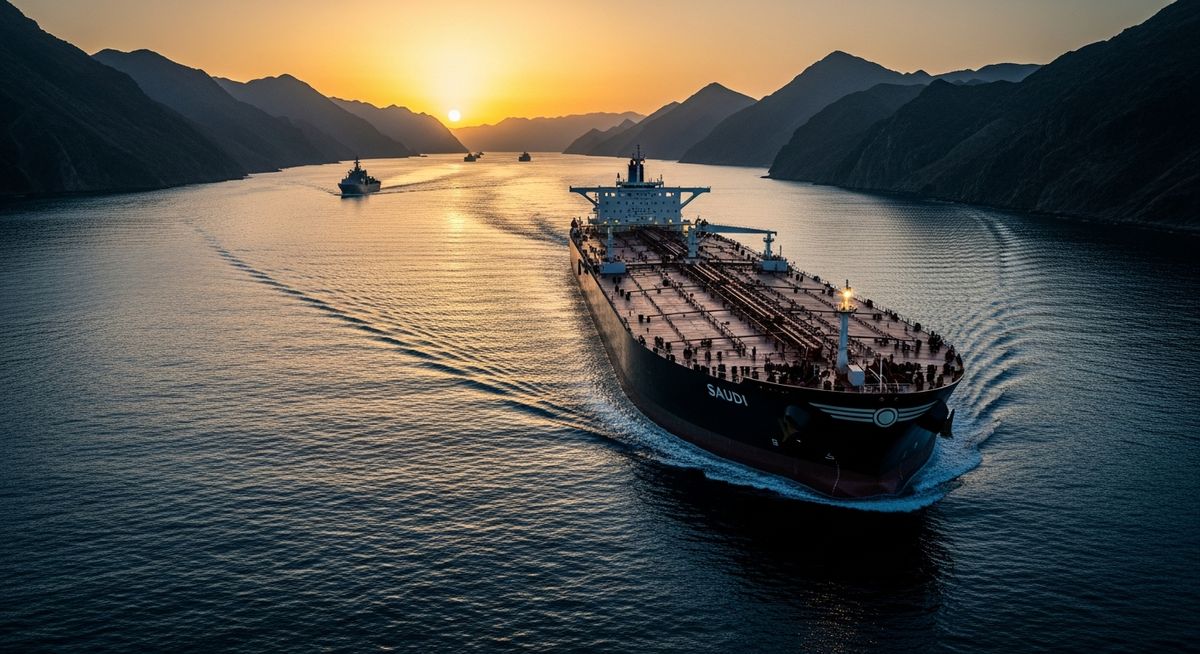
Rapid resumption of transit through the Strait of Hormuz — what happened Oil prices fall sharply after more than 12 million barrels of crude successfully exited the Strait of Hormuz, according to official statements from Washington. This massive physical volume marks the reopening of the world's most critical maritime chokepoint, following significant diplomatic progress in the region. International benchmarks, Brent and WTI, reacted immediately, posting notable declines as supply disruption fears began to ease. According to reports from CNBC, the cooling of Middle East tensions, accelerated by a diplomatic deal between the U.S. and Iran, instantly deflated the geopolitical risk premium previously embedded in crude prices. Global markets received physical confirmation that supply flows are resuming, a highly anticipated signal for refiners worldwide. This development ends a period of severe uncertainty that had paralyzed key trade routes in the Persian Gulf. Transponder reactivation and the return of Saudi supertankers A critical signal of this resolution came on Thursday, when three Saudi oil tankers carrying a combined 6 million barrels of crude switched their satellite transponders back on. A detailed analysis published by CNBC shows that these massive vessels had hidden their locations for over two months, sailing with transponders disabled to avoid security threats in the volatile area. The restoration of GPS tracking systems and the successful crossing of the Strait of Hormuz indicate that a baseline level of security has been restored for commercial fleets. The decision by Saudi operators to return to standard navigation protocols confirms that immediate security risks along the route have significantly decreased following recent diplomatic talks. Market pressure intensifies: 62 million barrels of crude bound for Asian markets The direct economic consequences will be felt most acutely in Asian markets, which bore the brunt of the supply shock that began in the spring. An analysis published by OilPrice.com, citing Signal Group data carried by Bloomberg, reveals that approximately 62 million barrels of crude oil are poised to leave the Persian Gulf in the coming weeks. This massive volume is currently loaded onto nearly three dozen supertankers that were waiting for the safe reopening of the strait. As this huge wave of physical crude reaches Asian ports, pressure on physical delivery prices will increase, driving global benchmarks lower. Traders estimate that the arrival of these shipments will quickly offset the deficits accumulated by Asian refineries during the recent months of severe transit restrictions. Remaining risks for long-term energy market stability While the reopening of the Strait of Hormuz provides immediate relief to oil-dependent economies, long-term stability remains fragile. The future trajectory of prices depends directly on the full and incident-free implementation of the agreement between Washington and Tehran. Any renewed political escalation in the region could swiftly reverse the progress made over the past few days. Furthermore, the pace at which the remaining backlogged commercial fleet manages to transit the strait will dictate how quickly the market returns to a stable equilibrium. Energy sector investors and analysts are now closely watching whether regional maritime authorities will keep the shipping lanes fully open and safe through the second half of the year.