Brent Oil Drops to $103 Amid US-Iran Talks & Hormuz Crisis — NRG-IA
Geopolitică & Energie Author: Ioana BuzoaicaBrent oil fell to $103.34 on hopes of a US–Iran deal. Yet shipping via Hormuz and rebuilding inventories remain critical for sustained price relief.
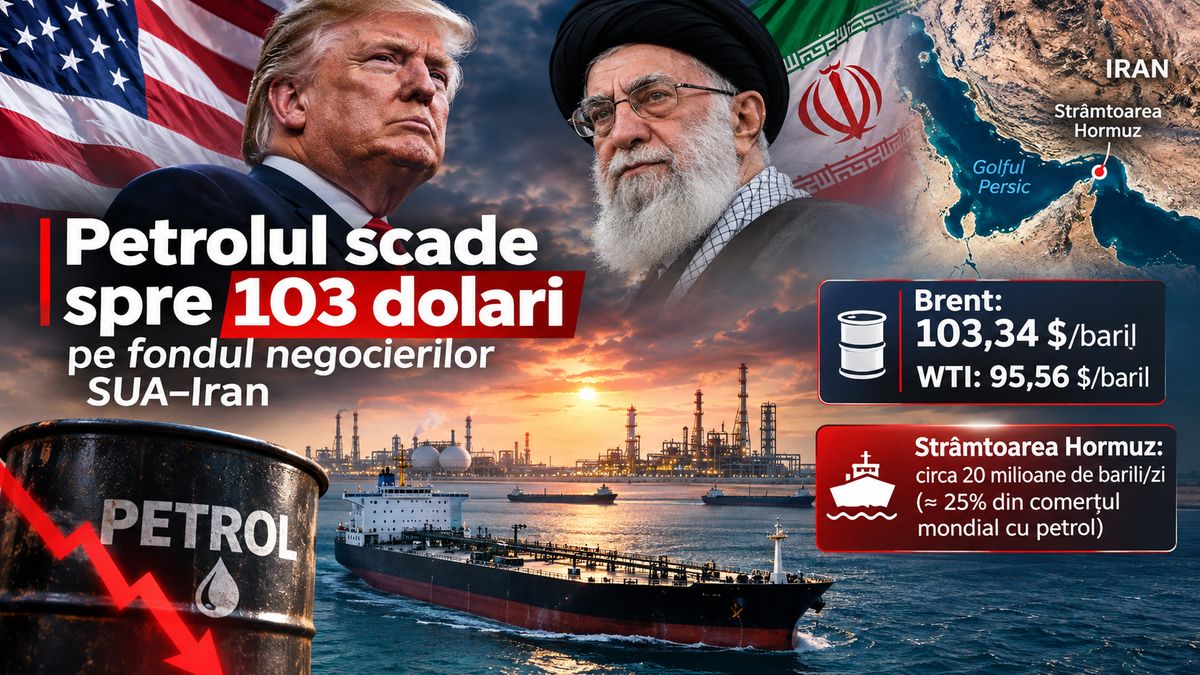
Brent crude fell to $103.34 per barrel in early trading on Wednesday, November 4, 2026, while US West Texas Intermediate (WTI) reached $95.56 following two consecutive sessions of losses. The market is reacting to the prospect of a deal between the United States and Iran, which could mitigate global supply risks and enable a gradual normalization of shipping through the Strait of Hormuz, one of the world's most critical oil transit chokepoints. According to Reuters, Brent futures were down 0.25% in early Wednesday trading, while WTI slid 0.55%. On Tuesday, Brent had settled at $103.60 per barrel, its lowest closing level since October 7, following a decline of about 1%. This correction extended Monday’s sharp drop, when international benchmarks tumbled over 7% on rising hopes for a diplomatic solution to the Middle East conflict. The price drop underscores the profound influence of geopolitical negotiations on energy markets. In recent months, conflict involving the United States, Israel, and Iran has disrupted Persian Gulf oil shipments, restricted the availability of key refined products, and drawn down substantial volumes of global inventories. While the potential restoration of trade flows is easing price pressures, the extent of the economic relief will depend on the concrete measures agreed upon and implemented. Oil Drops Over 8% in Two Days on Peace Hopes The shift in market sentiment began on Monday, November 2, as reports of intensifying talks between Iran and Qatari mediators fueled expectations of a breakthrough with Washington. Brent crude settled at $104.77 per barrel after a 7.63% drop, while WTI shed 7.36% to close at $96.46. On Tuesday, the decline persisted, albeit at a more moderate pace. Brent closed at $103.60 and WTI at $96.09 per barrel. In just two sessions, Brent crude lost roughly 8.7% of its value—a major correction for a market that has endured months of severe supply disruptions. Investors primarily reacted to the prospect of diminishing geopolitical risk. Crude oil prices reflect not only currently available physical supplies but also the risk premium tied to potential future disruptions. When the likelihood of military escalation subsides, market participants tend to unwind this risk premium even before physical supplies actually increase. This dynamic explains the speed of the market's response. A potential diplomatic agreement can instantly shift commercial expectations, whereas restarting production, loading tankers, and rebuilding supply chains take time. As a result, futures prices can drop in anticipation of market normalization long before physical volumes return to pre-conflict levels. US–Iran Talks Advance via Qatar, but Deal Remains Uncertain Qatar is playing a central role in diplomatic efforts to end the conflict. Earlier this week, Iranian officials held talks with Qatari mediators, and a draft proposal was circulated between the parties. The negotiations aim to establish terms for resuming commercial shipping through the Strait of Hormuz and terminating the military and economic measures enacted during the war. The Iranian Foreign Ministry indicated that the talks are built upon a proposal previously outlined by Tehran, which includes reopening the strait and ending the US naval blockade. Iranian authorities suggested that certain measures could be implemented on an accelerated timeline should the parties agree on terms. However, a senior Iranian official told Reuters on Tuesday that the United States and Iran remain far from a finalized agreement. Significant gaps persist over political and security demands, as well as the sequencing of implementation. Tehran is calling for sanctions relief and an end to the naval blockade, while Washington seeks guarantees regarding regional security and Iran's nuclear program. The diplomatic landscape is further complicated by ongoing military incidents. The United States carried out strikes against targets on Iran's Qeshm Island near the Strait of Hormuz. A US official described the operation as defensive, stating it targeted surface-to-air missile systems deployed against American assets. Another official characterized the strikes as limited, indicating no resumption of a broad military campaign. In parallel, President Donald Trump told the Financial Times that the United States has no immediate plans for further strikes on Iran. Conflicting signals from diplomatic channels and military actions continue to pull market expectations in opposing directions. For energy traders, the durability of any eventual agreement will be just as crucial as its initial announcement. Strait of Hormuz: The Gateway for a Quarter of Seaborne Oil The significance of these talks extends far beyond bilateral relations between Washington and Tehran. Situated between Iran and Oman, the Strait of Hormuz connects the Persian Gulf to the Gulf of Oman and the Indian Ocean. It serves as the primary maritime outlet for major global oil producers, including…
Ioana Buzoaica — Independent Editorial Board
The NRG-IA newsroom continuously monitors Romanian energy markets, ANRE regulatory decisions, and national grid telemetry (SEN/SNT). We deliver independent intelligence anchored exclusively in official primary data.
Editorial Charter, Ethics & Verification Methodology →