Brent Tops $84 Ahead of US Iran Blockade — NRG-IA
Geopolitică & Energie Author: Ioana BuzoaicaBrent crude jumped 9.6% to top $84 ahead of the US blockade on Iran, as markets react to falling Hormuz traffic and depleted global energy reserves.
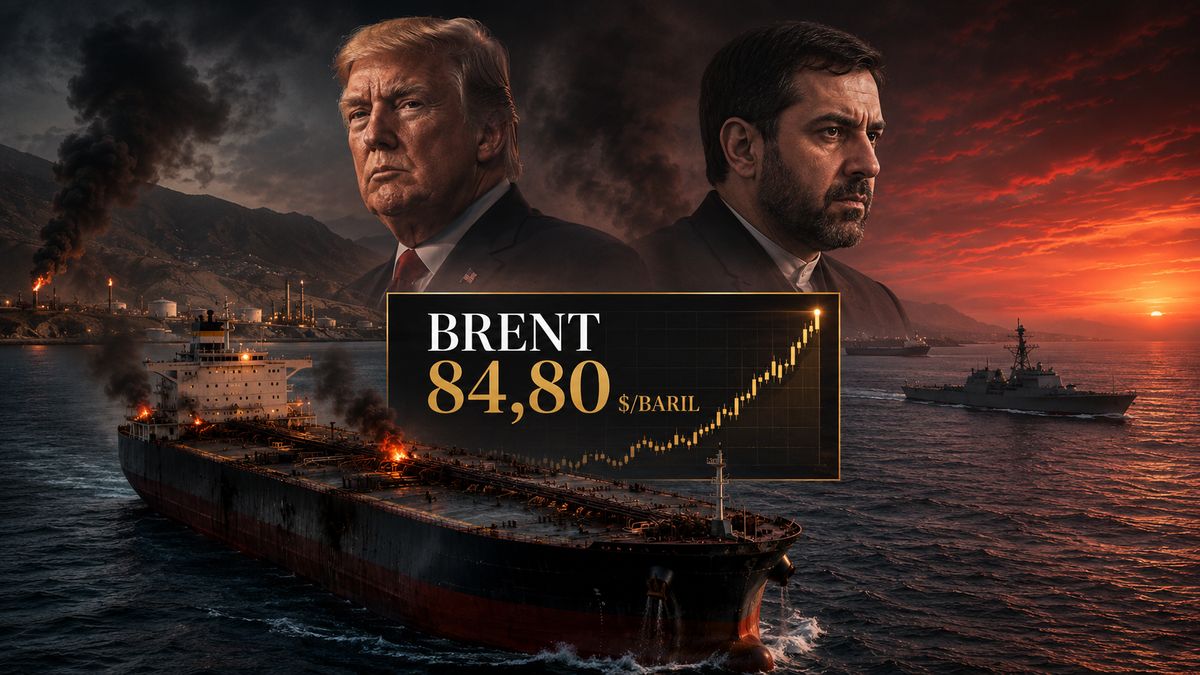
Oil has entered a new rally before the United States actually begins enforcing its naval blockade on Iran. Brent closed on Monday at $83.30 per barrel, up 9.59%, and reached $84.80 on Tuesday morning. US benchmark WTI rose to $79.84 per barrel, following a 9.42% gain in the previous session. The price surge does not merely reflect political rhetoric. Two UAE-flagged tankers were struck by Iranian missiles in the southern corridor of the Strait of Hormuz, within Oman's territorial waters. An Indian crew member was killed, and eight others were injured. Meanwhile, the number of tankers transiting the strait has fallen to its lowest level in two months. The US blockade is scheduled to take effect on July 14 at 20:00 GMT (23:00 Romanian time). It covers all Iranian ports, oil terminals, and the entire Iranian coastline, applying to vessels regardless of their flag. Ships suspected of entering or leaving the blockaded zone without authorization may be intercepted, diverted, or seized, and force may be used against non-compliant vessels. The transit of neutral vessels to Gulf states, unrelated to Iranian ports, is not formally included in the blockade. However, military risks, attacks on vessels, and the potential for direct confrontation mean that legal freedom of navigation is no longer sufficient to maintain normal trade flows. The regional maritime threat level is classified as "severe," and further deliberate hostile actions are considered likely under current conditions. Oil prices react before the first vessel is intercepted The rise in Brent represents the immediate price of uncertainty. Traders are trying to assess how many vessels will continue to enter the Persian Gulf, how much oil can still be loaded, and whether Iran will respond to the blockade with fresh attacks on commercial shipping. A complete closure of the strait is not required to trigger a market shock. Reduced sailings, temporary loading halts, rising insurance costs, and the refusal of some operators to send their vessels into the area can remove significant volumes from the market without the shipping lane being physically blocked across its entire width. Approximately one-fifth of the world's daily oil and liquefied natural gas (LNG) supply transited Hormuz before the conflict. Any significant disruption at this chokepoint ripples quickly to refiners, shippers, distributors, and consumers, as a vast portion of exports from Saudi Arabia, Iraq, Kuwait, Qatar, and the UAE depends on this maritime outlet. The market will primarily watch physical oil flows. If volumes continue to be exported, some of the risk-driven premium may recede. If vessel counts continue to drop and loadings are delayed or canceled, pressure could push prices into a new leg up. Six vessels in a day and no visible LNG shipments over the weekend Only six vessels were identified transiting Hormuz on Sunday, the lowest number in five weeks. Among them were the tanker "Humanity," carrying approximately two million barrels of Iranian crude, and the "Capetan Andreas," loaded with about 500,000 barrels of Kuwaiti petroleum products. Three other empty tankers entered the Gulf for loading. Most vessels turned off their transponders during transit. Consequently, public data does not capture every ship in the area, but operator behavior confirms the rapid deterioration of security conditions. Vessels are becoming harder to track, some cargoes are being transferred at sea, and routes are being adjusted to limit exposure. No LNG carriers entering the strait over the weekend were visible on public tracking systems. The halt in liquefied gas flows is particularly significant because Qatar, one of the world's largest exporters, has no alternative maritime route for its cargoes. In June, a recovery in traffic had allowed 40 LNG vessels to pass, following just eight in May, four in April, and none in March. The new escalation halts this recovery before flows could return to normal. The market has fewer buffers for a new shock The vulnerability does not stem solely from the importance of the Strait of Hormuz. The global system enters this phase with a significant portion of its reserves already depleted over previous months. The International Energy Agency indicates that global observable inventories rose by 21 million barrels in June, the first increase in four months. However, this growth occurred because oil on water surged by 117 million barrels. Onshore inventories continued to decline by approximately 96 million barrels. In developed economies, inventories fell by another 62 million barrels in June, with approximately 44 million barrels drawn from government reserves. Crude stocks outside these economies fell by 37 million barrels, driven primarily by a 41-million-barrel reduction in China. This breakdown matters more than the headline figure. Oil on water can eventually reach the market, but it does not offer the same immediate protection as inventories held near refineries and…
Ioana Buzoaica — Independent Editorial Board
The NRG-IA newsroom continuously monitors Romanian energy markets, ANRE regulatory decisions, and national grid telemetry (SEN/SNT). We deliver independent intelligence anchored exclusively in official primary data.
Editorial Charter, Ethics & Verification Methodology →