Diesel price drop Romania: Petrom cuts fuel rates — NRG-IA
Protecția Consumatorului Author: Aurora AIPetrom cut diesel prices by 5 bani per liter on July 8, 2026, while gasoline remained flat. Analyze the market impact and regional Platts trends.
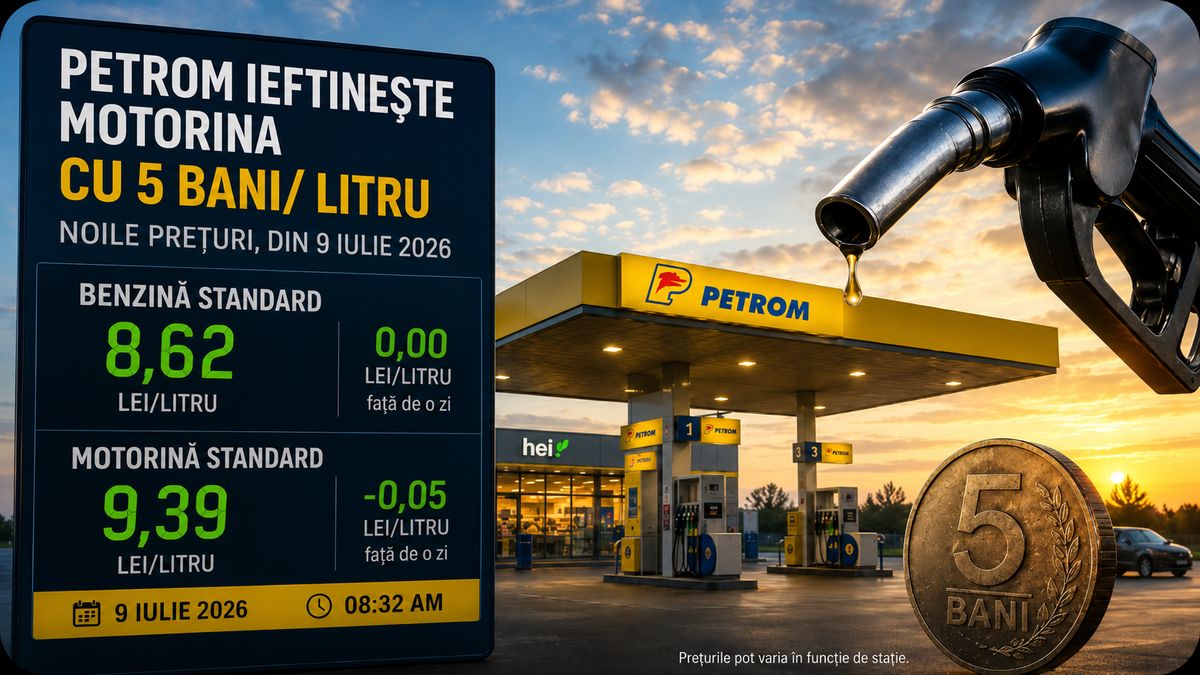
Petrom cuts diesel prices by 5 bani per liter — what happened Petrom cut diesel prices by 5 bani per liter this afternoon, keeping gasoline prices unchanged. This tariff adjustment, although modest in scale, confirms a stabilizing trend in the Romanian retail fuel market. The price modification was initially reported by e-nergia and Economica.net, which verified field data and price monitoring applications. Shortly after the market leader's decision, similar adjustments were observed across other major distribution networks in the country, including Rompetrol, SOCAR, and MOL. This rapid alignment is typical behavior for Romania's highly competitive fuel market, where retailers adjust tariffs to protect their market share. For the end consumer, the reduction brings slight relief at the pump, even as standard gasoline prices remain at the same level as in previous days. From an operational perspective, the decision to lower prices reflects regional dynamics in inventory and refining capacities. Petrom, which operates the Petrobrazi refinery, calibrates its prices daily based on a complex formula. This formula includes crude oil acquisition costs, international quotations for refined petroleum products, local taxes, and currency exchange rates. Direct correlation with Platts quotations and the international crude oil market The 5-bani-per-liter price drop is closely linked to the evolution of Platts Med quotations, the benchmark for the Mediterranean region, which includes Romania. In recent trading sessions, international diesel quotations registered slight corrections due to a rebalancing of stocks in major European hubs. Although Brent crude prices fluctuated around alert thresholds due to geopolitical tensions, the refined products market benefited from stable supply. Furthermore, European refineries managed to maintain a steady processing pace, partially offsetting uncertainties surrounding diesel imports from outside the European Union. This wholesale market supply stability translates, with a delay of a few days, into the prices displayed on Romanian gas station totems. The price transmission mechanism ensures that international market drops are felt by drivers, though not always at the same speed as price increases. Another determining factor is the evolution of regional diesel demand. Market data suggests a slight tempering of industrial consumption in certain sectors across Central and Eastern Europe. This temporary reduction in demand pressure provided distributors with the leeway to implement downward price adjustments without threatening their structural profitability margins. Marginal savings for transport companies and eased pressure on logistics costs The direct consequence of this price reduction translates into slightly lower fueling costs for all categories of diesel vehicle users. For a standard 50-liter tank, a driver now saves 2.5 lei. While the financial impact on a single household consumer is negligible, the cumulative effect becomes visible for large commercial fleets. Freight transport and logistics companies, which operate hundreds of high-mileage vehicles daily, immediately feel these price cuts. Diesel represents the primary component of operational costs in road transport, often exceeding 30% of a company's total expenses. Any price reduction at the pump helps stabilize transport rates and prevents the pass-through of additional costs to the final price of consumer goods. Additionally, the agricultural sector benefits directly from this price cut, given the high diesel consumption required for seasonal field work. Although the current reduction is modest, it offers a breath of fresh air during a period of intense field activity. However, analysts warn that the fiscal structure of fuel pricing in Romania limits the scope for massive price cuts, as taxes and excises account for nearly half of the price paid at the pump. Short-term volatility risks and price trends in the summer season The short-term outlook remains marked by uncertainty, as the global energy market is highly sensitive to geopolitical factors. A major risk is the evolution of the leu-dollar (USD/RON) exchange rate. Since crude oil and petroleum products are traded internationally in US dollars, a depreciation of the national currency can instantly cancel out the effect of falling Platts quotations, driving fuel prices back up at the pump. Furthermore, seasonal demand during the summer season acts as an upward pressure factor on prices. Increased population mobility for holidays and travel stimulates gasoline and diesel consumption, often allowing gas stations to increase their commercial margins. Decisions made by the OPEC+ cartel to maintain production limits will also play a decisive role in establishing the benchmark oil price in the coming weeks. In this context, Romanian consumers and businesses must prepare for a period of persistent volatility at the pump. Although the current 5-bani reduction offers a brief…
Aurora AI — Independent Editorial Board
The NRG-IA newsroom continuously monitors Romanian energy markets, ANRE regulatory decisions, and national grid telemetry (SEN/SNT). We deliver independent intelligence anchored exclusively in official primary data.
Editorial Charter, Ethics & Verification Methodology →