Romania power price reaches 3449 RON MWh on spot market — NRG-IA
Piața de Energie Author: Aurora AIRomania's spot electricity price hit a peak of RON 3,449/MWh on Monday, driven by a European gas price surge and escalating geopolitical tensions.
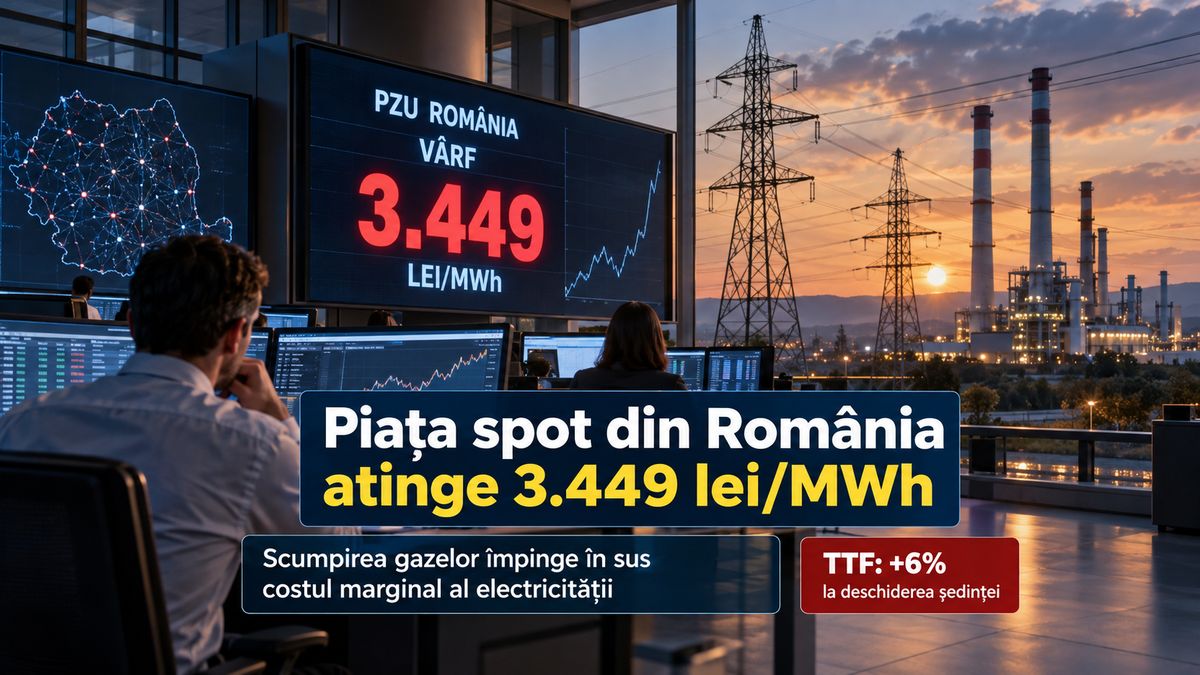
OPCOM records a peak of RON 3,449/MWh on the Romanian spot market Romania’s day-ahead electricity price reached a high of RON 3,449/MWh on Monday, driven by a tight correlation with soaring natural gas prices across Europe. This peak on the OPCOM exchange reflects Eastern Europe’s immediate vulnerability to international fossil fuel fluctuations, sparked by escalating geopolitical tensions in the Middle East. Day-ahead market (DAM) transactions showed a rapid alignment of local prices with broader European upward trends, directly impacting the cost profiles of suppliers and large industrial consumers. The price synchronization across the regional grid highlights that generation deficits in neighboring countries force Romania to import electricity at high marginal prices during peak hours. Furthermore, domestic battery storage capacity remains low, limiting arbitrage options and leaving the spot market exposed to extreme price swings. This development occurs as benchmark prices in most European spot markets followed a steep upward trajectory over the last 48 hours, raising serious concerns regarding industrial operational costs. Middle East escalation and the gas surge at the TTF hub The primary driver of these price hikes is the natural gas market, where Dutch Title Transfer Facility (TTF) benchmark futures in Amsterdam surged by 6% at the market opening. European gas reached its highest level in four years, a direct reaction to escalating geopolitical conflicts and the associated risks to maritime supply route security. The technical correlation between gas and electricity prices is driven by the role of gas-fired power plants as marginal generators, which set the market clearing price during high-demand periods. This gas price increase coincided with a rise in Brent crude oil, which surpassed the USD 106 per barrel threshold on international markets. The European power sector's reliance on gas to cover peak loads converts any fuel price volatility into an immediate surcharge on the electricity grid. Lacking flexible alternative generation sources and sufficient long-term storage capacity, the electricity market fully absorbs the volatility of the global hydrocarbon markets. Inflationary pressures and the European Central Bank warning The tense situation on commodity markets has directly alarmed the European Central Bank (ECB), with officials warning that Eurozone inflation could exceed current forecasts. Rising utility prices threaten to undo recent macroeconomic stabilization efforts and may force the ECB to keep benchmark interest rates higher for longer than anticipated. This inflationary pressure is spreading rapidly from energy to consumer goods, undermining the industrial competitiveness of the entire European Union. In Romania, the impact of these global developments is already being felt in fuel prices, with standard gasoline nearing the psychological threshold of RON 10 per liter at filling stations due to rising crude costs. This convergence of rising electricity, gas, and fuel prices creates a severe inflationary environment for the national economy. Increased logistics and production costs will inevitably translate into higher retail prices, reducing consumer purchasing power. Winter 2026 approaches with vulnerable grids and costlier retail contracts Short-term outlooks point to sustained high volatility as Europe approaches the cold season with vulnerable energy grids. The European Court of Auditors recently warned that the REPowerEU plan for energy independence is losing momentum, leaving national grids exposed to external supply shocks and infrastructure bottlenecks. Delays in developing large-scale storage and interconnection projects limit the EU's ability to manage concurrent supply crises. For Romanian households, the first warning signs are appearing in the commercial offers of suppliers. Hidroelectrica has already raised tariffs for new customers and renewed contracts by over 7%, reflecting purchasing cost pressures from the wholesale market. As capped tariffs and long-term contracts expire, consumers will gradually face the new price realities of the liberalized market, underscoring the urgent need for energy efficiency measures.