Fuel margin caps: why cheaper oil doesn't reach the pump — NRG-IA
Ghid Consumator Author: Ioana BuzoaicaRomania capped fuel markups until June 30, 2026, based on 2025 averages. The rule limits maximum margins but does not mandate price cuts when oil drops.
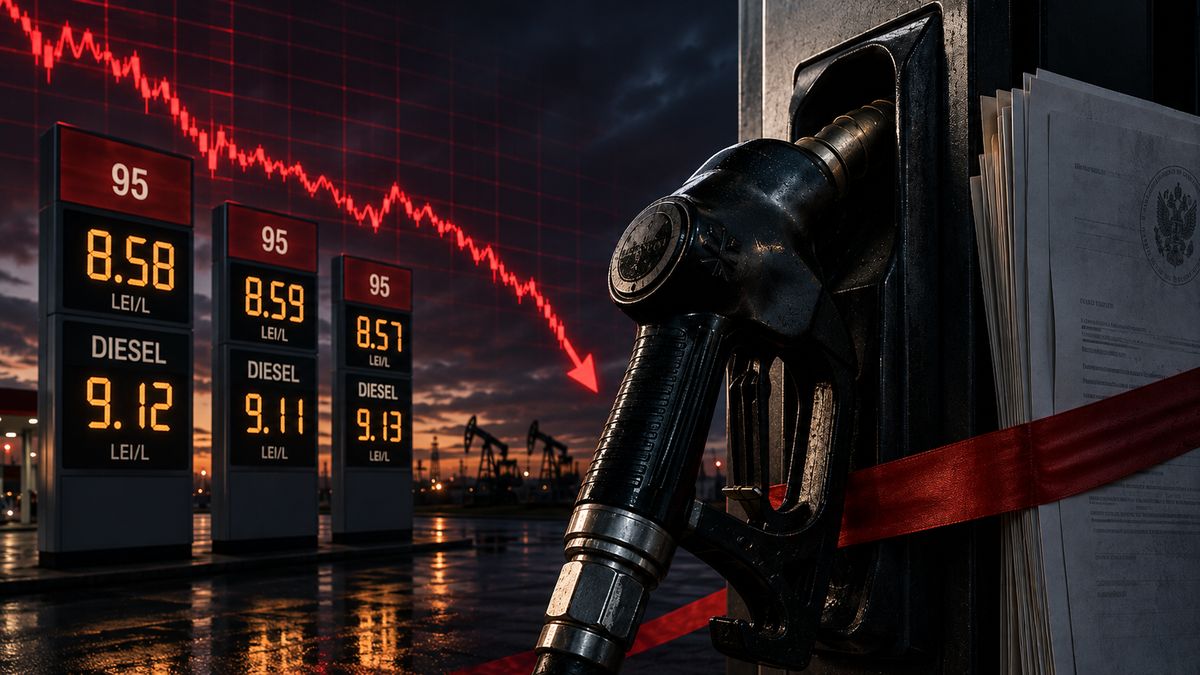
Gasoline and diesel prices do not automatically track Brent crude. Between a barrel of crude oil and the price board at the pump lie refining, product imports, previously purchased inventories, transport, exchange rates, excise duties, VAT, logistics costs, and commercial margins. In a competitive market, a drop in raw material costs should gradually be passed on to the customer, as the operator who cuts prices first can gain traffic and market share. However, Emergency Ordinance (GEO) No. 19/2026 introduces a new mechanism into this equation. The ordinance does not directly cap the price per liter of gasoline or diesel. Instead, it limits the average commercial markup to the level applied in 2025 by each economic operator across import, production, refining, distribution, wholesale, and retail activities. This rule applies until June 30, 2026, and the law allows for the extension of the crisis state through regulatory acts issued by Parliament or the Government. This distinction is essential. A margin cap can prevent the rapid expansion of markups during a crisis. However, it does not force operators to reduce their margins below the cap when their costs fall. It is not a price cap, but a limit on accounting markups Article 3 of GEO 19/2026 establishes that the average commercial markup for gasoline and diesel cannot exceed the annual average applied by each company in 2025. The formula does not use a single margin for the entire market. Each operator has its own cap, calculated from its historical revenues and costs relative to the volume sold. From an economic perspective, this mechanism produces two distinct effects. The first is upward protection: an operator cannot increase its markup above its reference limit during the crisis. If crude oil, refined products, transport, or geopolitical risk push costs up, the cap can limit the room for further commercial margin expansion. The second effect is less intuitive: the cap does not mandate the full pass-through of cost reductions to the consumer. A company operating below the cap can retain a larger share of the favorable spread between cost and price, as long as it complies with its individual limit calculated from 2025. Thus, the regulation does not directly answer the question drivers ask at the pump: "if oil has become cheaper, by how much will the price per liter drop?". Instead, it answers a different question: "up to what level can each operator's accounting margin rise?". The cap can become an anchor, not just a brake The Intelligent Energy Association (AEI) argues that this very mechanism can slow down the speed at which cheaper oil reaches the retail market. The hypothesis is that an administrative limit calculated from the past can become an economic benchmark for companies, which they have no incentive to abandon quickly. Profit.ro reported that, between Friday and Tuesday, distributors raised prices by 10 bani/liter in two stages, during a period when Brent and exchange rates did not offer an obvious justification for this move, according to AEI's analysis. This observation is relevant, but on its own, it does not prove that the capping caused the price increase. A period of a few days cannot isolate the influence of previously purchased product inventories, European gasoline and diesel quotes, transport costs, risk premiums, import flows, or the commercial policy of each retail network. The defensible thesis is more precise: capping can diminish the competitive pressure to reduce margins when costs ease, especially in a market where major operators track the same cost signals and have comparable commercial structures. However, at this moment, there is insufficient public data to assert that the measure has already produced this effect. Pump prices do not just track Brent Brent is the global benchmark for crude oil, but gasoline and diesel are refined products. In Europe, they are also influenced by oil product quotes, refining spreads, regional availability, logistics costs, and inventory levels. A retailer may sell fuel today that was purchased or produced from raw materials bought in previous days or weeks. For this reason, the pass-through of a cost reduction is not instantaneous. In addition, Romania applies excise duties, VAT, and other costs that remain in the price regardless of the immediate performance of crude oil. European Commission data shows that final fuel prices must be analyzed separately from crude oil quotes: the Commission's weekly bulletin tracks prices with and without taxes, excise duty levels, VAT, and consumption trends for each member state. Romania temporarily reduced the excise duty on diesel starting April 27, 2026, a measure that partially tempered the fiscal cost but does not eliminate the influence of other components on the final price. As of June 24, the averages reported by the PretCarburant.ro platform indicated around RON 8.58/liter for standard gasoline and RON 9.12/liter for diesel, with significant…
Ioana Buzoaica — Independent Editorial Board
The NRG-IA newsroom continuously monitors Romanian energy markets, ANRE regulatory decisions, and national grid telemetry (SEN/SNT). We deliver independent intelligence anchored exclusively in official primary data.
Editorial Charter, Ethics & Verification Methodology →