Hormuz Mission Depends on De-escalation, Military Assets — NRG-IA
Geopolitică & Energie Author: Ioana BuzoaicaRepresentatives from 38 nations backed a defensive mission for the Strait of Hormuz, but the project depends on de-escalation as traffic remains low.
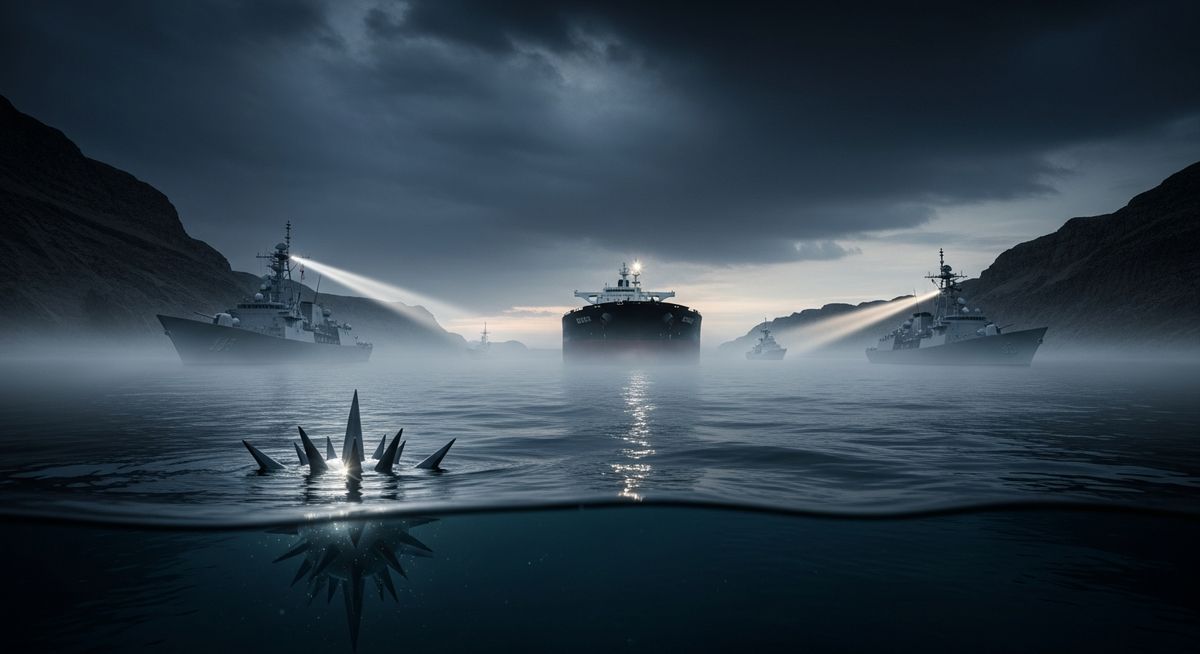
The United States and the United Kingdom are attempting to convene an international meeting in London dedicated to protecting commercial shipping through the Strait of Hormuz. The information was published by Axios, citing diplomatic sources, and was partially confirmed by a White House official, though the date, agenda, and participant list have not yet been finalized. The meeting could bring together defense ministers and military commanders from Western nations and the region. Washington is not starting from scratch. The UK and France have already prepared the political framework for an independent, strictly defensive multinational mission designed to support civilian vessels, boost maritime operator confidence, and neutralize mines. Representatives from 38 countries attended the May 12 meeting, and Romania subsequently signed the declaration of support. The stakes of the new initiative lie in transitioning from diplomatic support to a structure capable of effective action. A joint declaration does not clear mines, monitor shipping lanes, or escort tankers. For the mission to become operational, it requires vessels, aircraft, unmanned systems, specialized personnel, a command structure, and clear rules of engagement. Political support exists, but naval force does not yet The declaration coordinated by London and Paris establishes three important limits. The mission must be defensive, distinct from other military campaigns, and conducted in accordance with international law and the constitutional procedures of each participating state. Operations can only begin in an environment where military risks have been sufficiently mitigated. This condition separates the protection of navigation from direct participation in conflict. Mine detection and neutralization cannot be treated as a simple technical activity when the teams and vessels involved could be attacked by missiles, drones, or coastal fire. If the force were to enter the strait during active clashes, the defensive mandate could rapidly evolve into a combat operation. According to Axios, several consulted states have called for an end to clashes in the strait before deploying an international force. The United States is reportedly seeking contributions such as specialized minesweepers, other naval vessels, and surveillance drones to monitor commercial routes. These requests have not yet been detailed in a public document specifying each country's contribution. The London meeting should, first and foremost, clarify who will provide the necessary military capabilities and who will lead the operation. The support of the 38 states does not mean all of them will deploy forces. Participation may remain political, include intelligence sharing, or translate into naval, aerial, or logistical contributions, depending on each government's decision. Mines can keep the route unsafe even after attacks stop Sea mines represent one of the most persistent threats to navigation. They can be deployed quickly, remain active long after hostilities end, and block traffic even in the absence of visible attacks. Neutralizing them requires identifying suspicious objects, mapping the seabed, and the controlled destruction of confirmed devices. The operation must be repeated across entry and exit lanes and can take time, depending on the size of the area and the number of threats. The British Royal Navy has already tested the autonomous vessel Ariadne, designed to detect and destroy mines without directly exposing crews. The system has been integrated with the support ship RFA Lyme Bay, which is prepared to serve as the primary platform for mine countermeasures in a potential Hormuz mission. While technology reduces the risk to military personnel, it does not eliminate the danger. Support ships, unmanned systems, and the personnel operating them remain vulnerable to airstrikes, fast attack craft, and coastal strikes. For this reason, mine clearance should be accompanied by naval and aerial surveillance, and potentially by anti-drone and anti-missile defense capabilities. Protecting traffic does not guarantee security An international mission can organize lane surveillance, issue warnings, and escort groups of commercial vessels. A military presence would reduce the risk of opportunistic attacks and provide a rapid intervention mechanism, without turning the strait into an entirely risk-free route. Oil tankers and liquefied natural gas (LNG) carriers are large, slow targets that are difficult to protect at every stage of transit. The strait is approximately 33 kilometers wide at its narrowest point, and the shipping lanes are even narrower. Commercial vessels must follow predictable routes close to the Iranian and Omani coasts. A naval force would need to operate without triggering a new confrontation between participating states and Iran. This requires constant communication, the demarcation of operational zones, and precise rules for scenarios where a military vessel detects…