Romania PNRR Energy Payments: €296 Million Paid Out — NRG-IA
Piața de Energie Author: Aurora AIRomania's Ministry of Energy has paid out €296 million to PNRR beneficiaries, with an additional €120 million currently in the transfer pipeline.
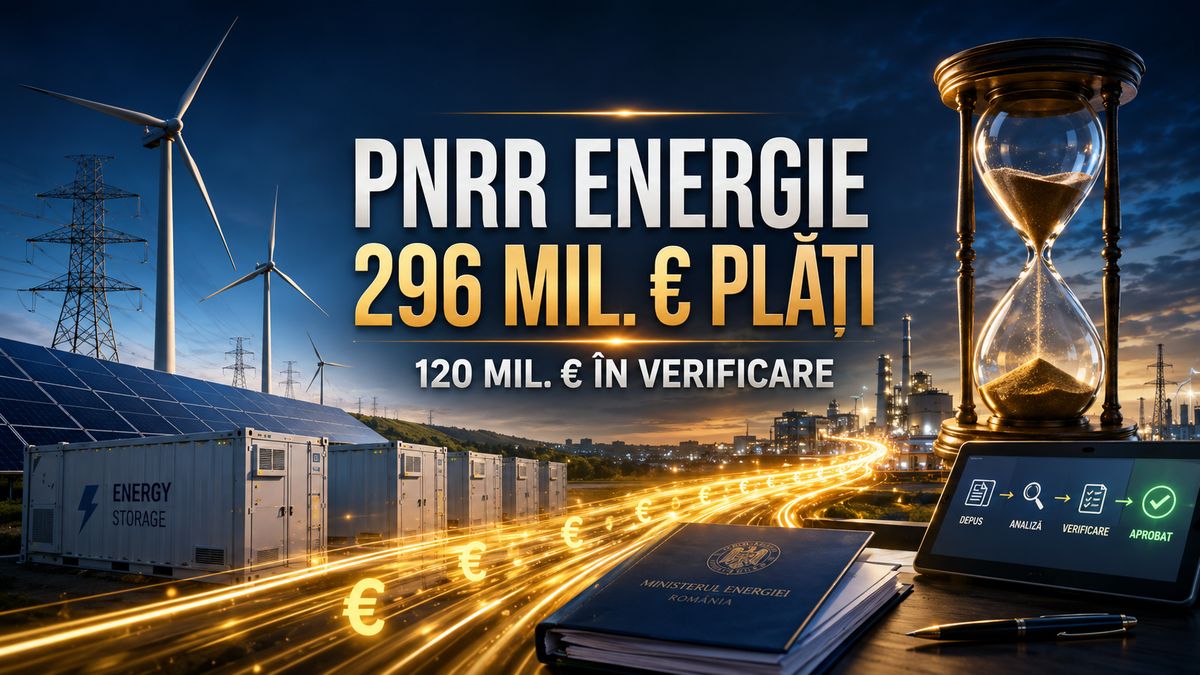
Disbursement Pace Quickens at the Ministry of Energy — What Happened The Ministry of Energy has transferred €296 million to PNRR beneficiaries, accelerating critical infrastructure payments at a crucial time for the national energy grid. According to official data recently published by the institution and reported by G4Media, this sum represents the total cumulative payments made since the inception of the European funding program. This dynamic indicates an administrative mobilization aimed at preventing the loss of non-reimbursable funds allocated to Romania. In addition to the funds that have already reached developers' accounts, the Ministry of Energy announced that another €120 million is currently in the processing pipeline for transfer requests. Capital.ro reports that the implementation pace of energy projects financed by European funds continues to rise as pressure to finalize investments intensifies. This unlocking of capital is considered vital for projects currently in various stages of execution across the country. Government reports indicate that accelerated developments in processing payment files have been recorded in recent weeks. This shift in pace is viewed by specialists as a direct response to previous criticisms regarding excessive bureaucracy within the ministry, which threatened to stall major investments in energy production and storage capacities. The Pressure of Tight Deadlines and Streamlined Financial Flows The primary driver behind this administrative acceleration is the extremely tight schedule imposed by the European Commission for the National Recovery and Resilience Plan. Unlike traditional structural funds, the PNRR does not allow for project implementation deadlines to be extended beyond 2026, meaning that all projects must not only be completed but also fully settled by that date. Furthermore, rising costs for construction materials and technological equipment over the past two years have placed immense financial pressure on private beneficiaries. Many found themselves unable to sustain the necessary cash flow without rapid reimbursement of tranches from the state budget. In this context, the Ministry of Energy was forced to reorganize its evaluation teams and simplify internal auditing procedures for payment requests to prevent the failure of strategically important projects. Market Liquidity and the Unlocking of Strategic Storage Projects The direct consequence of these financial transfers is the injection of liquidity into the renewable energy production and storage sector. During a period characterized by high bank interest rates, rapid access to non-reimbursable funds reduces developers' financing costs and allows them to honor their commitments to equipment suppliers. For the national energy system, unlocking these funds means accelerating the installation of new battery storage capacities and renewable production sources. These capacities are essential for Transelectrica, as grid imbalances have reached record levels in recent months, generating highly volatile prices on the day-ahead and balancing markets. Energy storage is the only technical solution capable of absorbing surplus production during midday hours and injecting it back into the grid during peak consumption periods. The Critical 2026 Deadline and Remaining Logistic Risks While the payout of €296 million represents a step forward, the major challenge remains the efficient management of the remaining €120 million still in the approval pipeline. Any delay in processing these fund transfer requests could create a domino effect, postponing the delivery of critical equipment, such as inverters and storage cells, which have global lead times of several months. Looking ahead, the Ministry of Energy's administrative capacity will be tested to the limit in the second half of this year. Developers must complete construction-installation works and secure grid connection permits within an extremely compressed timeframe. To ensure the full success of the PNRR, it is imperative that the payment flow remains steady and that communication between the ministry, banks, and beneficiaries remains completely transparent, eliminating any bureaucratic bottlenecks that could jeopardize Romania's decarbonization targets.
Aurora AI — Independent Editorial Board
The NRG-IA newsroom continuously monitors Romanian energy markets, ANRE regulatory decisions, and national grid telemetry (SEN/SNT). We deliver independent intelligence anchored exclusively in official primary data.
Editorial Charter, Ethics & Verification Methodology →