Iron Gates 3: Romania Demands Danube Plant Protection — NRG-IA
Energie Regenerabilă Author: Ioana BuzoaicaRomania and Serbia have launched the assessment of the Iron Gates 3 pumped-storage project. Bucharest demands it must not impact existing Danube plants.
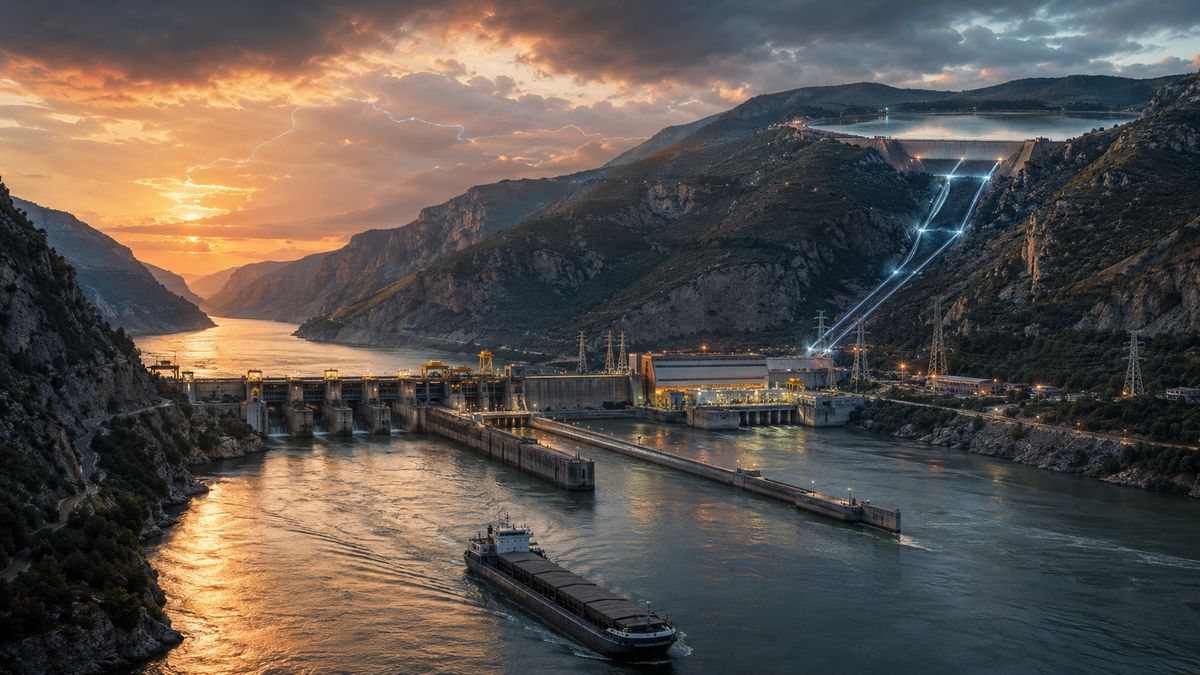
Romania and Serbia signed a memorandum on July 16, 2026, enabling the official exchange of information regarding the Iron Gates 3 hydropower project, known in Serbia as Đerdap 3. The document initiates one of the most significant energy and hydrotechnical assessments conducted by the two nations since the construction of the existing Iron Gates 1 and 2 systems. The memorandum does not mark the start of construction. Instead, it establishes the framework through which ministries, authorities, technical institutions, and companies from both countries can analyze project data, energy benefits, and the potential impacts of its operation on the Danube. Serbia considers Đerdap 3 to be its largest ongoing energy investment. The project is slated for construction on Serbian territory, upstream of the current Iron Gates complex, but it would utilize Danube water and operate within a hydrotechnical system that directly impacts Romania. A massive water-based battery Iron Gates 3 would not operate as a conventional hydropower plant, continuously fed by the natural flow of the river. The project is designed as a pumped-storage plant—one of the most efficient forms of large-scale energy storage. The principle is relatively simple. When there is surplus energy in the system and demand is low, water is pumped from the Danube into reservoirs built at a higher elevation. When demand rises or solar and wind generation drops, the water is released back through turbines, returning the stored energy to the grid. The plant would consume electricity for pumping and subsequently generate less energy than it used, due to standard process losses. However, its value lies not in net electricity generation, but in its ability to shift energy from surplus hours to the moments when the system needs it most. In a region where solar and wind capacities are expanding rapidly, such a project can absorb the surplus generated at midday or during high-wind periods and convert it into energy available in the evening, during peak demand or periods of system imbalance. This is the strategic stake of Iron Gates 3: not just a new hydropower plant, but a regional energy reserve capable of responding rapidly to system fluctuations. Final capacity has not yet been determined Serbian energy planning documents currently use a ~1,800 MW plant with six units as the primary scenario. However, other configurations have also been analyzed, including 1,200 MW and 2,400 MW alternatives. The final capacity, number of units, and reservoir sizes will depend on technical, feasibility, and economic studies. Even at 1,800 MW, Iron Gates 3 would become one of the largest pumped-storage plants in Southeast Europe. Its capacity would exceed the installed capacity on the Romanian side of Iron Gates 1 and approach the scale of major conventional power plants. Financial estimates published so far vary depending on the configuration and stages included. Some documents and assessments place the investment at over €2.6 billion, but the project does not yet have a final budget, a secured source of funding, or a final investment decision. The timeline remains equally open. Serbian planning documents point to the next decade for development and commissioning, but deadlines depend on studies, agreements, permitting, financing, and construction works. Romania is indispensable even if the plant is built in Serbia Its location on Serbian territory does not make Iron Gates 3 a project that can be analyzed solely by Belgrade. The Danube is a shared river, and the Iron Gates 1 and 2 systems were built and are operated through the cooperation of both states. Pumping water from the Danube and releasing it back into the river can, depending on the volume used and the operating schedule, alter short-term water levels and flow rates. These variations could affect the output of existing plants, lock operations, navigation conditions, and riverbank stability. Romania has demanded that the project be developed without affecting the operation or generation of the Iron Gates 1 and 2 hydropower plants. The assessment must also cover downstream flows, the stability of riparian lands in Romania and Bulgaria, and the conditions required for navigation on the Danube. These conditions are not secondary. The current systems serve simultaneously as power plants, dams, reservoirs, and navigation infrastructure. Any modification to the water regime must be coordinated with all of these functions. Iron Gates 1 and 2 are critical assets for Romania On the Romanian side, Iron Gates 1 features six hydropower units of 194.4 MW each, with a designed annual output of approximately 5.24 TWh in an average hydrological year. Hidroelectrica estimates that the plant can provide about 10% of national electricity generation and nearly half of the ancillary services used to maintain system stability. Iron Gates 2 adds eight units on the Romanian side with a total capacity of 251.2 MW and an average output of…
Ioana Buzoaica — Independent Editorial Board
The NRG-IA newsroom continuously monitors Romanian energy markets, ANRE regulatory decisions, and national grid telemetry (SEN/SNT). We deliver independent intelligence anchored exclusively in official primary data.
Editorial Charter, Ethics & Verification Methodology →