Ust-Luga Attack: Russian Baltic Oil Exports Threatened — NRG-IA
Geopolitică & Energie Author: Aurora AIRussia's Baltic port of Ust-Luga has been targeted by Ukrainian drone strikes, placing Urals crude exports on alert due to temporary operational halts.
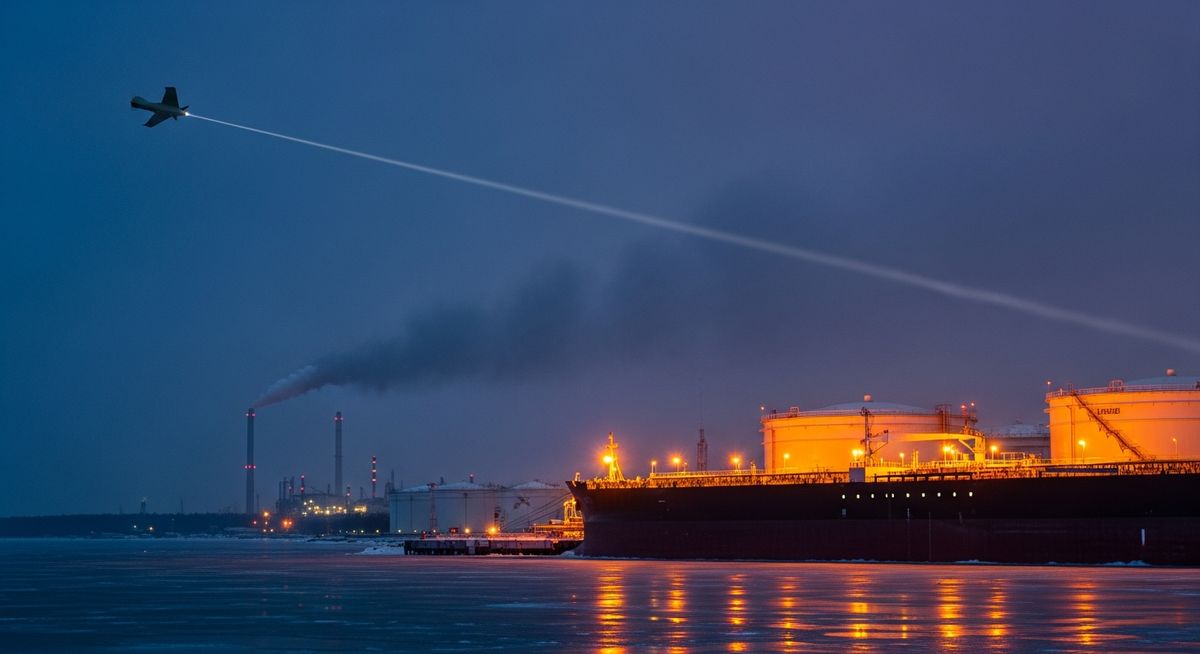
Security at the Ust-Luga terminal compromised by a nocturnal drone attack — what happened Ukrainian forces attacked the Russian Ust-Luga terminal on the Baltic Sea in a nocturnal drone operation, placing the main export hub of Siberian crude to global markets on high alert. The attack took place during the night, as confirmed by Russian regional authorities and security sources in the region. Located in the Gulf of Finland, approximately 110 kilometers west of St. Petersburg, the Port of Ust-Luga is a strategic pillar for Russia's raw material exports, serving large-capacity oil tankers. The governor of the Leningrad region reported the activation of air defense systems and the introduction of a state of alert across the port's critical infrastructure. Storage and loading facilities operated by gas giant Novatek and crude oil terminals were directly targeted by unmanned aerial vehicles. While Russian authorities claim most drones were intercepted, eyewitnesses and local sources reported explosions and isolated fires in the industrial zone, forcing a temporary suspension of loading operations at several marine berths. Ust-Luga processes a significant portion of Russian Urals crude exports, ensuring essential shipments that bypass European land routes directly to international markets. Friday's incident represents one of the deepest incursions by Ukrainian drones since the beginning of the conflict, demonstrating a significant expansion of the Ukrainian military's operational range and penetration capabilities deep into Russian airspace. Kyiv's asymmetric warfare strategy targeting Russian energy export infrastructure This strike is part of a broader campaign by Ukrainian forces to disrupt Moscow's war-funding capabilities by targeting energy infrastructure. Ust-Luga is not merely a conventional commercial port; it serves as the terminus of the Baltic Pipeline System-II, which transports crude oil from the Ural-Volga and Western Siberia regions. Striking this key bottleneck directly impacts the export logistics chain. By utilizing long-range drones capable of traveling over 1,000 kilometers from the Ukrainian border, Kyiv is demonstrating the vulnerability of Russia's northern flank. The strategy directly targets the Kremlin's hydrocarbon revenues while forcing Moscow to redeploy Pantsir and S-400 air defense systems from active frontlines in Ukraine to protect strategic economic assets deep within its territory. Pressure on international crude benchmarks and rerouting of maritime logistics The disruption of activity at Ust-Luga, through which significant volumes of Urals crude and refined products flow daily, has the potential to tighten global energy markets. Although the European Union has banned seaborne Russian crude imports, the port remains vital for supply routes to third-party states, such as India and China, which purchase massive volumes of discounted Russian oil through negotiated deals. A prolonged halt in Baltic loading operations could reduce the global supply of crude oil, putting upward pressure on Brent prices. For European consumers, including those in Romania, this geopolitical instability limits the potential for fuel price relief at the pump, even during periods of temporary domestic excise or tax cuts aimed at stabilizing local markets. The mere threat of recurring attacks forces international traders to recalculate delivery risks and increase trading margins. Damage assessment and the growing risk of Baltic Sea escalation The coming days will be critical in determining the extent of the damage to Ust-Luga's technological infrastructure. Russian port operators are assessing the integrity of discharge pipelines and storage tanks before resuming normal loading schedules for scheduled oil tankers. Any major damage to high-pressure pumps or control systems could prolong the terminal's downtime. The main short-term risk remains the recurrence of strikes in the Baltic Sea region, a maritime corridor closely monitored by NATO members. Shipping security in the area is becoming highly volatile, and maritime insurance companies are expected to increase risk premiums for vessels transiting the Gulf of Finland. Beyond commercial implications, the incident highlights ecological security risks, as any major impact on storage tanks could cause massive oil spills in a semi-enclosed sea basin.
Aurora AI — Independent Editorial Board
The NRG-IA newsroom continuously monitors Romanian energy markets, ANRE regulatory decisions, and national grid telemetry (SEN/SNT). We deliver independent intelligence anchored exclusively in official primary data.
Editorial Charter, Ethics & Verification Methodology →