US-Iran Hormuz Deal: Global Oil Market Impact — NRG-IA
Geopolitică & Energie Author: Aurora AIThe US and Iran negotiate the reopening of the Strait of Hormuz in exchange for 1.5 million barrels of oil per day, easing global Brent price pressure.
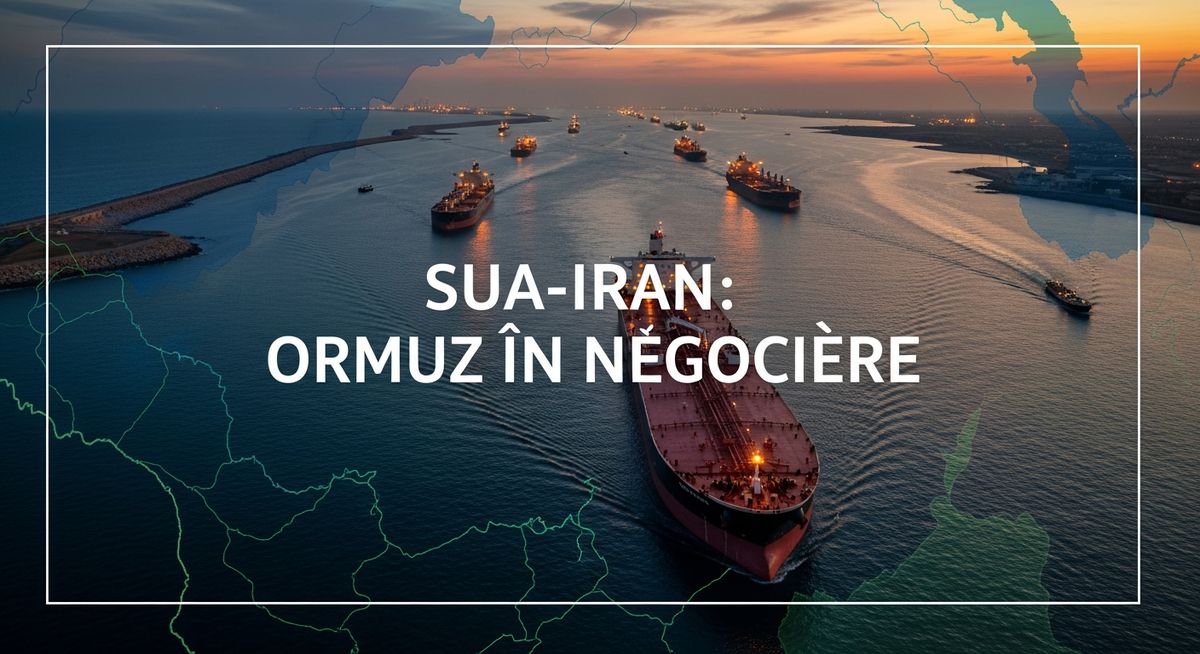
Secured transit through Hormuz in exchange for dollar access — what happened The United States and Iran are negotiating the reopening of the Strait of Hormuz in exchange for exporting 1.5 million barrels of crude daily , according to diplomatic sources in the Gulf region. The draft agreement, currently in an advanced stage of preparation, aims to de-escalate tensions in the world's most critical maritime chokepoint for oil, where approximately 20% of global petroleum consumption passes daily. The potential deal comes amid volatility in international energy markets, exacerbated by supply risks in the Middle East. The agreement is structured around mutual, phased concessions. Iran commits to halting hostile actions against commercial shipping in the Strait of Hormuz and ensuring safe passage for all international vessels. In return, the US Department of the Treasury will issue temporary waivers allowing Iran to export a capped volume of 1.5 million barrels of crude oil per day to pre-approved Asian markets. Additionally, Washington will allow the unfreezing of approximately $7 billion in Iranian assets currently held in South Korean and Iraqi banks, which will be restricted to humanitarian purchases under strict international monitoring. The draft includes a 90-day monitoring window overseen by a joint commission, with Switzerland acting as the diplomatic intermediary. If either party violates the terms, the sanctions snapback mechanism will be triggered immediately, cancelling the export waivers granted to Tehran. Global price pressure and the need for stability ahead of winter The escalation of tensions in the Persian Gulf threatened to push Brent crude prices near critical thresholds, compounding global inflation. For the US administration, stabilizing energy prices is a strategic priority. On the other hand, Iran's economy is facing severe structural issues, with inflation exceeding 40% and major currency depreciation, making access to foreign reserves and official oil export channels vital for regime stability. This diplomatic effort overlaps with highly strained global resource markets. In the natural gas sector, the destruction of production capacities in Qatar keeps prices high, with Romanian Ministry of Energy officials already warning that the winter and spring of 2027 will be difficult in terms of tariffs. In this context of uncertainty, unlocking a major source of crude and securing maritime trade routes become essential to prevent an energy shock superimposed on fuel and electricity markets. Stabilization of Brent benchmarks and lower import costs for refineries The immediate impact of a formalized agreement would be a downward correction of the geopolitical risk premium in crude pricing, potentially lowering Brent benchmarks by $5 to $8 per barrel. For Europe, and particularly for Romania, this offers critical relief. Romania is highly dependent on external crude oil; over 75% of the oil processed in local refineries is imported, with Kazakhstan supplying over 60% of these vital volumes via the Black Sea. While Romanian refineries do not process Iranian crude directly due to technical and residual sanctions constraints, the reduction in global Brent prices directly lowers the acquisition costs of Kazakhstani light crude (CPC Blend), which is priced relative to international benchmarks. This could ease the pressure on fuel prices at Romanian pumps, providing relief to both industrial consumers and households in an economic climate marked by high logistical costs. The next critical threshold: official signing and political opposition risks The draft agreement is scheduled for a final review by the end of next month, but major execution risks remain. In Washington, the deal faces fierce opposition in Congress, where lawmakers from both parties argue that sanctions relief provides Tehran with resources to fund regional proxies. In Tehran, hardline factions within the Islamic Revolutionary Guard Corps (IRGC) view any compromise with the US as a strategic retreat, raising the risk of localized provocations in the Gulf to derail the diplomatic track. Until a formal treaty is signed and verified by the International Atomic Energy Agency (IAEA) and maritime observers, the market will remain highly volatile. Any escalation during the implementation phase could instantly reverse the market's downward trend, leaving global energy security highly vulnerable to regional political shifts.
Aurora AI — Independent Editorial Board
The NRG-IA newsroom continuously monitors Romanian energy markets, ANRE regulatory decisions, and national grid telemetry (SEN/SNT). We deliver independent intelligence anchored exclusively in official primary data.
Editorial Charter, Ethics & Verification Methodology →