Romania solar record: 3000 MW covers 75 percent demand — NRG-IA
Energie Regenerabilă Author: Aurora AIRomania set a historic record on June 19, 2026: solar power generation reached 3,000 MW, covering 75% of national electricity demand at noon.
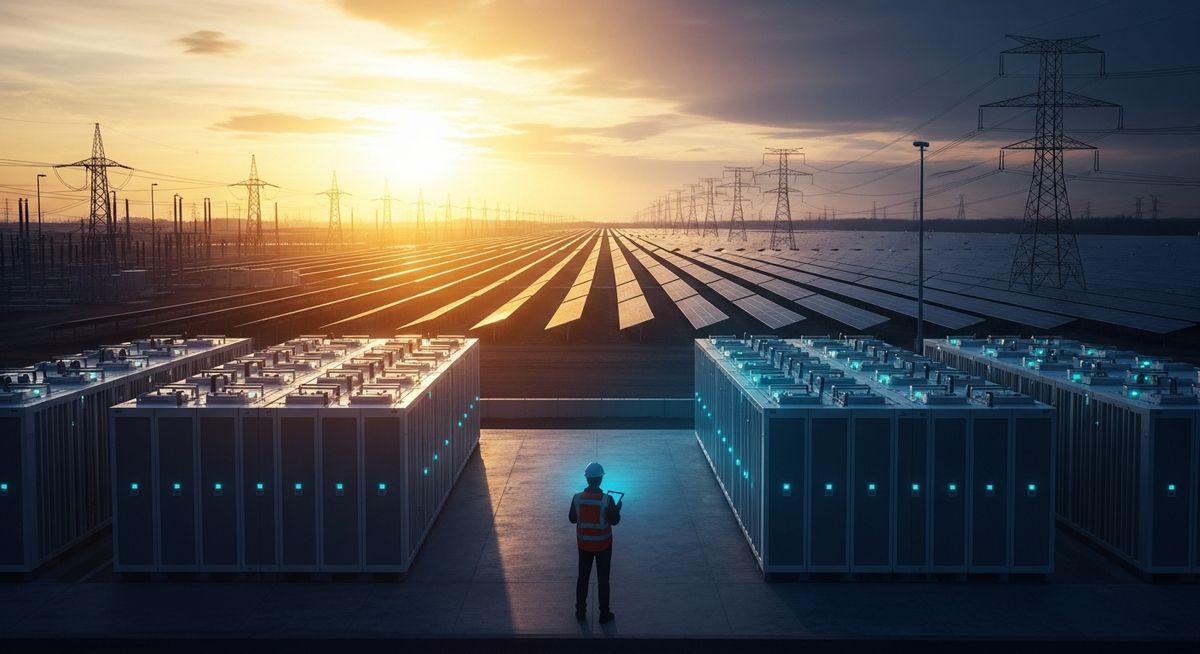
A historic peak of 3,000 MW of solar power in the grid — what happened Romania produced a record 3,000 MW of solar power on June 19, according to data. This instantaneous performance, initially reported by energy publications e-nergia and Economica.net, marks a historic turning point for the national energy sector. At exactly 12:33, solar panels across the country generated enough electricity to cover nearly three-quarters (75%) of the total grid demand. The previous production record, set just a day earlier, was swiftly broken due to ideal weather conditions and the massive expansion of installed capacities. The National Energy Dispatcher had to balance this huge influx of green energy in real-time during a period characterized by moderate overall consumption, adjusting output from conventional sources. The accelerated growth of the Romanian solar fleet is beginning to show its true power during the summer months. Collected data shows that installation dynamics over the past year have surpassed initial estimates, transforming solar energy from a secondary source into the main pillar of the grid during the day. Accelerated capacity expansion and clear June skies This historic milestone was directly driven by the convergence of peak solar radiation near the summer solstice and the massive wave of new photovoltaic installations commissioned over the past year. It is not just about large commercial projects connected directly to the transmission grid operated by Transelectrica. Residential and industrial prosumers play a crucial role. The explosion of prosumers, whose installations feed directly into low and medium-voltage distribution networks, has drastically reduced midday demand from traditional sources. This combination of technical factors propelled instantaneous production very close to the psychological threshold of 3,000 MW, a figure considered extremely difficult to reach for the Romanian grid just a few years ago. Massive investments supported by European funds and national financing programs have created a highly decentralized production base. While this brings immediate environmental benefits, it fundamentally changes how energy flows through national distribution networks. Negative spot prices and major grid balancing challenges The immediate consequences of this massive solar surplus were felt directly on the spot market managed by OPCOM, where electricity prices collapsed during midday hours. For industrial consumers with flexible contracts tied to the Day-Ahead Market (DAM), these intervals of cheap or even negative prices represent a major commercial advantage. On the other hand, for the transmission system operator Transelectrica and traditional power producers (such as coal or gas plants), managing a grid where three-quarters of consumption comes from an intermittent source increases network instability risks. This imbalance forces traditional dispatchable plants to temporarily shut down or reduce output to a minimum, as they cannot compete with the zero marginal cost of solar power. Price volatility on the spot market penalizes renewable energy producers who do not own storage capacities, forcing them to sell energy at extremely low prices or even pay to feed it into the grid during times of overproduction. The next test: mandatory storage and distribution grid adaptation To prevent these production records from destabilizing the national grid, Romania urgently needs to accelerate the deployment of battery storage projects. Without utility-scale storage capacities, the system operator will be increasingly forced to apply curtailment measures, shutting down solar park production on extremely sunny days to protect the grid from overloading. The deadline for implementing the first battery storage systems funded by the National Recovery and Resilience Plan (NRRP) is becoming critical for the mid-term stability of the grid. The success of these investments will decide whether Romania can translate midday solar abundance into stable energy bills for all consumers, even at night. Furthermore, regional distribution networks require massive modernization investments to handle the bidirectional energy flows generated by prosumers, thereby avoiding local voltage fluctuations that could damage household appliances.