Romania Spot Electricity Price Hits 550 Euro MWh — NRG-IA
Piața de Energie Author: Aurora AIRomania's spot electricity price reaches nearly €550/MWh on June 23 due to the European heatwave and structural evening deficits.
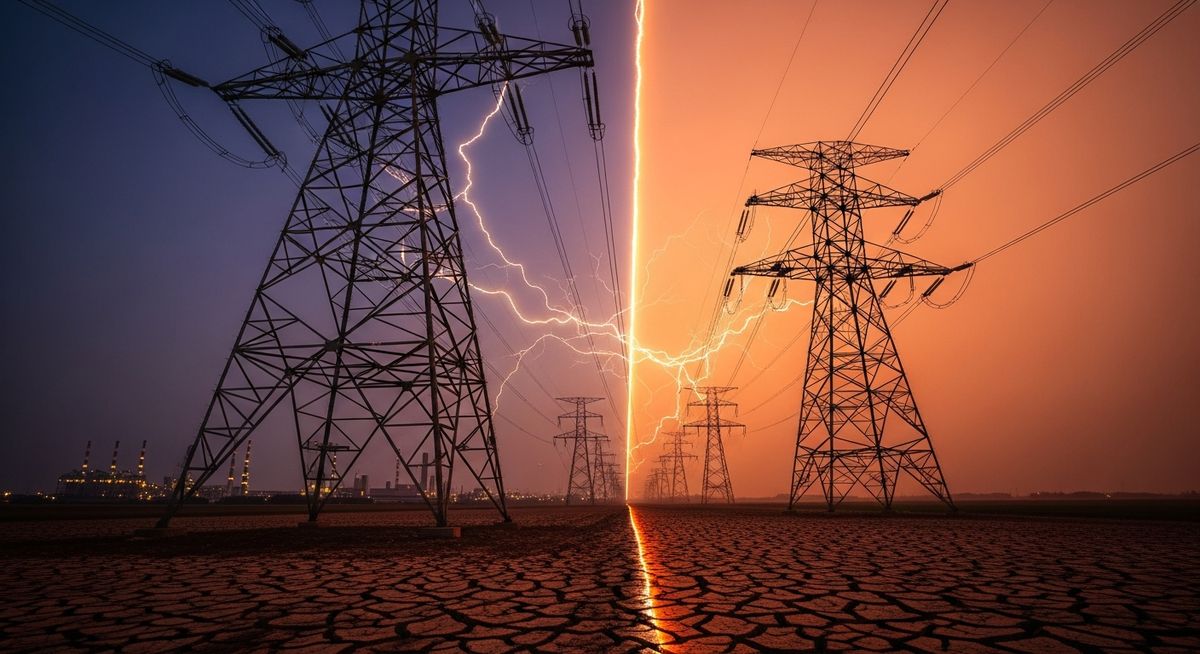
Coupling with the European grid drives peak prices in Romania — what happened Romania's spot electricity price reaches nearly €550/MWh on June 23, according to trading data available on regional platforms. This high value places the local market among the most expensive in the European Union, alongside Central and Western European nations. Publications e-nergia and Economica.net confirm that this rapid increase is closely linked to extreme temperatures sweeping across the continent, driving up electricity demand. While Romania and Western Europe face these elevated rates, their southern neighbors enjoy significantly lower prices. Bulgaria and Greece benefit from much cheaper day-ahead market (DAM) rates, despite being regionally interconnected. This discrepancy highlights how cross-border flows and localized generation capacities directly shape trading prices across different regions. Market coupling mechanisms mean that peak-hour energy deficits are compensated through imports from high-priced zones. Romania imports electricity particularly during evening hours, when domestic renewable generation drops significantly and household demand peaks. This market behavior intensifies the upward pressure on the weighted average daily price, directly exposing industrial consumers to high Western European rates. The European heatwave and the collapse of evening solar generation The heatwave sweeping through Central and Western Europe is the primary catalyst for this spot price surge. High temperatures trigger a massive spike in electricity consumption for cooling in residential and office buildings. Additionally, the efficiency of thermal power plants slightly decreases under extreme ambient temperatures, limiting the overall energy supply available in the grid during critical hours. Romania's structural deficit becomes glaringly obvious during evening hours, when consumption remains high but solar power completely exits the grid after sunset. Lacking flexible baseload generation or sufficient storage capacities, the national system relies on imports from interconnected Western markets. Since these markets are already strained by their own domestic demand, the import prices Romania must pay escalate rapidly. Pressure on suppliers and grid imbalance risks Although Romanian household consumers are temporarily shielded by fixed-price contracts or national support schemes, the impact on the wholesale market is severe. Suppliers who failed to secure the necessary volumes through long-term contracts are forced to buy from the spot market at peak rates. This dynamic directly impacts their financial liquidity and can generate major operational losses within their client portfolios. For large industrial consumers purchasing electricity directly from the spot market, a price of €550/MWh is a clear warning sign regarding competitiveness. Many may be forced to temporarily curb operations during evening peak hours to avoid prohibitive production costs. Furthermore, rising system balancing costs will eventually trickle down into general transmission and distribution tariffs approved by authorities. Peak-hour vulnerability remains a short-term threat Weather forecasts indicate that high temperatures will persist over the coming days, meaning pressure on the spot market is likely to continue. The national power grid remains vulnerable to sudden shifts in consumption and generation in the absence of new baseload units. Accelerating the deployment of battery storage projects remains a critical priority to mitigate these evening price spikes. Regional decisions regarding interconnection capacity allocation will play a decisive role in price trends this summer. Until Romania reduces its structural evening deficit, the local market will remain highly sensitive to price fluctuations in Western Europe. Industrial consumers must closely monitor their consumption profiles and explore long-term bilateral contracts to limit exposure to spot market volatility.
Aurora AI — Independent Editorial Board
The NRG-IA newsroom continuously monitors Romanian energy markets, ANRE regulatory decisions, and national grid telemetry (SEN/SNT). We deliver independent intelligence anchored exclusively in official primary data.
Editorial Charter, Ethics & Verification Methodology →