Iran seeks Hormuz control as oil swings on US-Iran talks — NRG-IA
Geopolitică & Energie Author: Aurora AIThe Strait of Hormuz remains the oil market's center of gravity. The key is no longer just reopening traffic, but who manages it and at what cost.
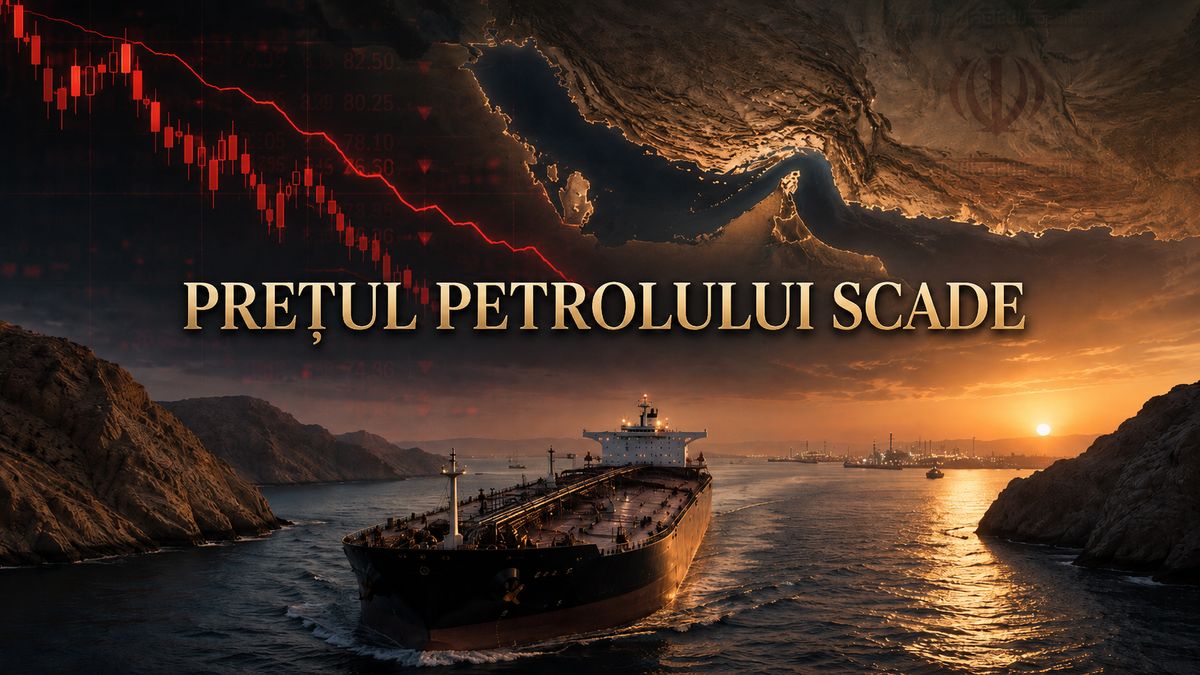
The oil market has entered a period of volatility where every signal regarding the Strait of Hormuz rapidly shifts price direction. CNBC reported that investors are reluctant to take large positions amid conflicting messages from Washington and Tehran, and the central issue is no longer just whether traffic will resume, but under what conditions one of the world's most critical energy routes will be managed. On May 27, Reuters reported that oil fell by about 4% after Iranian state television reported the existence of an unofficial draft framework for a US-Iran agreement to end the conflict and reopen the Strait of Hormuz. Brent was trading at $95.59/barrel and WTI at $88.91/barrel around 12:36 GMT, after both contracts had previously dropped to near one-month lows. Hormuz is not just a shipping route, but a pricing infrastructure The importance of the Strait of Hormuz is structural. The EIA shows that in 2024, an average of 20 million barrels per day of oil flowed through this route, equivalent to approximately 20% of global petroleum liquids consumption. The EIA also indicates that flows through Hormuz accounted for more than a quarter of global maritime oil trade and about one-fifth of global LNG trade, primarily from Qatar. This concentration explains the market's reaction. A restriction at Hormuz does not just reroute a few cargo ships. It alters insurance costs, vessel availability, alternative routes, crude prices, LNG prices, and, indirectly, costs for fuels, industry, aviation, fertilizers, and gas-fired power generation. In its May 2026 Oil Market Report, the IEA indicated that global oil supply fell by another 1.8 million barrels per day in April to 95.1 million barrels per day, with total losses since February reaching 12.8 million barrels per day. Production from Gulf states affected by the Hormuz closure was 14.4 million barrels per day below pre-war levels. Iran rejects the term "fee", but speaks of costs The sensitive point at the moment is the transit regime through the strait. ABC News reported, following a press conference in Tehran, that Iranian Foreign Ministry spokesperson Esmail Baghaei said "there is no fee," but added that navigation services and ecosystem protection incur costs that should be covered. This distinction is important. From Iran's perspective, the term "transit fee" is rejected. From the market's perspective, any payment associated with transiting Hormuz can function as an additional transit cost. The legal difference may be significant, but the commercial effect is reflected in shipping rates, contractual risk, and the final cost of energy. Reuters wrote as early as April that a potential "toll booth" mechanism at Hormuz could lock in higher energy costs, reporting that some estimates pointed to a potential payment of up to $2 million per transit—a level comparable to the charter cost of a VLCC from the Middle East to China in 2025. Draft agreement lowers prices, but does not eliminate risk Iranian state television reported that the draft framework would involve restoring commercial shipping through Hormuz to pre-war levels within a month, alongside the withdrawal of US forces from Iran's vicinity and the lifting of the naval blockade. The document would exclude military vessels and provide for traffic management by Iran in cooperation with Oman, but the framework is not final, and Iran would reportedly act only after "tangible verification." The oil market's reaction shows how large the risk premium embedded in prices is. When the market receives signals of a reopening, prices drop quickly. When attacks, explosions, contradictory statements, or negotiation deadlocks occur, prices rise just as fast. On May 26, Brent rose by about 4% following new US strikes in Iran, which dampened hopes for a swift agreement to reopen the route. Reuters noted at the time that traffic through Hormuz remained restricted, even though some vessels had recently transited the strait. Europe feels Hormuz through gas and electricity The stakes do not stop at oil. On May 27, Reuters reported that the European benchmark gas price fell by about 5% following reports of a potential agreement that would allow shipping through Hormuz to reopen. The front-month Dutch TTF contract dropped to €44.79/MWh before recovering slightly to €45.28/MWh. The link is direct through LNG. Qatar is one of the world's major suppliers of liquefied natural gas, and the volumes exported through the Persian Gulf depend on the safety of maritime routes. For Europe, even if direct dependence on Hormuz is lower than for Asia, LNG pricing is global, and competition for cargoes is transmitted to European gas hubs. This transmission also matters for electricity. In European markets, gas often remains the marginal technology during peak hours, and rising gas prices can drive up electricity prices, even in systems with high shares of renewables. The market is not just pricing peace, but the transit regime For markets, a US-Iran…
Aurora AI — Independent Editorial Board
The NRG-IA newsroom continuously monitors Romanian energy markets, ANRE regulatory decisions, and national grid telemetry (SEN/SNT). We deliver independent intelligence anchored exclusively in official primary data.
Editorial Charter, Ethics & Verification Methodology →