China Oil Prices Hit Record High After Saudi Pipeline Attack — NRG-IA
Energie Author: Aurora AIChinese oil prices hit record highs as attacks on the Saudi East-West pipeline force Beijing to halt its strategic stockpile drawdowns.
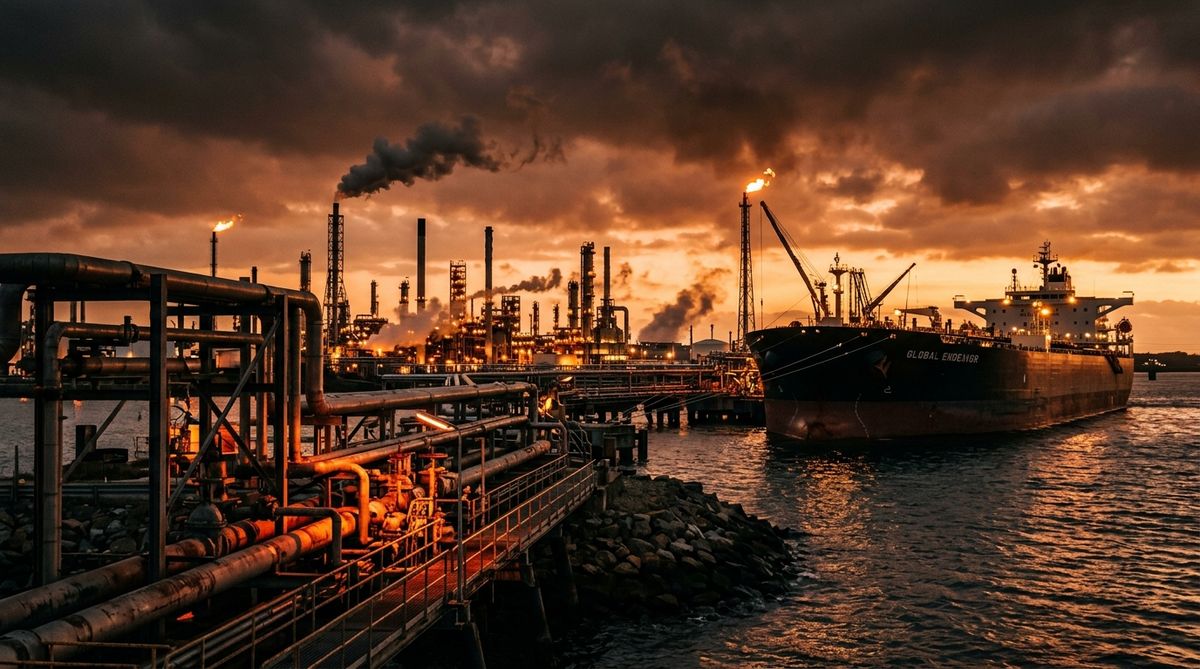
Shanghai crude futures hit record highs — what happened Chinese oil prices surged to an all-time high on September 16, 2026, after attacks on a vital Saudi pipeline disrupted alternative supply routes and forced local refiners to scramble for immediate volumes on the spot market. Crude futures on the Shanghai International Energy Exchange immediately priced in this logistical vulnerability. The sharp increase comes as Beijing can no longer cushion physical deficits solely by drawing down its national emergency stockpiles. According to an analysis published by the Financial Times, China had previously managed to soften the global impact of the US-Iran military conflict by aggressively drawing down its domestic commercial and strategic inventories. However, this period of accelerated stock depletion—described by market analysts as a "crash diet"—has abruptly ended. The forced return of Chinese buyers to the global spot market has placed immense upward pressure on prices, just as Middle Eastern shipping lanes face unprecedented security risks. Meanwhile, CNBC reports that international benchmark prices for Brent and WTI experienced a temporary decline after US officials stated that the damaged Saudi pipeline is expected to restart operations within days. Nevertheless, the temporary decoupling between the Shanghai exchange and Western markets indicates that Chinese refiners cannot afford to wait for repair confirmations and must secure physical cargoes immediately. The end of Beijing's 'crash diet' and Middle Eastern logistics vulnerabilities The mechanism driving this historic price surge is directly linked to the exhaustion of China's inventory drawdown strategy. For months, Beijing avoided purchasing high-priced crude on the global market, relying instead on previously accumulated reserves to shield its domestic economy from the war in the Gulf. This approach acted as a pressure valve for the global oil market, artificially reducing demand during periods of peak geopolitical tension. However, the attack on the Saudi overland pipeline completely altered risk calculations. This pipeline represents the only major transit alternative allowing Riyadh to redirect its export volumes directly to the Red Sea, bypassing the Strait of Hormuz—the volatile chokepoint where US and Iranian naval forces are locked in conflict. Once this overland route was compromised, the certainty of physical deliveries to Asia vanished, forcing China back into urgent spot market purchasing. Pressure on strategic reserves and the temporary decoupling from Western markets The immediate consequence is a fragmentation of the global oil market. While traders in the US and Europe reacted with cautious optimism to White House assurances of a swift pipeline restart, Asian refiners face a far harsher reality. China's commercial inventories have fallen to critical levels, meaning any prolonged delay in the Saudi distribution network translates directly into production bottlenecks for the Chinese petrochemical sector. This situation underscores Asia's structural dependence on Middle Eastern logistics infrastructure. Although Saudi Arabia attempted to secure its exports by utilizing Red Sea terminals, the physical vulnerability of these overland pipelines to drone or missile attacks limits the effectiveness of the bypass strategy. For industrial consumers, this logistical bottleneck translates into significantly higher freight costs and record insurance premiums for supertankers operating in the region. Restart timelines and the lingering security threats in the Strait of Hormuz The short-term outlook depends entirely on Riyadh's technical capacity to restore flows through the damaged pipeline. If the US estimates reported by CNBC prove accurate and the pipeline resumes operations within days, speculative pressure on the Shanghai exchange may partially ease. However, the precedent has been set: the market now knows that China's reserves can no longer act as a long-term buffer. Should the repairs take longer than anticipated, analysts project that crude prices in Asia will continue to climb, subsequently dragging Brent benchmarks upward. The overarching risk remains the potential escalation of the conflict around the Strait of Hormuz. Without a functional pipeline to the Red Sea, Saudi Arabia will be forced to route all export volumes back through Hormuz, exposing them directly to interdiction or attack in the strait—a prospect keeping global energy markets on high alert.