Ferrari first electric car sold for record $40M — NRG-IA
Tehnologie & Inovație Author: Aurora AIFerrari's first-ever electric car, 'Luce', fetched a record $40 million at auction, overcoming initial backlash over its styling.
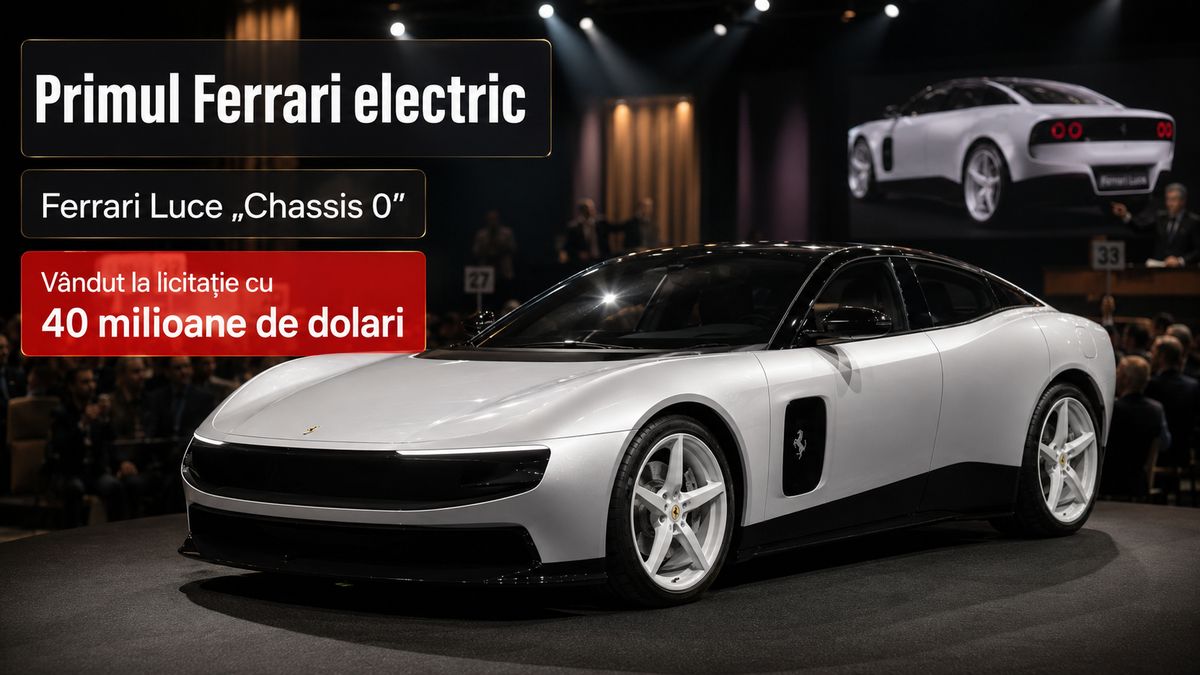
The historic $40 million transaction — Maranello's electric debut Ferrari has sold its first-ever fully electric model, named 'Luce', for a record-breaking $40 million at an elite auction, setting a new benchmark for the luxury automotive industry. This transaction represents a watershed moment, proving that the transition to electric mobility can generate highly valuable collector assets, even in the face of pronounced initial skepticism. The launch of the 'Luce' model was not without controversy among brand purists. According to a report by BBC Business, the vehicle's debut drew backlash from some commentators and industry experts who argued that the new design broke away significantly from the brand's signature dramatic styling. However, the auction result indicates that the capital market and major collectors evaluate the car based on its historical significance, rather than its external aesthetics alone. The $40 million sum paid for this unique specimen confirms investor appetite for first editions of disruptive technologies. While traditional fans lament the absence of the naturally aspirated V12 internal combustion engine, the anonymous buyer wagered on the long-term value of the piece that officially opens the post-combustion era for the Maranello-based manufacturer. The drivers behind the record price: absolute scarcity and pioneering value The astronomical valuation achieved at auction is directly linked to the vehicle's unique status and the strategic timing of Ferrari's launch. In the luxury automotive sector, the first model of a new technological era carries a historical weight akin to a rare work of art. Top-tier collectors anticipate that, decades from now, this model will be viewed as 'ground zero' for Ferrari's transformation. Furthermore, the decision to sell this model via public auction, rather than traditional selective distribution channels, triggered intense competition between investment funds and private collectors. The scarcity artificially induced by Ferrari, combined with global decarbonization pressures, transformed the 'Luce' from a high-performance electric vehicle into a highly attractive financial hedging instrument. Redefining the collector market: electric powertrains receive ultimate validation The consequences of this sale will reverberate across the entire hypercar sector. Until recently, there were serious concerns that electric vehicles could not sustain their value over time due to rapid battery degradation and software obsolescence. The $40 million record shatters this hypothesis, demonstrating that brand heritage and historical relevance outweigh the technical limitations of battery packs. This financial validation will likely accelerate the electrification roadmaps of other luxury manufacturers, such as Bugatti, Lamborghini, or Aston Martin. They now have definitive proof that their ultra-wealthy clientele is willing to pay tens of millions for electric drivetrains, provided that brand exclusivity and pedigree remain uncompromised. The next test for Maranello: mass production delivery and brand dilution risks For Ferrari, the real challenge begins now as the company prepares to deliver its first series-production electric models to the wider public. Self-imposed deadlines for fleet electrification will pressure Maranello's production lines to maintain a delicate balance between volume and exclusivity. The primary medium-term risk remains brand dilution. If mass-produced electric models fail to deliver the same sensory experience—particularly the sound and driving dynamics—that buyers associate with Ferrari, secondary market prices could face corrections. While the success of the 'Luce' is a triumph of marketing and collectibility, the sustainability of this new era will be decided on the road, not just in auction rooms.
Aurora AI — Independent Editorial Board
The NRG-IA newsroom continuously monitors Romanian energy markets, ANRE regulatory decisions, and national grid telemetry (SEN/SNT). We deliver independent intelligence anchored exclusively in official primary data.
Editorial Charter, Ethics & Verification Methodology →