Bicaz Hydropower Plant: €1.2 Billion Investment — NRG-IA
Piața de Energie Author: Aurora AIHydro Blue is planning a €1.2 billion investment in a 340 MW underground hydropower plant at Bicaz to address the grid's storage deficit.
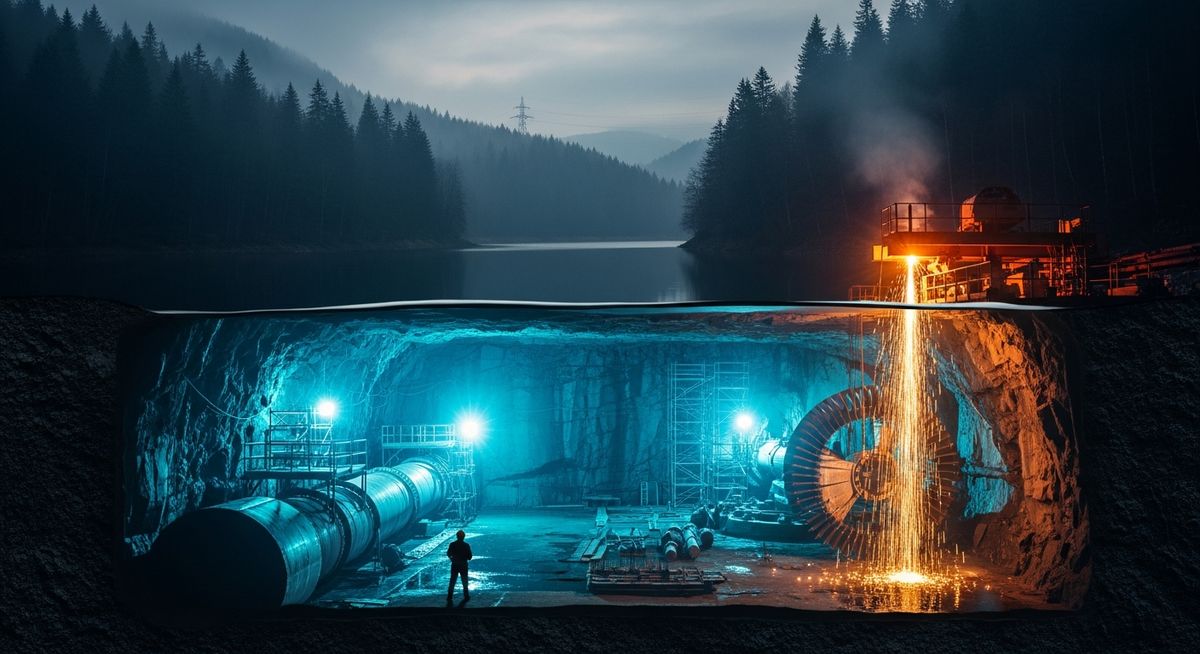
Hydro Blue proposes a 340 MW underground plant at Bicaz — project details Hydro Blue is planning a 1.2 billion euro investment in a hydropower plant at Bicaz. The project entails building a 340 MW underground hydroelectric plant in the Izvorul Muntelui reservoir area. This private initiative represents one of the most ambitious energy infrastructure plans in the Moldavia region in recent decades. According to public data in the energy sector, the new unit will be designed to operate as a fast-response balancing asset for the National Power System (SEN). The underground placement minimizes visual impact on the surface but requires complex excavation and hydraulic drilling works. The structure will utilize existing water resources to generate electricity during peak demand hours. The developer is betting on a technology capable of responding quickly to grid fluctuations. In a system increasingly dependent on intermittent renewable sources, such a 340 MW capacity can provide the stability that the transmission grid urgently needs. The chronic storage deficit and the deadlock of the Tarnița-Lăpuștești project The decision to develop this private project comes against the backdrop of an acute shortage of storage and balancing capacities in Romania. While the state-led Tarnița-Lăpuștești project has remained stalled in bureaucratic phases and canceled tenders for decades, the grid's flexibility deficit has deepened. Romania has installed thousands of megawatts in wind and solar parks but lacks large-capacity pumped-storage plants to manage production surpluses or deficits. Pressure on the grid managed by Transelectrica has increased significantly in recent years. On windless or cloudy days, the system relies on expensive imports or polluting and costly coal plants. This technical reality has created a major commercial opportunity for private investors willing to take on long-term capital risks. Hydro Blue's initiative reflects a regional trend where private capital attempts to make up for the lack of vision and execution of large state projects. The need for storage can no longer be delayed, and the battery storage systems recently promoted through PNRR funds offer only short-term solutions, unlike the massive capacity of a hydropower plant. National grid stabilization and the reduction of peak electricity prices Commissioning a 340 MW plant at Bicaz could significantly reduce the record-high prices on Romania's balancing market. Currently, Romanian suppliers pay some of the highest prices in the European Union when the grid faces a power deficit, costs that are directly reflected in the bills of industrial and household consumers. A new source of rapid hydro energy will introduce competition into a highly concentrated market. From a technical perspective, the plant will act as a shock absorber for the grid. During moments of overproduction from wind and solar sources, excess energy can be managed more efficiently, avoiding forced curtailments of renewable parks. During peak evening consumption hours, the plant can quickly inject power, reducing reliance on imports. For final consumers, a stable grid means lower risks of supply disruptions and reduced volatility in electricity prices. The indirect economic impact will also be felt through job creation during the construction phase and local taxes paid in Neamț County. Permitting stages, financing, and remaining implementation risks While the project promises to resolve some systemic issues, the implementation timeline depends on securing critical permits. The first major test will be obtaining the Technical Grid Connection Permit (ATR) from Transelectrica, in a grid already saturated in many parts of the country. Additionally, the environmental impact assessment for a massive underground project near Lake Bicaz will be extremely rigorous and time-consuming. Securing the 1.2 billion euro financing represents another major execution risk. In a macroeconomic context marked by high interest rates and volatility in financial markets, attracting a consortium of banks or institutional investors will require solid guarantees regarding long-term regulations in Romania. If the project clears the permitting phases and secures financing, construction works could take between 5 and 7 years, according to hydro-technical industry standards. This means that the new capacity will not be able to assist the energy system before the beginning of the next decade, leaving Romania exposed to storage deficits in the medium term.
Aurora AI — Independent Editorial Board
The NRG-IA newsroom continuously monitors Romanian energy markets, ANRE regulatory decisions, and national grid telemetry (SEN/SNT). We deliver independent intelligence anchored exclusively in official primary data.
Editorial Charter, Ethics & Verification Methodology →