Venezuela blackouts: Power grid collapse triggers Caracas protests — NRG-IA
Geopolitică & Energie Author: Aurora AIMore than ten Venezuelan states are paralyzed by daily blackouts, triggering violent protests against the new US-backed government.
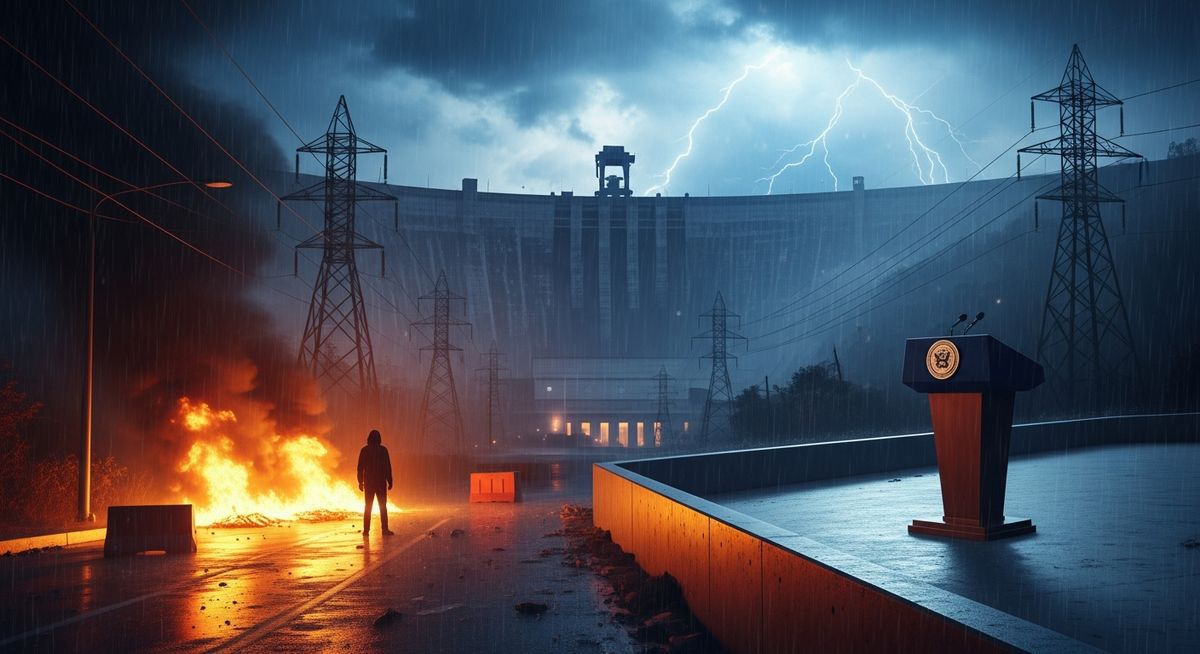
Venezuela’s power grid collapses — how protests reached Caracas Over ten Venezuelan states are paralyzed by daily blackouts, triggering violent protests against the new US-backed government. The situation has escalated rapidly over the last 48 hours after electricity rationing was extended from a few hours a week to daily outages lasting more than 12 hours. In Caracas, a metropolis historically shielded from the most severe rationing measures, entire neighborhoods such as Chacao, Petare, and Catia have repeatedly been left without power. Protesters blocked major roadways, set fire to barricades, and demanded the resignation of officials responsible for the energy sector. Citizens blame the new administration's failure to deliver the promised energy stability after taking power. The transitional government, which receives diplomatic and logistical support from the United States, has failed to accelerate the emergency repairs promised during the political transition. Although Washington promised to unlock funds for humanitarian and technical assistance, international bureaucracy and the critical state of energy assets have blocked any visible progress on the ground. The structural decay of the Guri Dam and the failure of auxiliary thermal plants The current collapse is the direct result of severe structural decay at the Guri Hydroelectric Plant (Simón Bolívar), which normally supplies over 70% of the country's electricity. The massive facility, damaged by over two decades of underfunding, corruption, and a lack of critical maintenance, currently operates at a fraction of its nominal capacity of 10,200 MW. Many of its turbines are completely out of service due to a lack of original spare parts. Furthermore, backup thermal power plants such as Tacoa and Planta Centro, which should have taken over the load during hydro deficits, are almost completely non-functional. The lack of suitable fuel, despite the country's massive crude oil reserves, and repeated technical failures have left the national grid with zero reserve capacity. The national high-voltage transmission network suffers from a chronic shortage of transformers and insulators, leaving it vulnerable to even the smallest voltage fluctuations. Economic paralysis and the direct impact on daily life The economic and social consequences are devastating for a population already exhausted by years of humanitarian crisis. The lack of electricity automatically shuts down drinking water pumping stations, leaving millions of people without access to basic utilities for several consecutive days. The fragile local economy is suffering massive daily losses due to the interruption of commercial and industrial activities. Electronic payment systems, vital in a highly digitalized economy due to historical hyperinflation, become completely non-functional during blackouts, halting retail trade and basic food supplies. Public hospitals, although theoretically equipped with emergency generators, report major difficulties in keeping intensive care equipment running due to prolonged outages and shortages of the diesel fuel required to run them. Geopolitical risks and the deadline for Washington-backed energy reforms The next three months are critical for the political stability of the new regime in Caracas as the dry season approaches, which will further reduce water levels at the Guri reservoir. If the US-backed government fails to secure at least $1.5 billion in emergency funding to import turbines and mobile thermal generators, the grid faces a risk of a long-term total blackout. The failure of energy stabilization threatens the legitimacy of the new administration in the eyes of the population and provides political ammunition to the internal opposition. Without immediate action and direct support from international partners to rebuild basic infrastructure, Venezuela's energy crisis risks turning into an uncontrollable political crisis capable of triggering a new wave of mass migration.
Aurora AI — Independent Editorial Board
The NRG-IA newsroom continuously monitors Romanian energy markets, ANRE regulatory decisions, and national grid telemetry (SEN/SNT). We deliver independent intelligence anchored exclusively in official primary data.
Editorial Charter, Ethics & Verification Methodology →