Putin Admits Fuel Shortages: Moscow Weighs Diesel Export Ban — NRG-IA
Geopolitică & Energie Author: Ioana BuzoaicaRussia shifts to acknowledging regional fuel shortages. Putin says reserves are being used, and Moscow is considering a complete ban on diesel exports.
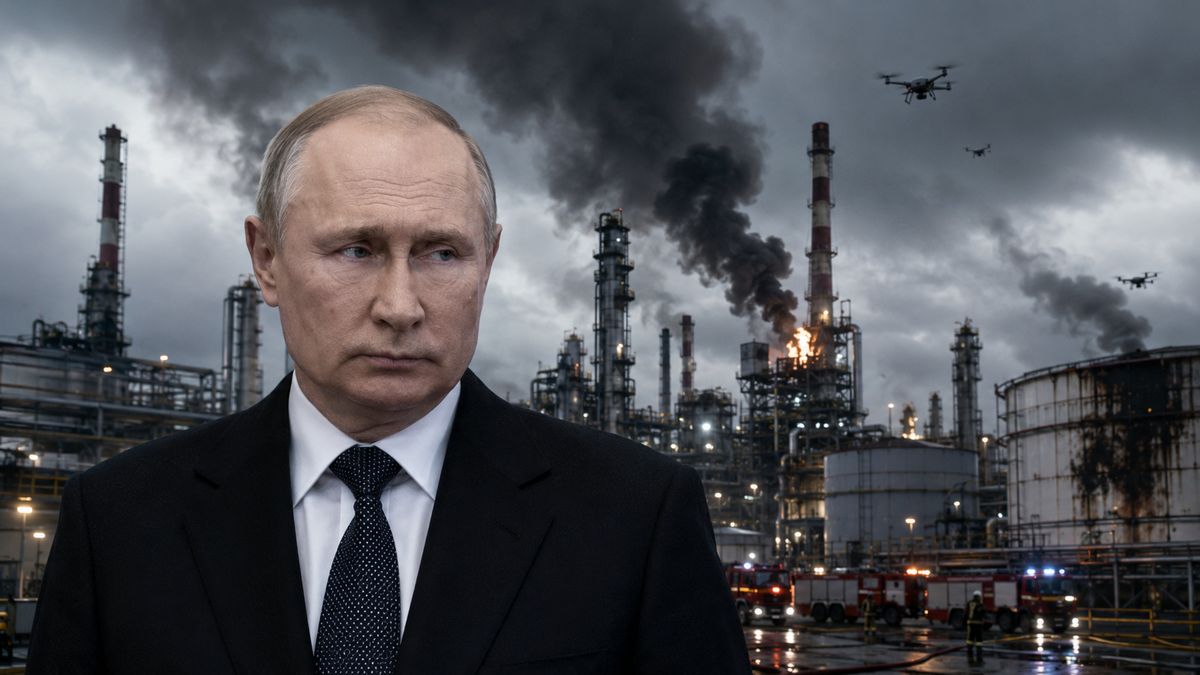
Russia, one of the world's largest exporters of petroleum products, is considering a complete halt to diesel exports to cover domestic market shortages. On June 28, Vladimir Putin acknowledged fuel supply issues in several Russian regions, stating that authorities have established a working group to manage the situation continuously. The declared priority is supplying the domestic market, including agriculture, at a sensitive time for summer field operations and the approaching harvest season. Moscow has not yet decreed a total ban on diesel exports. The measure is under consideration, and the distinction is important: while Russia has already restricted gasoline and jet fuel exports, diesel remains a heavier-weight product in foreign trade and the domestic logistics of the Russian economy. Gasoline reserves come into play Putin pointed to gasoline reserves of approximately 1.7 million tons and indicated that July production is expected to exceed June levels. However, the message reveals that the domestic market is no longer comfortably covered solely by current production and normal refinery distribution. The issue is not strictly local. Reuters has documented sales restrictions, fueling limits, and supply difficulties across several areas of Russia, from central regions to Siberia, the Far East, and occupied Crimea. In some areas, volumes per fill-up have been capped, while in others, distribution has been prioritized for essential services and transport. For the Kremlin, the risk is not merely economic. Fuel shortages affect transport, agriculture, public services, industrial activity, and, consequently, the state's ability to control inflation and social discontent. Refineries become the weak link in the Russian oil chain Ukrainian attacks on oil infrastructure and unplanned refinery maintenance have reduced fuel availability on the domestic market. Putin explicitly linked the supply difficulties to attacks on energy infrastructure, and Reuters reports that unplanned shutdowns and repairs have directly impacted gasoline production. Data cited by Reuters indicates an approximate 25% drop in gasoline production compared to the daily average in June 2025. In the first half of June, Russian seaborne exports of petroleum products fell by about 15% compared to the first half of May. These figures show that the issue is no longer just one of regional distribution. Russia is processing less crude oil into domestically used fuels and has fewer refined products available for export. In a separate case, Reuters reported that the Moscow refinery, one of the most important sources of petroleum products for the capital region, could remain offline for at least six months following drone attacks, according to industry sources. Russia can export more crude oil while simultaneously running low on fuel On the surface, the situation seems contradictory: Russia is struggling with gasoline and diesel supplies, yet crude oil exports through its western ports are estimated at record levels for June. Reuters estimates that crude loadings from Primorsk, Ust-Luga, and Novorossiysk could reach 2.7–2.8 million barrels per day in June. The explanation is that crude oil that no longer reaches refineries can be redirected for export. This is the energy crux of the situation: Russia is not necessarily facing a crude oil shortage, but rather a bottleneck in refining crude into fuels available on time, in the right regions, and at affordable prices for the domestic market. An offline refinery can reduce the production of gasoline, diesel, and jet fuel, even as crude extraction and seaborne crude exports continue. For a state whose economy relies on oil and gas, the bottleneck is no longer just underground or at the ports. It lies in refining capacity, transport infrastructure, and final distribution. Moscow is also discussing fuel imports An export ban is not the only measure under consideration. Reuters reported that Russia is in talks with Kazakhstan to import around 50,000 tons of AI-92 gasoline in an effort to alleviate the domestic deficit. The Russian government has also prepared tax amendments to increase the availability of petroleum products on the domestic market. The Russian parliament has approved measures allowing the use of fuel blends with more permissive standards, the postponement of refinery modernization investments without losing certain tax benefits, and support mechanisms for fuel imports. The package indicates that Moscow is trying to buy time using all available levers: reserves, export restrictions, imports, lowering quality standards, and delaying modernization works. Diesel becomes the high-stakes product A total ban on diesel would carry a different weight compared to the one applied to gasoline. Diesel is the dominant fuel for heavy transport, agriculture, logistics, construction, and a large part of Russia's economic infrastructure. For the domestic market, the restriction could free up volumes for sectors…
Ioana Buzoaica — Independent Editorial Board
The NRG-IA newsroom continuously monitors Romanian energy markets, ANRE regulatory decisions, and national grid telemetry (SEN/SNT). We deliver independent intelligence anchored exclusively in official primary data.
Editorial Charter, Ethics & Verification Methodology →