Nord Stream Returns: Putin Tests Germany on Russian Gas — NRG-IA
Geopolitică & Energie Author: Aurora AIThe Kremlin brings Nord Stream back to Europe as Germany faces energy cost pressures. Moscow is testing if cheap gas can crack post-2022 EU consensus.
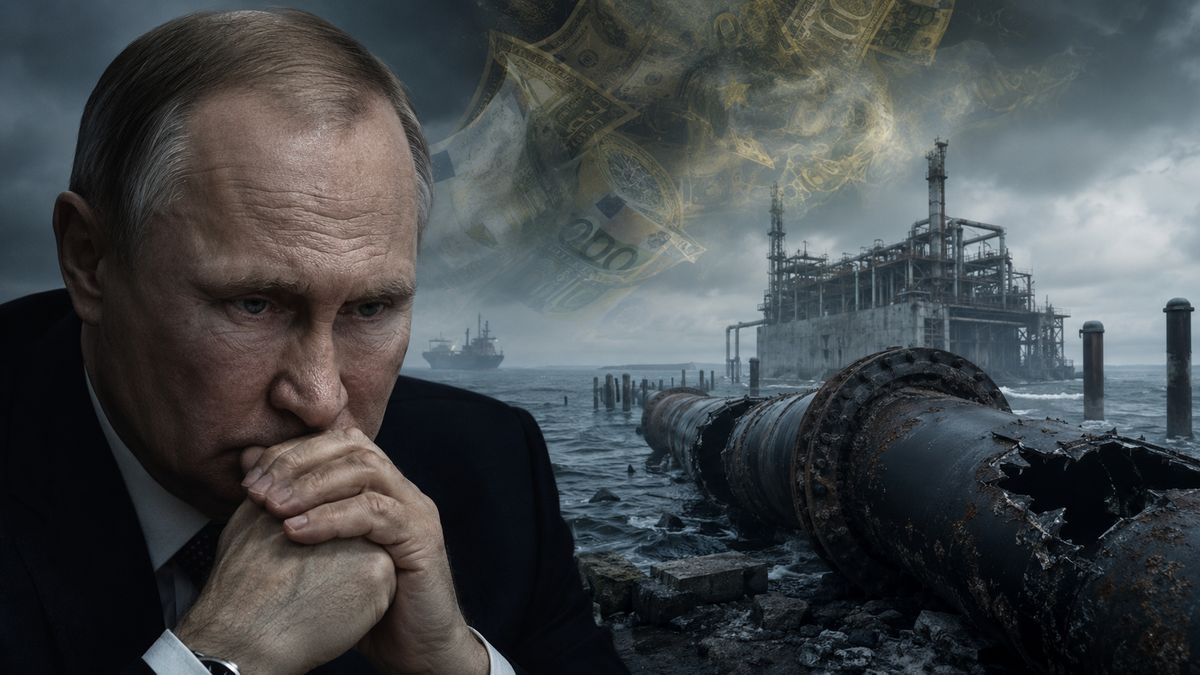
Vladimir Putin has brought Nord Stream back to the center of European energy discourse, claiming that Russia is ready to resume gas deliveries to Germany through the pipeline damaged in the 2022 explosions. The statement was made in St. Petersburg on the sidelines of the economic forum organized by Russia, putting back on the table one of the most sensitive issues of European energy security: the direct relationship between Russian gas, German industry, and sanctions policy. According to Reuters, Putin said that one of the two lines of Nord Stream 2 remained intact and could be used for deliveries if Germany decided to buy Russian gas again. The Russian leader indicated a capacity of up to 28 billion cubic meters per year and argued that Berlin should secure the lifting of US sanctions applied to the project. This rhetoric must be read with utmost caution. There is no announced German-Russian agreement, no decision to resume flows, and no confirmed shift in Berlin's energy policy. Instead, the statement marks an offensive return by the Kremlin to the topic of Russian gas, at a time when energy costs remain a major political issue in Germany. An intact line, but a blocked political project Nord Stream 2 was built to double the direct transport route of Russian gas to Germany through the Baltic Sea, but it never entered commercial operation. The project was politically blocked before Russia's full-scale invasion of Ukraine, and the September 2022 explosions severely damaged the Nord Stream 1 and Nord Stream 2 infrastructure. Reuters previously reported that three of the four pipelines were ruptured, while one line of Nord Stream 2 remained intact. This distinction is essential. The fact that a line might be technically usable does not mean flows can resume automatically. Nord Stream 2 is caught between sanctions, German political decisions, the European framework for phasing out Russian energy imports, and the deterioration of the strategic relationship between Moscow and Berlin. Clean Energy Wire describes Nord Stream 2 as a symbol of the failure of Germany's bet on Russian gas, after Russia used energy supplies as a geopolitical tool against Europe. Since 2022, the pipeline has become more than just energy infrastructure: it has become a benchmark of the strategic dependence that Germany is trying to reduce. AfD pushes the Russian gas issue into German politics Putin's statements come in the same context in which an official of the German AfD party, Markus Frohnmaier, met in St. Petersburg with key representatives of the Kremlin and Gazprom. Reuters notes that Frohnmaier called for the recommissioning of Nord Stream and the resumption of energy trade with Russia, despite warnings from the German Foreign Ministry. This element shifts the political weight of the issue. The Kremlin is not just talking about a pipeline. It is speaking to a Germany where energy costs, industrial competitiveness, and the relationship with Russia have once again become electoral mobilization topics. The AfD is trying to link domestic economic pressure to the idea of returning to cheap Russian gas, and Moscow is using this opening to test the cracks in the German and European consensus. Reuters notes that the AfD is the largest opposition force in Germany and criticizes the position of the government led by Friedrich Merz towards Russia and Ukraine. The Nord Stream issue can thus become a tool of domestic political pressure, not just an energy file. The EU has moved in the opposite direction Putin's statement directly contradicts the formal direction adopted by the European Union. The European Commission points out that on January 26, 2026, EU member states adopted the regulation on the gradual phasing out of Russian natural gas imports, both via pipelines and as LNG. The regulation was published in the Official Journal of the EU on February 2, 2026, turning the REPowerEU roadmap into European law. The regulation aims for a gradual but permanent ban on Russian natural gas imports to strengthen Europe's energy security and independence. Within this framework, a resumption of flows through Nord Stream would mean a major political shift, not a simple commercial decision between buyer and supplier. The European Commission also highlights the scale of this repositioning: the share of Russian gas in EU imports fell from 45% in 2021 to 12% in 2025, and the volume of Russian gas imports dropped from 152 billion cubic meters in 2021 to 36 billion cubic meters in 2025. Germany has changed its supply architecture Germany entered the 2022 energy crisis with a heavy dependence on Russian gas. Since then, Berlin has accelerated LNG imports, built floating terminals, reduced consumption, diversified contracts, and lowered the alert level regarding gas supply security. Reuters reported in 2025 that Germany was no longer importing Russian gas via pipelines or LNG, and the German government considered the supply stable, although prices remained…
Aurora AI — Independent Editorial Board
The NRG-IA newsroom continuously monitors Romanian energy markets, ANRE regulatory decisions, and national grid telemetry (SEN/SNT). We deliver independent intelligence anchored exclusively in official primary data.
Editorial Charter, Ethics & Verification Methodology →