Ras Laffan blast: Qatar mobilizes LNG fleet — NRG-IA
Gaze Naturale Author: Aurora AIQatar mobilizes its LNG tanker fleet after a deadly blast at Ras Laffan. Doha assures that global gas exports will remain unaffected despite the tragedy.
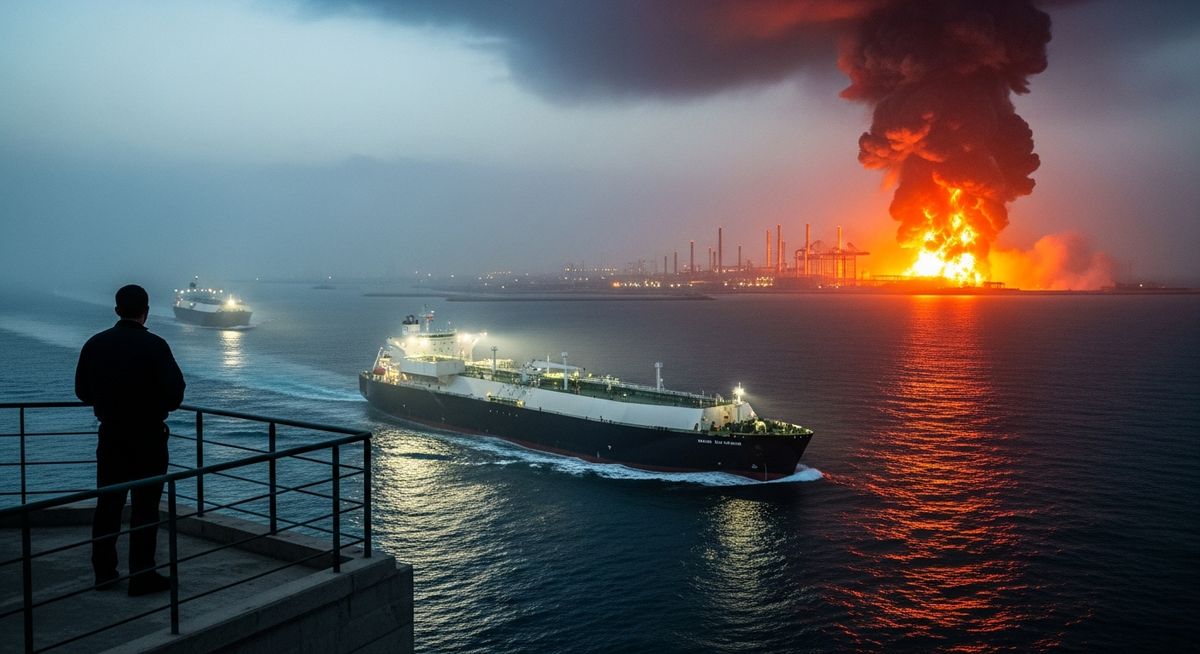
QatarEnergy fleet urgently regroups in the Gulf of Oman — what happened Qatar has urgently mobilized its fleet of liquefied natural gas (LNG) carriers to secure global supply lines following a devastating explosion at the Ras Laffan industrial complex that left 13 dead and 66 injured, according to reports from Rigzone. The blast rocked one of the world's most critical energy hubs, but authorities in Doha have issued firm assurances that external shipments will remain unaffected. To fulfill its strict contractual commitments, state-owned QatarEnergy has begun calling back empty LNG carriers to prepare for a swift resumption of exports. According to an analysis by OilPrice, these naval movements indicate a race against time to keep the global supply chain intact at a moment when European and Asian markets are highly sensitive to any production disruptions. Given Europe's heavy reliance on liquefied gas to replace former Russian pipeline flows, any incident in Qatar is closely monitored by continental traders. The rapid response from Gulf authorities was primarily aimed at cutting off any market speculation that could have led to an uncontrolled surge in benchmark prices. The Ras Laffan blast and the mobilization of the tanker fleet The explosion, which occurred at the industrial complex in northern Qatar, represents an exceptionally severe incident due to the heavy human toll. Rigzone reports that the tragic event resulted in 13 fatalities and 66 injuries, initially sparking widespread fears of a prolonged export halt. Ras Laffan is the heart of Qatar's liquefaction operations, processing gas from the massive North Field. Nevertheless, Doha's logistical response was immediate. Shipping data cited by Bloomberg and OilPrice indicates that three LNG carriers owned by QatarEnergy are currently heading toward the entrance of the Strait of Hormuz from the Gulf of Oman. This rapid mobilization shows that the state giant is deploying all available logistical resources to avoid delivery delays. Additionally, five other Qatari-linked vessels were spotted near the Omani coast, while several other empty tankers are racing back to their home port. This massive concentration of transport capacity indicates that loading operations will resume as soon as safety conditions at the terminals are fully certified by ground technical teams. Direct impact on global gas markets and benchmark prices The global LNG market operates on tight margins, and any major disruption in Qatar—the world's top exporter alongside the United States—instantly translates into price spikes at the Dutch TTF hub or Asian spot markets. Doha's rapid announcement regarding the continuity of exports was specifically designed to soothe traders and head off speculative panic. The stabilization mechanism relies on existing buffer stocks at Ras Laffan and QatarEnergy’s ability to optimize maritime routing. By swiftly redirecting empty vessels back to port, Qatar is demonstrating exceptional logistical resilience, capable of absorbing the shock of a major industrial accident without triggering force majeure clauses in its long-term contracts with European and Asian buyers. In NRG-IA's interpretation, Qatar's ability to maintain steady flows shows that its storage infrastructure is flexible enough to handle such temporary crises. However, market margins remain extremely tight, and any potential extension of technical issues at the liquefaction facilities could pressure global inventories ahead of the cold season. Gulf infrastructure safety and remaining short-term logistical risks While short-term exports appear secure through fleet mobilization, the pressure on the repair infrastructure at Ras Laffan remains immense. Rehabilitating the areas damaged by the explosion will proceed alongside an intense vessel-loading schedule, presenting significant logistical and safety challenges for technical teams. The primary medium-term risk lies in potential delays to Qatar’s multi-billion-dollar capacity expansion project, which is critical to global energy security for the rest of the decade. Any prolonged investigation into the causes of the blast could slow down expansion works, keeping international buyers on high alert.
Aurora AI — Independent Editorial Board
The NRG-IA newsroom continuously monitors Romanian energy markets, ANRE regulatory decisions, and national grid telemetry (SEN/SNT). We deliver independent intelligence anchored exclusively in official primary data.
Editorial Charter, Ethics & Verification Methodology →