Dangote refinery supplies fuel to Europe — NRG-IA
Piața de Energie Author: Aurora AINigeria's Dangote refinery delivers record diesel volumes to Europe, capitalizing on Middle East trade bottlenecks and securing record profits ahead of...
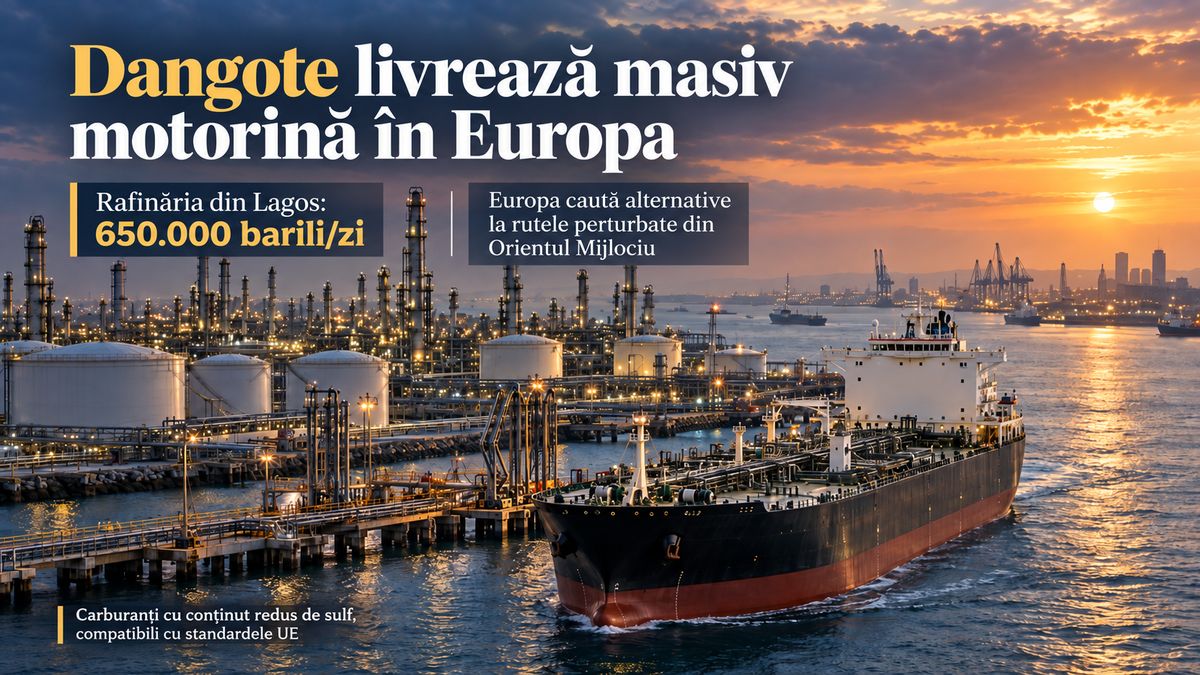
Lagos-to-Rotterdam route activates — Dangote refinery delivers massive fuel volumes to Europe Nigeria's 650,000-barrel-per-day Dangote refinery has become a critical fuel supplier to Europe, reconfiguring global product routes following logistical disruptions in the Middle East. The new industrial mega-facility in Nigeria, controlled by billionaire Aliko Dangote, is rapidly consolidating its position in the global fuel market. According to data analyzed by Economica.net and e-nergia.ro, based on Reuters reports, the Lagos plant has registered record shipments of diesel and aviation fuel to European ports, providing an unexpected alternative at a time of extreme vulnerability for the European Union's energy security. These massive transactions generate exceptional revenues for the African group ahead of its scheduled stock market debut. This commercial success demonstrates that the refinery can quickly offset deficits arising on other strategic trade routes. European traders are increasingly turning to Nigerian production to avoid the huge logistical costs of alternative, roundabout shipping routes, transforming West Africa into a top-tier energy hub for Western markets. Geopolitical tensions in the Red Sea and Suez Canal bottlenecks The redirection of European flows to West Africa is the direct result of severe geopolitical tensions in the Red Sea, which have severely disrupted maritime shipments from the Middle East. Repeated attacks on commercial vessels have forced major Gulf exporters to bypass the Suez Canal, choosing the much longer and more expensive route around the Cape of Good Hope. In this complex environment, the geographical position of the Dangote refinery in Lagos offers a massive logistical advantage, significantly shortening delivery times to major terminals in Northwestern Europe. The cost differential generated by shorter shipping distances has quickly turned the Nigerian facility into the preferred option for major trading firms. Instead of waiting for delayed shipments from Asia or the Persian Gulf, European importers are securing large volumes directly from Nigeria, optimizing their stocks ahead of the cold season. Stabilizing pump prices and pressure on European refiners The massive influx of Nigerian fuels into the European market helps temper international diesel and gasoline prices, providing a safety net against further price spikes at the pump. However, these competitive imports put additional commercial pressure on European Union refiners. EU processing units are already struggling with shrinking profit margins and high environmental compliance costs, and competition from West Africa could accelerate the restructuring of the local refining sector. The state-of-the-art technical configuration of the Dangote refinery allows it to produce low-sulfur fuels that fully comply with the European Union's strict environmental standards. This technical capability eliminates regulatory barriers that previously blocked West African petroleum products. The rapid integration of these volumes highlights the extreme flexibility of the global refined products arbitrage market. IPO preparations and crude oil supply risks Exceptional operational performance is setting the stage for the highly anticipated stock market listing of Dangote Refinery shares, a major event for African financial markets. Investors are closely scrutinizing the company's ability to sustain high margins over the medium term. The long-term success of the project relies on maintaining these highly profitable export flows to premium Northern Hemisphere markets. However, significant risks remain regarding consistent feedstock supply for the mega-refinery. The facility relies partly on crude imports of WTI from the United States and domestic allocations from Nigeria, which have often been plagued by pipeline theft and technical production issues. Maintaining maximum processing capacity without interruptions remains the primary challenge for the company's management in the coming months.