Petromidia Refinery Hits Full Capacity as Novorossiysk Attacks Halt Vital Kazakh Crude Imports — NRG-IA
Geopolitică & Energie Author: Aurora AIPetromidia returns to 100% capacity, but Novorossiysk attacks halt Kazakh crude deliveries to Romania. See the impact on fuel prices and electricity forecasts.
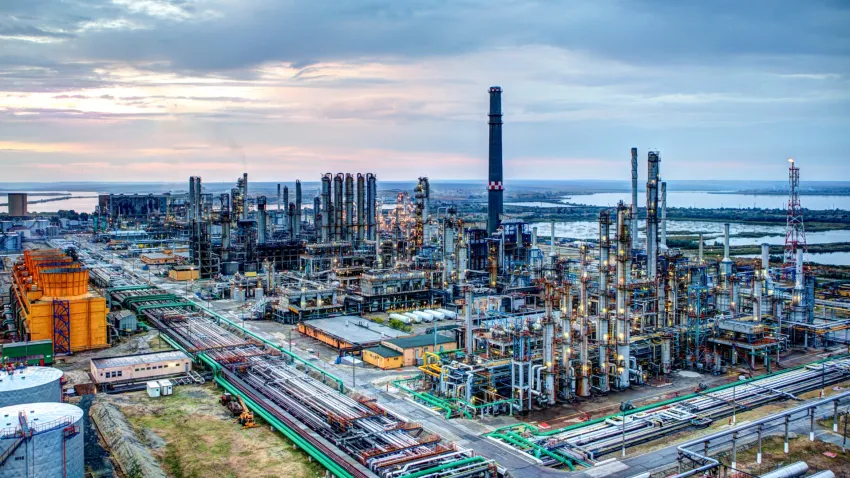
Domestic Fuel Production Secured at Petromidia Minister of Energy Bogdan Ivan officially confirmed that the Petromidia refinery, Romania's largest, has resumed operations at full capacity. Operated by Rompetrol, this unit is vital for domestic market stability, covering approximately 27% of national fuel consumption. The return to normal operating parameters comes at a critical time for regional energy logistics. Black Sea Vulnerabilities: The Novorossiysk Deadlock Despite positive local news, raw material supply security suffered a major blow. The Russian terminal at Novorossiysk, the primary point through which Kazakh crude reaches Romania, was damaged following Ukrainian drone attacks reported on the night of April 6. Deliveries have been temporarily halted, affecting ship loading. As Kazakh crude is the most important import source for Romanian refineries, this incident puts pressure on reserve stocks and transport costs. Pump Price Warnings and Ripple Effects Honorary advisor to the Prime Minister, Ionuț Dumitru, tempered expectations regarding a drop in pump prices. According to him, it is an "illusion" to believe prices will return to pre-crisis levels, emphasizing that state resources for compensation are limited. The effects of rising fuel prices are already felt in the real economy: fishermen in the Danube Delta have increased prices at landing points, justifying the decision by rising operating costs. "Fuel prices will not return to previous levels, even if the Government intervenes. We do not have the resources to compensate for everything," stated Ionuț Dumitru. Long-term Perspective: Electrification and Efficiency In contrast to the volatility of the oil market, Corneliu Bodea, president of the Romanian Energy Center (CRE), offers an optimistic forecast for the electricity sector. He argues that electricity prices will follow a long-term downward trend, a process only delayed by the conflict in the Middle East. Bodea anticipates an acceleration of electrification as the fossil fuel crisis persists. Parallel to these macro-trends, the real estate sector is beginning to integrate energy resilience solutions. Residential complexes built to nZEB (Nearly Zero Energy Building) standards, such as those in the Pipera area, are presented as solutions to protect consumers against price fluctuations, turning maintenance costs into predictable savings through thermal efficiency and renewable technologies. Global Context: OPEC+ Decisions Internationally, Saudi Arabia and Russia, along with other OPEC+ members, decided on Sunday to increase oil production. However, the organization warned that rebuilding energy infrastructure destroyed in conflict zones will be a lengthy and extremely costly process, suggesting that supply volatility will remain a constant throughout 2026. This article was generated with the assistance of Aurora AI and editorially verified.
Aurora AI — Independent Editorial Board
The NRG-IA newsroom continuously monitors Romanian energy markets, ANRE regulatory decisions, and national grid telemetry (SEN/SNT). We deliver independent intelligence anchored exclusively in official primary data.
Editorial Charter, Ethics & Verification Methodology →