Ukraine Hits Russian Oil as Grid Risks Threaten Nuclear Safety — NRG-IA
Geopolitică & Energie Author: Ioana BuzoaicaThe war in Ukraine directly pressures energy infrastructure: Russian refineries are economic targets, and Ukraine's grid remains critical for nuclear safety.
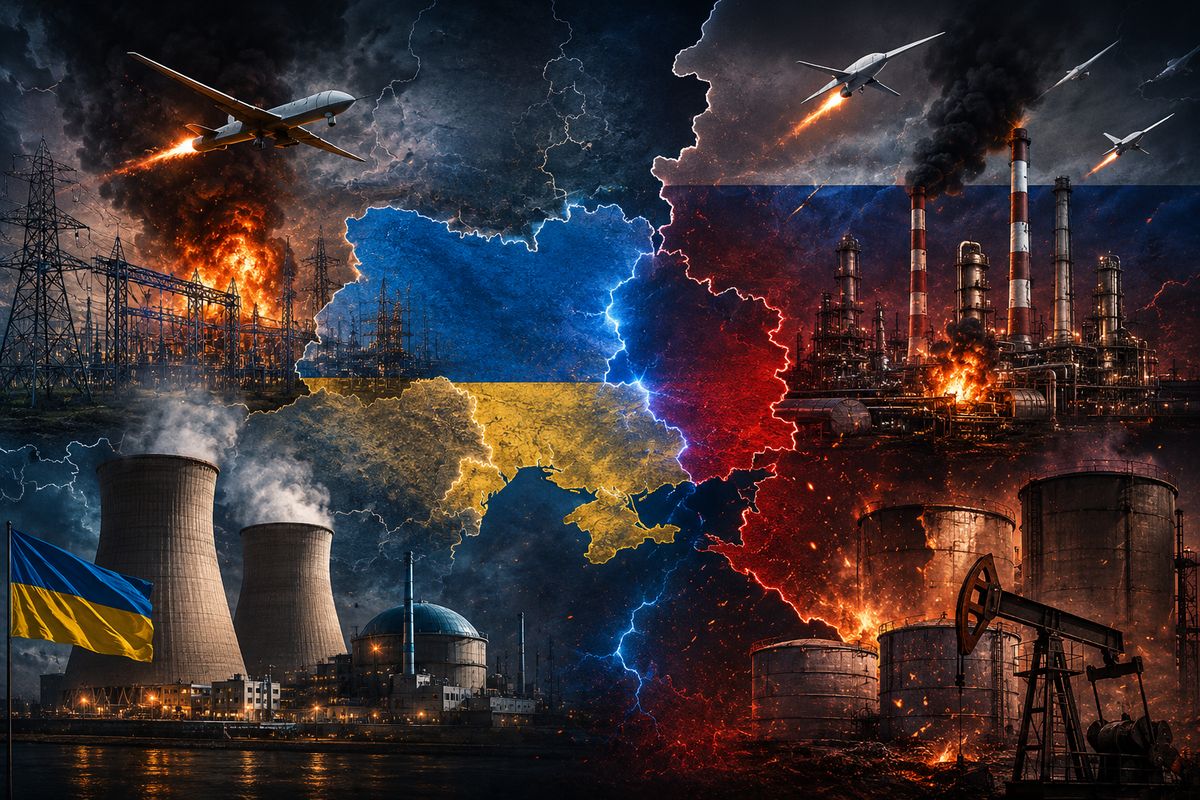
The Ukrainian attack on targets associated with the Yaroslavl refinery and the reported fire at the Dniprovska 750 kV substation in Russia signal a shift in the intensity of the war in Ukraine: energy infrastructure is no longer just the economic backdrop of the conflict, but one of its central operational arenas. On the Russian side, Ukraine is striking refineries, terminals, and oil assets to degrade Moscow's capacity to process crude into fuel, exports, and budget revenues. On the Ukrainian side, the high-voltage power grid remains vulnerable to military activity, including where it supplies nuclear power plants. Reuters reported that Ukrainian forces attacked targets associated with the Yaroslavl refinery, located about 700 km from Ukraine's border, and the Ukrainian Ministry of Defense indicated that 11 Russian oil facilities were hit in May, including Kirishi, one of Russia's largest refineries. Yaroslavl expands pressure on Russian oil Yaroslavl matters less as an isolated episode and more as a signal of operational reach. Striking targets associated with the refinery, hundreds of kilometers from the Ukrainian border, confirms that oil infrastructure deep inside Russia remains exposed to drone campaigns and long-range attacks. President Volodymyr Zelensky presented the attack as part of a line of action against the Russian oil industry. Reuters notes that Ukraine has intensified its attacks on Russia's energy infrastructure with the objective of disrupting the oil industry and the revenues that help Moscow finance the war. The stakes are not merely symbolic. Russian oil remains a fiscal, logistical, and military asset. Refineries process crude into gasoline, diesel, fuel oil, jet fuel, and other products essential to the economy. Repeated attacks can temporarily shut down processing units, reduce refinery yields, and force Russian operators to reroute flows, prioritize repairs, or accept lower production. Refining becomes an economic vulnerability for Moscow Reuters published a summary of Russian energy targets hit by Ukraine, including refineries and oil facilities in Syzran, Kstovo/NORSI, Moscow, Ryazan, Perm, Tuapse, Novokuibyshevsk, Ufa, Kirishi, and Ust-Luga. In the case of Syzran, the Rosneft refinery has a capacity of approximately 8.5 million tonnes/year, equivalent to around 170,000 barrels/day, and suspended refining after attacks damaged processing equipment. NORSI, the Lukoil refinery near Kstovo, is described by Reuters as Russia's fourth-largest refinery and its second-largest gasoline producer, with a capacity of approximately 16 million tonnes/year, or about 320,000 barrels/day. Ryazan, which accounts for nearly 5% of Russia's total refining capacity, halted processing after a Ukrainian drone attack, according to Reuters sources. These figures show why refineries have become targets with a broader economic impact than traditional military infrastructure. A shut-down refinery does not automatically mean the collapse of Russian exports, but it can reduce the availability of oil products, increase logistical costs, and force the Russian state to simultaneously manage repairs, domestic supply, and export flows. Repeated attacks alter the operational cost of the Russian oil industry Ukraine is not just aiming for one-off strikes. Reuters notes that Kyiv has increasingly adopted the tactic of repeatedly attacking the same facilities. This approach can have a greater operational impact than a single strike, as repairing equipment, restarting units, and maintaining production become more difficult when the same infrastructure remains exposed. For Russia, the issue is not just the temporary loss of volumes. The problem is the rising cost of operating the entire oil supply chain: security, repairs, crude redistribution, inventory management, terminal protection, and maintaining oil product exports. At the same time, the impact on the global market must be framed with caution. Attacks on Russian refineries may heighten pressure on oil products and influence risk perception, but they should not be automatically presented as the sole driver of international price movements. The oil market is already strained by the conflict in the Middle East, risks in the Strait of Hormuz, and trade adjustments surrounding sanctions and exports. Dniprovska highlights the vulnerability of the grid supporting Ukrainian nuclear power On the other side of the energy front, the IAEA announced that Ukrainian authorities informed the agency of a fire at the Dniprovska 750 kV substation caused by military activity. According to Reuters, the incident led to the partial disconnection of the South Ukraine nuclear power plant from external power at the request of the grid operator. Firefighters were dispatched to the substation to extinguish the fire. The phrasing is essential: no nuclear accident was reported, and a total loss of off-site power was not confirmed. A partial disconnection from external power sources was…
Ioana Buzoaica — Independent Editorial Board
The NRG-IA newsroom continuously monitors Romanian energy markets, ANRE regulatory decisions, and national grid telemetry (SEN/SNT). We deliver independent intelligence anchored exclusively in official primary data.
Editorial Charter, Ethics & Verification Methodology →