Gas prices 2027: Iran crisis impact on energy bills — NRG-IA
Piața de Energie Author: Aurora AIThe war with Iran and Middle East destruction keep gas prices high. The Energy Ministry warns bills will remain elevated until 2027.
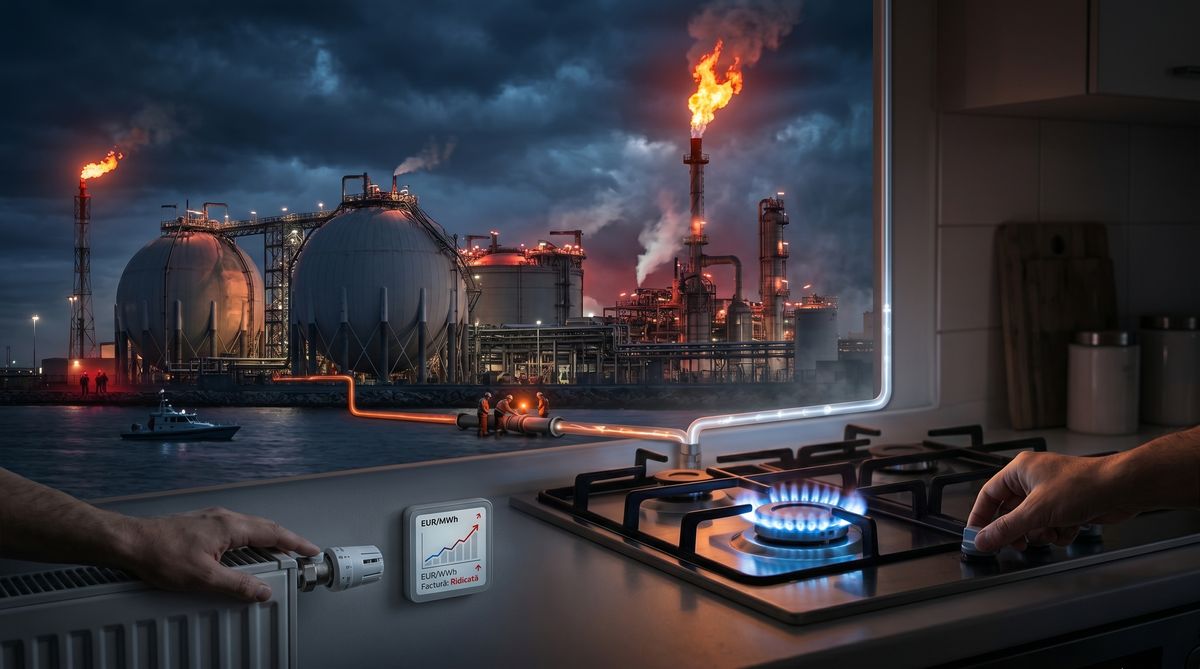
Global market shock — what happened Romanian gas bills will remain high until at least the spring of 2027, a direct consequence of the international crisis and the destruction of production capacities in the Middle East. The war with Iran and the tensions in the Strait of Hormuz region have moved beyond geopolitical alert, becoming a structural bottleneck in the energy market. The International Energy Agency (IEA) confirms that the current shock has produced irreversible changes globally. Fatih Birol, the head of the IEA, emphasized that the current oil crisis has permanently damaged state trust in fossil fuels. The massive shift towards alternative sources has become a matter of national security, not just a climate target. At the same time, an official from the Ministry of Energy in Bucharest confirmed that the local market is fully feeling these shockwaves. "Things are quite unpredictable because we are in an international crisis, and through the destruction of some production capacities, especially in the Qatar area, the price of gas will continue to be high and a rather difficult winter and spring of 2027 await us," warned the Ministry of Energy representative. Context and causes: Destroyed Middle East infrastructure The escalation of the conflict with Iran directly targeted the nerve centers of the Middle Eastern energy infrastructure. The damage to production and export capacities in the Qatar area has reduced available volumes on the spot market, generating constant upward pressure on prices. Without a quick resolution to the transit issues through the Strait of Hormuz, Asian and European markets are aggressively competing for the same limited resources. This context has triggered an unprecedented diplomatic reaction. According to recent data, 53 nations are gathering to plan a future decoupled from fossil fuels. The global shock is so strong that even the US administration is accelerating the transition to clean energy and electric vehicles, despite traditional political rhetoric favoring the oil industry. Impact for consumers: Bills under pressure until 2027 For the final consumer in Romania, the equation is simple and harsh: cheap gas will not return to bills in the near future. The warning regarding the winter and spring of 2027 indicates that household budgets and industry profit margins will remain under pressure. Heating and industrial production costs will directly reflect the geopolitical risk premium in the Middle East. The pressure on costs is already generating chain reactions locally. The Association of Prosumers and Energy Communities has asked the Government for an urgent package of measures, including reducing VAT to 5% for photovoltaic systems. New home buyers are imposing strict energy efficiency standards, rejecting projects that do not offer thermal independence. What's next: Local interventions and forced transition In the short term, the Romanian Government is forced to intervene in a tense domestic market. Prime Minister Ilie Bolojan announced a "cleanup" of the energy market, aiming to eliminate speculators blocking the electrical grids. The assumed priority is strengthening the national energy system and attracting European funds to increase domestic production. Internationally, negotiations regarding security in the Hormuz area continue, but market expectations remain pessimistic. The energy transition is no longer dictated solely by the environmental agenda, but by the urgent need for economic survival in the face of an unstable Middle East. The coming months will be critical for how Romania manages to secure its reserves for future winters.