Reshaping the National Energy Mix: How the Mintia Grid Connection and Hormuz Reopening Will Impact June Electricity Prices — NRG-IA
Piața de Energie Author: Aurora AIAnalysis on how the 575 MW Mintia plant connection and the Hormuz Strait reopening will stabilize Romanian energy bills starting this June.
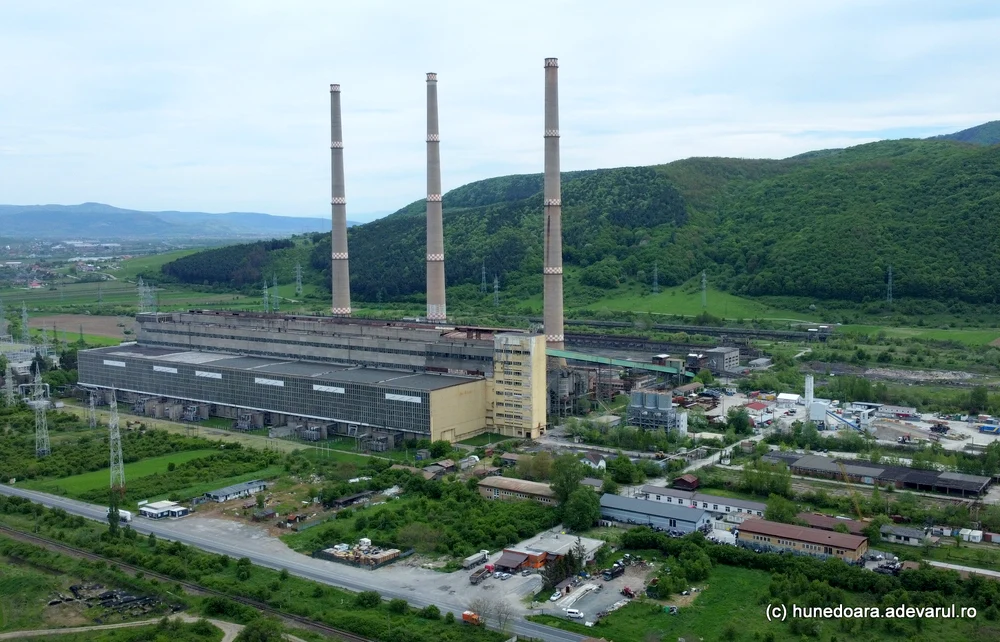
A Market in Transformation Spring 2026 marks a turning point for the Romanian energy sector, defined by a rare overlap of global geopolitical events and domestic technical milestones. Following a period of extreme volatility caused by the Middle East conflict—which generated estimated losses of $50 billion in the oil market over just 50 days—price indicators are finally showing signs of stabilization. This external easing coincides with a historic moment for the National Energy System (NES): the testing phase of the first large-scale power unit built in Romania in decades. The Global Factor: Reopening the Strait of Hormuz According to recent data, Iran's announcement regarding the reopening of the Strait of Hormuz to commercial tankers has acted as a decompression mechanism for international exchanges. Oil prices have returned to pre-conflict levels, eliminating the "risk premium" that had indirectly inflated the cost of conventional electricity and balancing services. The impact is visible not only in fuel prices but also in investor confidence , with US stocks reaching new records following the restoration of trade flows from the Persian Gulf. "The world lost $50 billion in oil in just 50 days of war, a disruption equivalent to all vehicles globally not driving for 11 days," analysts noted via Profit.ro. This return to normalcy provides Romania with a necessary window to calibrate its procurement strategy for the summer season, when cooling demand typically strains the grid. The Domestic Pillar: The Mintia Giant Takes the Stage The most significant news for Romania's energy security comes from Transelectrica: on May 15, 2026, the first turbine of the new Mintia power plant will be connected to the national grid. Developed by Mass Group Holding, the Mintia plant is set to become the largest gas-fired power unit in Europe, with a final capacity of 1,700 MW. Phase 1 (May 15): Connection of the first 575 MW for testing. Technology: Combined cycle, offering superior efficiency compared to old coal units. DAM Impact: Introducing a significant amount of baseload energy will put downward pressure on Day-Ahead Market (OPCOM) prices, reducing reliance on expensive peak-hour imports. This new capacity acts as a "shield" against regional fluctuations, providing the NES with the stability needed when renewable production (wind or solar) is low. Hidroelectrica and the Profitable Governance Model In parallel with new private investments, the performance of state-owned companies remains a critical factor for the final price paid by consumers. Vice-Premier Oana Gheorghiu recently highlighted Hidroelectrica's success, describing it as a model for transforming state entities into "profitable entities for Romanians." Hidroelectrica’s profitability is not just an accounting figure; it is a guarantee that Romania's cheapest producer can maintain competitive offers for household consumers and fund the maintenance necessary to keep prices low in the long run. Regional Tensions: Russian Gas and the "Slovak Front" Price outlooks are, however, nuanced by legal developments within the European Union. Slovakia, through Prime Minister Robert Fico, has announced its intention to challenge the EU's ban on Russian gas imports at the CJEU, which is set to take full effect in January 2026. Simultaneously, there are signals that Russian oil flows through the Druzhba pipeline to Hungary and Slovakia could resume shortly. These moves indicate a fragmentation of European energy policy that could create price discrepancies between member states. For Romania, completing the Mintia plant becomes a strategic priority to ensure independence from these regional legislative and logistical turbulences. Consumer Implications and Forecasts In the short term (June - August 2026), we expect electricity prices to stabilize, with a slight downward trend in the wholesale market, contingent on the success of the Mintia tests. If the 575 MW enter the grid consistently, Romania will reduce its import requirements during critical hours of the day. Factors to Watch: Hydropower Reservoir Levels: Essential for Hidroelectrica to remain the primary price regulator. Slovakia-EU Dispute Evolution: Could influence regional natural gas prices, the primary fuel for the new Mintia plant. Stability in Hormuz: Any new tension will quickly erase recent gains on commodity exchanges. In conclusion, Romania is currently benefiting from a favorable conjuncture. The reopening of global trade routes and the completion of the first phase of the Mintia project create the conditions for a summer season with predictable prices, providing a much-needed breather for the national economy after the successive shocks of recent years. This article was generated with the assistance of Aurora AI and editorially verified.
Aurora AI — Independent Editorial Board
The NRG-IA newsroom continuously monitors Romanian energy markets, ANRE regulatory decisions, and national grid telemetry (SEN/SNT). We deliver independent intelligence anchored exclusively in official primary data.
Editorial Charter, Ethics & Verification Methodology →