Romania solar record: 2690 MW peak production — NRG-IA
Energie Regenerabilă Author: Aurora AIRomania hit a new historic solar power record: 2,690 MW at 12:43 PM, temporarily covering nearly two-thirds of national electricity consumption.
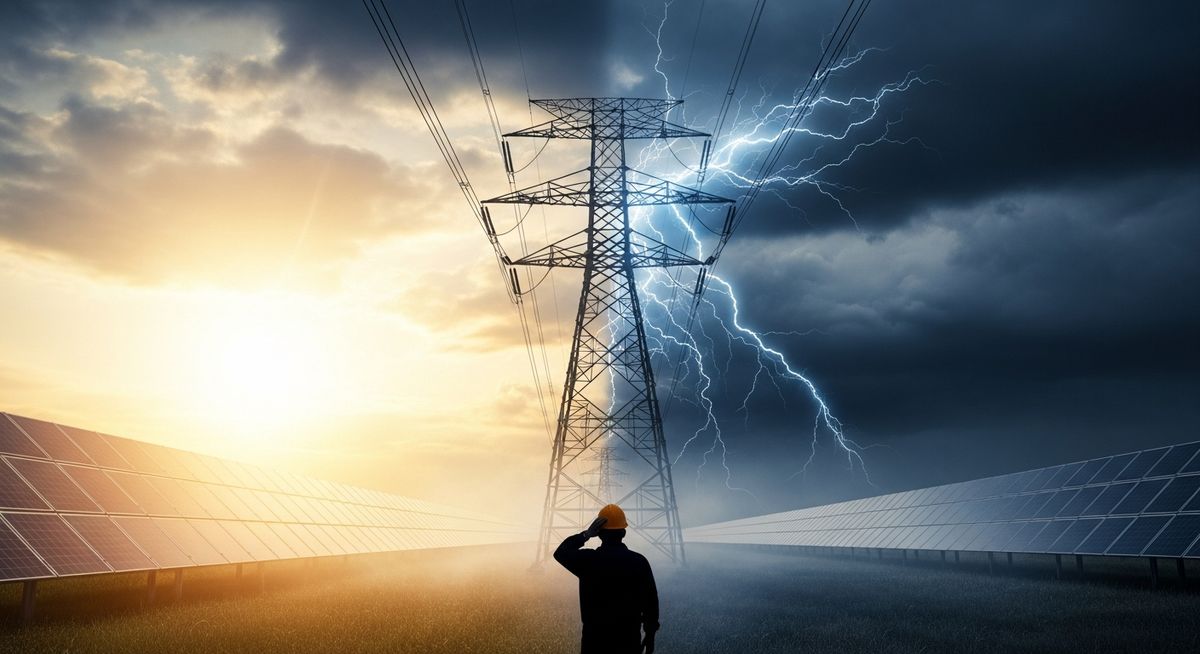
The Historic 2,690 MW Photovoltaic Peak on Transelectrica's Grid — What Happened Romania's solar parks delivered a historic record of 2,690 MW to the national grid today at 12:43 PM, covering nearly two-thirds of the country's total electricity consumption. This performance marks a new peak for the national energy system, breaking the previous record set just eight days ago, according to reports by specialized publications e-nergia and Economica.net. At the peak production moment, national electricity consumption drawn from the grid was relatively low, allowing solar power to dominate the generation mix. Official measurements from the national transmission system operator, Transelectrica, only account for dispatchable photovoltaic capacities. This means Romania's actual solar generation at midday was significantly higher when factoring in the contribution of thousands of prosumers (households and businesses with rooftop panels) who directly consume their own generation, massively reducing net demand from the national grid. However, this instantaneous abundance of clean energy highlights a structural vulnerability: the national grid is becoming highly weather-dependent. A simple cloud front passing over major photovoltaic basins in the south and west of the country can slash this output by over 1,500 MW in just a few minutes, forcing dispatchers to scramble for rapid balancing resources. Accelerated Expansion of Dispatchable Parks and Maximum Summer Solar Radiation The direct cause of this new historic record is threefold: the explosion of installed capacity over the past year, completely clear skies across the country, and the optimal angle of solar radiation typical of the summer solstice period. Over the last 12 months, dozens of large-scale solar parks have been connected to the high-voltage grid, driven by European funding schemes and massive private investor interest in decarbonization. In addition to large commercial capacities, the low and medium-voltage grids are feeling the cumulative impact of over 120,000 active prosumers. On hot, sunny days, these small producers fully cover their own consumption and inject the surplus into distribution networks, leaving large coal and gas plants without a significant portion of their traditional midday customers. Negative Price Pressure on OPCOM and Technical Grid Imbalance Risks The consequences for the energy market are immediate and severe for both conventional producers and renewable operators without fixed-price contracts. During hours of peak solar production, electricity prices on the Day-Ahead Market (DAM), managed by OPCOM, tend to plummet, frequently hitting zero or even negative values. Photovoltaic producers selling directly to the market risk failing to amortize their investments during these peak hours due to oversupply penalties. Technically, Transelectrica is mandated to maintain a perfect balance between production and consumption. When solar power floods the grid, gas or coal-fired plants—notorious for their low flexibility—cannot be shut down instantly without incurring massive costs. The result is a forced export of electricity to neighboring countries (Hungary, Bulgaria) at extremely low or negative prices, meaning Romania essentially pays other operators to take its excess electricity. The Storage Mandate and New Dispatching Rules The short-term outlook points to a single viable solution to avoid technical and commercial gridlocks: the accelerated deployment of Battery Energy Storage Systems (BESS). Regulators and the Ministry of Energy are drafting new rules that could condition the grid connection of future large-scale solar parks on having dedicated storage units capable of holding at least 20% of the park's installed capacity for a minimum of two hours. Without these massive battery investments, which have a critical implementation deadline of late 2026 under PNRR funding, Transelectrica will increasingly have to resort to curtailment. This involves the forced, temporary disconnection of solar parks from the grid during overproduction periods without financial compensation for operators, a scenario that could severely disrupt green energy business models.