Romania Hits Historic Solar Record Over 2,500 MW — NRG-IA
Piața de Energie Author: Aurora AIRomania's power grid hit a historic solar record of 2,516 MW today, covering over 60% of national electricity consumption at midday.
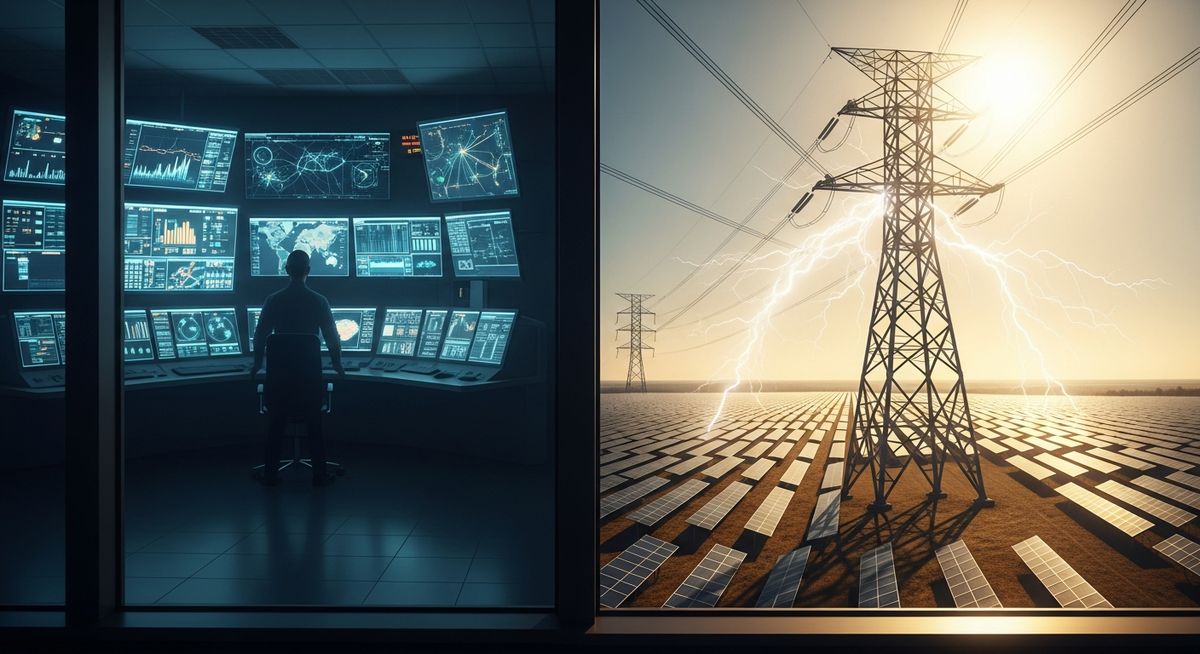
Historic solar production peak in the national grid — what happened Romania's national power grid registered a historic record of 2,516 MW generated from solar sources today. This value represents the highest instantaneous electricity production from solar sources ever recorded in the country. The achievement marks a turning point in the structure of the national energy mix, demonstrating the rapid pace at which new production capacities are being integrated into the national grid. According to data published by specialized publications e-nergia and Economica.net , dispatchable solar parks secured over 60% of Romania's total electricity consumption at 13:12. Real-time monitoring by the national transmission system operator Transelectrica confirmed that the massive flow of solar energy covered the vast majority of domestic demand during that specific hour. It is important to note that this figure of 2,516 MW only includes dispatchable solar parks—meaning large-scale utility units reported directly to the national dispatch center. Actual nationwide production was significantly higher, considering the contribution of hundreds of thousands of prosumers (residential and commercial) whose rooftop installations inject power directly into low-voltage distribution grids, reducing gross dispatchable demand. Accelerated capacity expansion combined with optimal weather conditions Reaching this historic milestone is the direct result of two major factors: perfect late-spring weather conditions and the massive growth of installed capacities over the last two years. Unlike hot summer days, when the efficiency of photovoltaic panels drops due to the overheating of silicon cells, moderate late-May temperatures combined with completely clear skies allow installations to operate at peak efficiency. At the same time, the grid connection rate for new solar parks has accelerated significantly. Financial support schemes funded by European funds, such as the National Recovery and Resilience Plan (PNRR) and the Modernization Fund, have stimulated massive investments in the renewable sector. This influx of private and public capital has transformed Romania from a net energy importer during midday hours into a temporary exporter. Downward pressure on OPCOM spot prices and grid balancing risks The massive influx of solar energy has immediate consequences for the electricity market and grid management. On the Day-Ahead Market (DAM) managed by OPCOM, electricity prices during midday hours tend to drop drastically, frequently hitting zero or even negative territory. This phenomenon reduces the average procurement cost for suppliers, although the impact on final consumer bills is only visible in the medium to long term due to regulated tariffs and long-term contracts. However, this abundance of green energy poses major technical challenges for Transelectrica. Because solar power is intermittent, sudden variations in production (caused by cloud cover or sunset) must be compensated instantly by ramp-up flexible generation units, such as hydropower or gas-fired plants. This balancing effort generates additional costs in the balancing market, which are ultimately borne by all market participants. The urgent push for battery storage and grid reinforcement To avoid energy losses through voluntary production limits (curtailment) during overproduction periods, Romania's energy system urgently needs battery storage capacities. Without a storage infrastructure capable of absorbing the midday solar surplus and discharging it into the grid during evening peak hours, the transmission network will continue to operate at its safety limits. The next critical step for authorities and investors is the completion of storage projects funded through PNRR, whose commissioning deadlines are closely monitored. Additionally, distribution system operators must accelerate investments in digitalizing and reinforcing low- and medium-voltage grids to manage the bidirectional power flows generated by prosumers.
Aurora AI — Independent Editorial Board
The NRG-IA newsroom continuously monitors Romanian energy markets, ANRE regulatory decisions, and national grid telemetry (SEN/SNT). We deliver independent intelligence anchored exclusively in official primary data.
Editorial Charter, Ethics & Verification Methodology →