US Power Grid Deficit: AI Boom and Clean Energy — NRG-IA
Geopolitică & Energie Author: Aurora AIThe US power grid faces severe deficits by 2030 driven by AI data centers and the green transition, NERC warns. Critical lessons for Romania's grid.
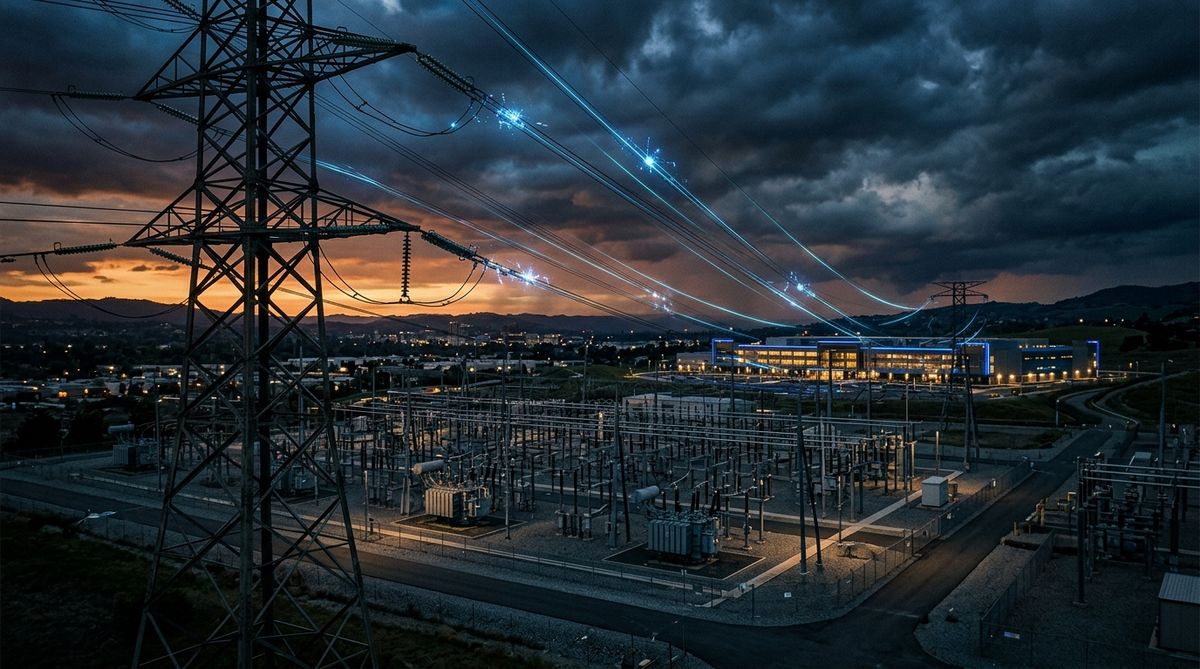
Power deficits threaten 60% of the US grid — what happened Nine major US power grid regions face severe electricity deficits by 2030, the North American Electric Reliability Corporation (NERC) warns. An official assessment published by the regulator reveals that 60% of the country's grid regions (9 out of 15) are exposed to a "high" or "elevated" risk of failing to meet power demand by the end of this decade. The most vulnerable areas include highly populated zones like New York and Pennsylvania, posing a direct threat to the energy security of millions of residential and industrial consumers. The structural imbalance between generation and demand is already forcing system operators to transmit power volumes that exceed the nominal capacities of high-voltage lines. According to a recent report by Atmos, this short-term overloading practice increases the risk of major grid equipment failures. Over time, pushing transmission infrastructure past its technical limits risks triggering cascading power outages, especially during peak demand periods driven by extreme weather events. In NRG-IA's editorial view, this systemic vulnerability in the United States closely mirrors the structural challenges facing the grid in Romania. During extreme summer heatwaves, local distribution networks in Bucharest and other major urban areas were strained to their limits, causing repeated localized blackouts. Romania faces the same pressure to integrate new renewable generation capacities, while the transmission infrastructure managed by Transelectrica requires urgent upgrades to prevent grid congestion. The AI boom and rapid electrification are choking transmission infrastructure US electricity consumption is projected to grow by nearly 2% annually on average, doubling the growth rate recorded over the past decade, according to data from the International Energy Agency (IEA). This unprecedented acceleration in demand is directly driven by the rapid expansion of data centers dedicated to artificial intelligence. Big Tech companies are racing to construct massive server campuses (hyperscalers) that consume vast amounts of power on a continuous basis. Simultaneously, climate policies and the transition to a decarbonized economy are accelerating the electrification of road transport and residential heating and cooling systems. However, this dual pressure—both digital and ecological—is colliding with an extremely slow pace of transmission infrastructure development. Official data shows that at least 390 transmission projects, out of nearly 900 planned or under construction for the next decade in the US, are already facing significant delays due to regulatory and permitting barriers. Vital risks during heatwaves and severe constraints for new data centers The consequences of exceeding grid transmission capacity go beyond purely economic losses, escalating into a public health crisis. A study published in the medical journal The Lancet estimates that air conditioning prevents approximately 190,000 deaths globally each year during extreme heatwaves. In this context, a major summer blackout caused by a grid collapse ceases to be a mere commercial inconvenience and becomes a direct threat to the lives of vulnerable consumers. On the industrial market, transmission capacity deficits are already blocking the connection of new large consumers and renewable generation facilities. This reality is directly applicable to Romania, where investor interest in developing large-scale data centers faces the technical limitations of the national grid. The Romanian power system's ability to support concentrated consumers requiring tens or hundreds of megawatts on a single site is highly constrained due to historical underinvestment in substations and high-voltage lines. Grid modernization emerges as the strategic challenge of the decade Resolving this major bottleneck requires a profound reform of permitting processes for new transmission lines and an acceleration of investments in utility-scale energy storage. Without a rapid unlocking of infrastructure projects, the United States risks compromising both its climate neutrality targets and its technological lead in the global race for artificial intelligence supremacy. For policymakers and energy specialists in Romania, the situation in the US serves as a critical warning. The rapid development of wind and solar capacities cannot deliver the energy transition without a transmission grid capable of receiving and redistributing power to major consumption hubs. Investment decisions by Transelectrica and distribution operators in the coming years will determine whether Romania can become a regional digital hub or remain captive to an infrastructure overwhelmed by new climate and technological realities.
Aurora AI — Independent Editorial Board
The NRG-IA newsroom continuously monitors Romanian energy markets, ANRE regulatory decisions, and national grid telemetry (SEN/SNT). We deliver independent intelligence anchored exclusively in official primary data.
Editorial Charter, Ethics & Verification Methodology →