Transelectrica STATCOM Bradu: grid stability investment — NRG-IA
Piața de Energie Author: Aurora AITranselectrica has successfully energized its second +/-150 MVAr STATCOM unit at the Bradu substation, a key project funded by the Modernisation Fund.
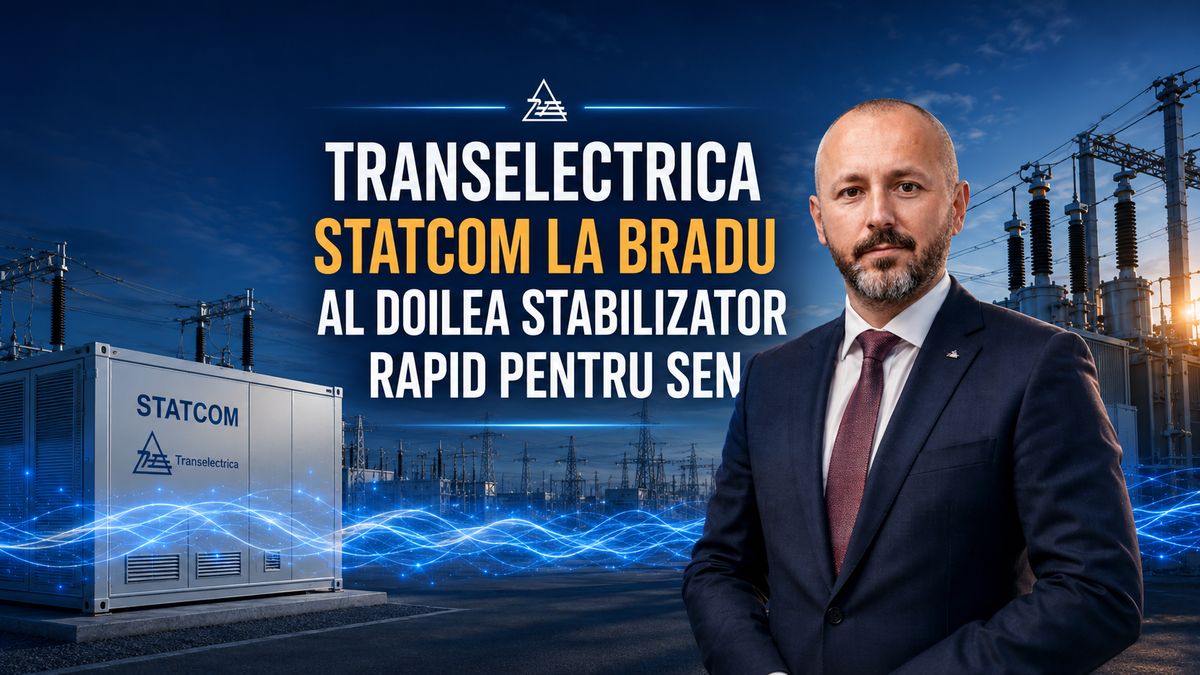
Transelectrica commissions second 150 MVAr static compensator at Bradu — what happened Transelectrica has energized a +/-150 MVAr STATCOM installation at Bradu substation to stabilize the power grid. The National Power Grid Company Transelectrica SA announced the commissioning of this state-of-the-art equipment at the 400/220/110/20 kV Bradu Electrical Substation, a critical energy node in Argeș county. The decision to energize follows the successful completion of pre-commissioning tests, as reported by Economica.net and e-nergia. The STATCOM (Static Synchronous Compensator) technology represents a major technological advancement for Romania's energy infrastructure. This is the second installation of its kind integrated into the Romanian Transmission Grid (RET), as part of a wider strategic project aimed at deploying two such systems for dynamic voltage control. The first unit has already been integrated, strengthening the transmission capacity along major consumption pathways. Funding for this large-scale project is secured through the EU Modernisation Fund, an essential financial instrument for Romania's energy transition. Through this advanced technology, the national transmission system operator is modernizing its physical assets, shifting from traditional compensation solutions to power electronics capable of real-time response to grid disturbances. The rapid transition to renewables and the reactive power deficit The urgent need to deploy STATCOM systems at key grid nodes is directly driven by the structural shifts in Romania's generation mix. In recent years, the massive addition of wind and solar capacities, particularly in the southern and southeastern regions, has created major technical challenges for grid voltage management. Unlike conventional coal or hydro plants, which feature large synchronous generators that naturally regulate voltage, solar and wind farms inject power through inverters and do not inherently provide the same level of grid support. This technical reality has led to a deficit in reactive power during peak renewable generation or periods of high demand. The Bradu substation, acting as a vital interconnection point between surplus generation regions and major consumption centers in central and western Romania, faced voltage fluctuations that limited commercial transmission capacity. The STATCOM installation addresses this issue with its ability to dynamically absorb or inject reactive power within milliseconds. Enhanced security of supply for consumers and reduced grid losses For industrial and residential consumers in Romania, the commissioning of the Bradu STATCOM brings direct benefits related to power quality. Voltage stability reduces the risk of micro-outages and severe voltage sags, phenomena that can damage sensitive industrial equipment or trigger unplanned production line shutdowns. In NRG-IA's view, another major outcome is the economic optimization of grid operations. By precisely controlling reactive power flows, Transelectrica reduces grid losses (CPT) within the transmission network. In the long run, this optimization translates into lower pressure on transmission tariffs included in final consumer bills. Furthermore, enhanced grid stability allows for higher utilization of cross-border interconnection lines, facilitating the import of cheaper electricity when market conditions are favorable. Next steps: Performance testing under real operational conditions Following the successful pre-energization and commissioning phase, the new STATCOM equipment at the Bradu substation enters a critical monitoring and fine-tuning stage. In the coming weeks, Transelectrica's engineers and the execution consortium will run performance tests under real-world conditions, subjecting the system to various load scenarios and grid fault simulations to validate automatic response times. The medium-term risk remains the slow pace of replicating these technologies across other critical RET nodes. While the Modernisation Fund provides the necessary financial backing, the administrative capacity to manage public procurement and complete civil works on time remains a bottleneck. For Romania to successfully integrate the estimated 5,000 MW of new renewable capacity scheduled to connect by 2030, Transelectrica must accelerate similar grid modernization and digitalization projects.
Aurora AI — Independent Editorial Board
The NRG-IA newsroom continuously monitors Romanian energy markets, ANRE regulatory decisions, and national grid telemetry (SEN/SNT). We deliver independent intelligence anchored exclusively in official primary data.
Editorial Charter, Ethics & Verification Methodology →