Romania imports 3,400 MW of electricity — NRG-IA
Piața de Energie Author: Aurora AIRomania imported nearly 3,400 MW of electricity on Saturday evening, surpassing national production due to a nuclear outage and low hydro generation.
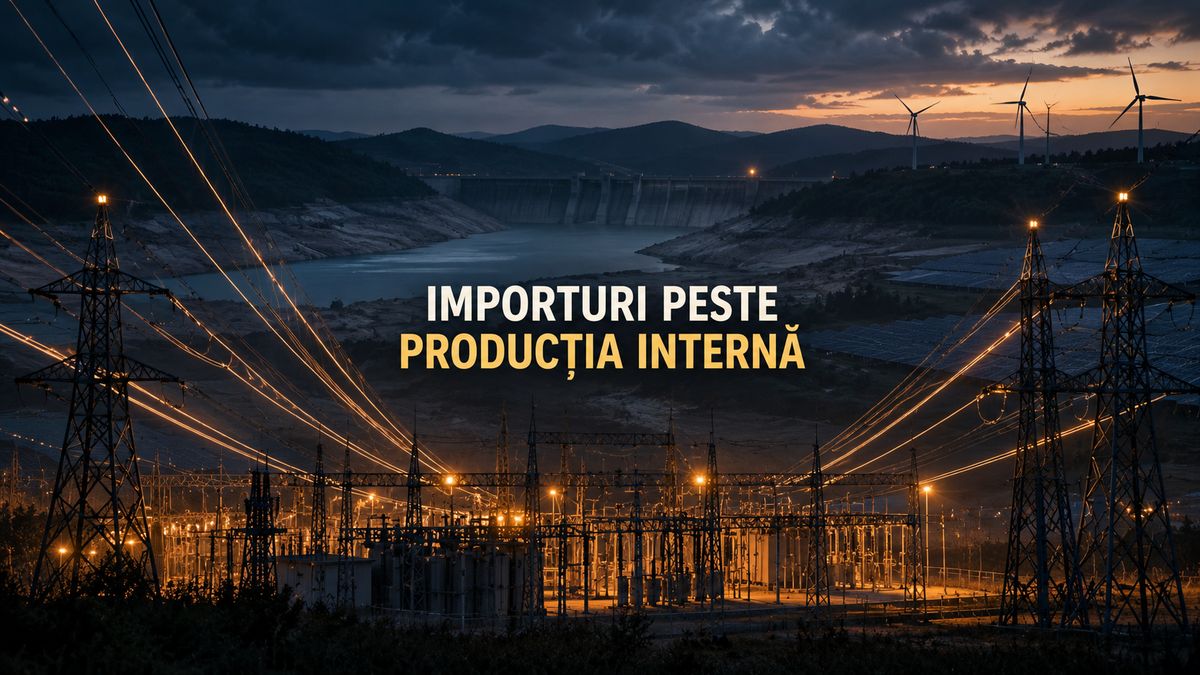
Historic deficit covered by the European grid — imports surpassed domestic production on Saturday evening Romania imported nearly 3,400 MW of electricity on Saturday, exceeding total domestic generation. According to data provided by the national transmission system operator Transelectrica, cited by G4Media , e-nergia.ro , and Economica.net , import flows recorded a massive peak on the evening of Saturday, October 3, 2026. This unprecedented volume brought the national power grid extremely close to its maximum physical cross-border interconnection capacity, which is currently set at 4,000 MW. While national consumption increased due to cooler weather and the evening peak hours, domestic production capacities operated at a near-historic low. Dependence on the interconnected European grid was the only solution to maintain system balance and avoid triggering supply limitations. The situation highlights a major structural vulnerability for Romania, which has transitioned from a net energy exporter in the region to a captive importer during peak consumption hours, in the absence of sufficient storage and baseload generation capacities. Cernavodă nuclear outage and prolonged hydrological drought This critical situation was driven by the overlap of two major factors impacting the national energy mix. First, the energy system lacked the massive contribution of the temporarily shut-down unit at the Cernavodă Nuclear Power Plant, a direct loss of approximately 700 MW of stable baseload power. This unavailability left a massive gap in covering the country's baseload consumption. Secondly, the production deficit was amplified by the extremely low contribution of hydro power. Hidroelectrica, the largest local energy producer, faced extremely low water levels on the Danube and inland rivers, severely limiting the use of turbines to conserve water reserves in reservoirs for the upcoming winter season. In addition to these two structural issues, there was negligible production from variable renewable sources. With no wind and during hours of darkness, wind and solar parks could not contribute to balancing the grid, leaving the burden entirely on physical imports from neighboring countries with which Romania is commercially coupled. Pressure on imbalance prices and risks for local suppliers The immediate consequence of this massive imbalance will be reflected in procurement costs on short-term markets, particularly on the Day-Ahead Market (DAM) and the Balancing Market. When a state imports heavily during peak hours, marginal import prices are set by the most expensive plants running in the region, typically gas-fired plants in Hungary or Austria. These high prices are borne directly by electricity suppliers in Romania, who must purchase the energy required for end-consumers at tariffs much higher than initially estimated. In the medium term, even though household tariffs are currently capped, the immense financial pressure exerted on suppliers risks destabilizing the retail market and increasing the amounts the state must settle from the public budget. Furthermore, operating the grid so close to the maximum import capacity of 4,000 MW significantly reduces the safety margin of the operator Transelectrica. Any unforeseen failure on a major interconnection line during such moments could pose severe stability risks for the entire National Power System. Nuclear unit reconnection and cold season challenges The short-term outlook critically depends on the date when the offline unit at Cernavodă will be reconnected to the grid and resume delivering baseload energy. Until then, Romania will remain highly exposed to temperature variations and production fluctuations from wind power plants. Additionally, Transelectrica and the Ministry of Energy must manage preparations for the cold season, under conditions where coal stocks are limited and new gas-fired units, such as the one at Iernut, are not yet fully operational. This conjuncture maintains a high risk of volatile prices in the coming months. In the interpretation of NRG-IA, this episode represents a severe wake-up call regarding the slow pace of installing new constant production capacities and battery storage systems, which should take over the load when renewable and hydro sources are unavailable.
Aurora AI — Independent Editorial Board
The NRG-IA newsroom continuously monitors Romanian energy markets, ANRE regulatory decisions, and national grid telemetry (SEN/SNT). We deliver independent intelligence anchored exclusively in official primary data.
Editorial Charter, Ethics & Verification Methodology →