Romania's reform gap: Fast internet vs. high energy bills — NRG-IA
Piața de Energie Author: Ioana BuzoaicaRomania has top-tier EU fixed internet, but households face the heaviest electricity burden by purchasing power, showing two opposite reform outcomes.
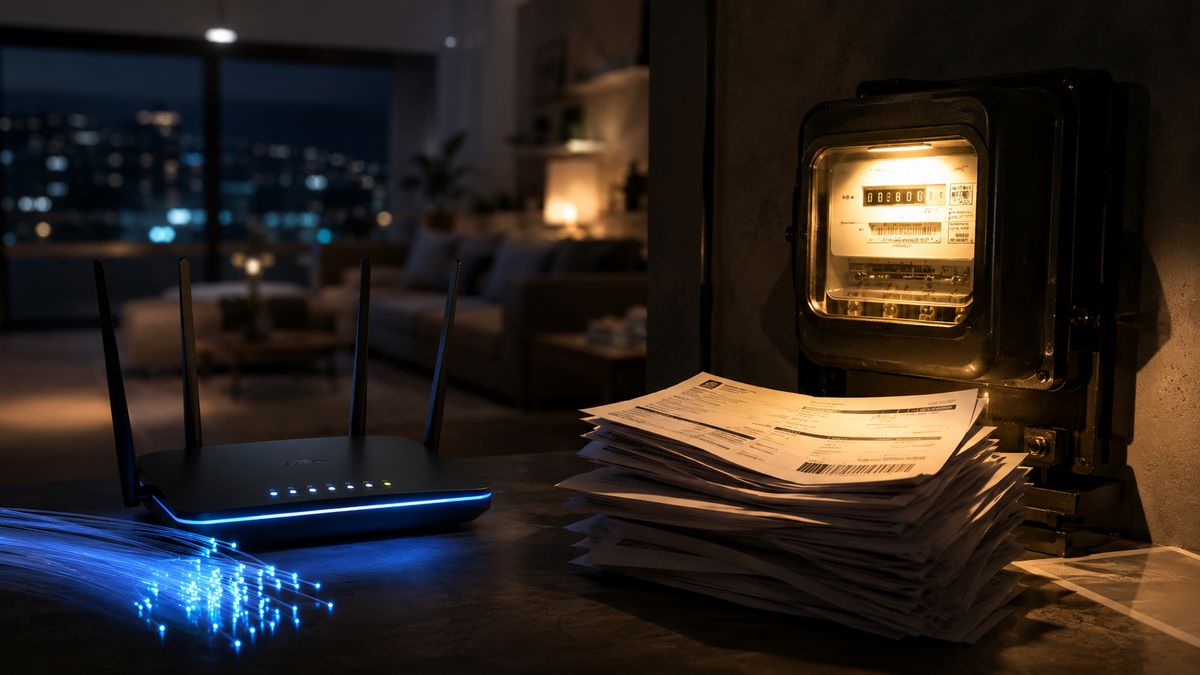
Over three decades, Romania has built one of the highest-performing fixed internet infrastructures in Europe, yet it has simultaneously ended up with the most burdensome household electricity prices relative to purchasing power. This contrast, starkly framed by Dumitru Chisăliță, president of the Intelligent Energy Association, pits two critical infrastructure reforms against each other: telecommunications delivered speed, access, and competitive services, while energy has remained associated with price caps, administrative interventions, unstable rules, and hard-to-bear bills. Eurostat data confirms the most sensitive part of this comparison. In the second half of 2025, household electricity prices in Romania, expressed in purchasing power standards (PPS), were the highest in the European Union at 49.52 PPS per 100 kWh. In nominal terms, Ireland, Germany, and Belgium recorded the highest prices, but adjusting for purchasing power places Romania at the very top of the real burden borne by the population. In telecom, the data shows an opposite trend for the consumer. ANCOM reports that in 2024, the average national fixed internet speed measured via the Netograf platform was 284 Mbps for downloads and 244 Mbps for uploads. ANCOM also shows that at the end of 2024, fixed connections of at least 100 Mbps accounted for 95% of all fixed connections, and over 93% of addressable administrative locations were covered by FTTH/FTTB fiber optic technologies. Electricity weighs heavier when prices are adjusted for income To be precise, Romania does not have the most expensive electricity in the European Union in nominal terms. Ireland, Germany, and Belgium had higher nominal household prices in the second half of 2025. The indicator that changes the conversation is PPS—purchasing power standard—because it shows how heavily the same service weighs relative to household incomes. Under this indicator, Romania appears in the most vulnerable position. Eurostat indicates 49.52 PPS/100 kWh for Romanian households, ahead of the Czech Republic and Poland. This means that the electricity bill issue is not just about the nominal price on paper, but about the ratio between the final cost, incomes, and the structure of the entire system that converts produced or purchased energy into the final amount paid by the consumer. Electricity reaches the consumer through a much more rigid chain than an internet subscription. The final price includes active energy, network tariffs, system costs, imbalances, taxes, the supply component, and the effects of public interventions. Some of these costs depend on the market, some on regulation, and some on investments made or deferred in networks, generation, and flexibility. Telecom delivered fast infrastructure and pressure on service quality Telecommunications followed a different dynamic. Operators competed through networks, coverage, speed, commercial packages, and direct customer relationships. The European Commission notes that Romania remains one of the EU leaders in fixed connectivity, including in sparsely populated areas. This performance does not eliminate the sector's challenges, but it shows a concrete result: for the end-user, fixed internet has become fast, widely available, and relatively affordable. ANCOM shows that in the first half of 2025, Romania had 6.9 million fixed connections, 37% of which were capable of Gigabit speeds. Average monthly traffic reached 97 GB per inhabitant on fixed networks and 14 GB on mobile. The telecom market has significant concentration—Digi held 73% of fixed connections in the first half of 2025—but the visible outcome for the consumer remains high technical performance and commercial pressure on service quality. This outcome supports Dumitru Chisăliță's comparison only if formulated rigorously. Telecom is not a perfect market, and Romania still has areas with insufficient coverage. However, the final service has improved massively, and the customer has directly felt the investment in networks and technology. Energy liberalization operated on top of rigid infrastructures Energy followed a different logic. Consumers can switch suppliers, but they cannot change the distribution network, the transmission system, the generation mix, the level of interconnection, balancing costs, or the infrastructure investment schedule. This is where the difference between contractual freedom and the actual competition felt in the bill arises. Dumitru Chisăliță argues that Romania has confused liberalization with the existence of real alternatives for the consumer. In his interpretation, energy has remained a space where profit has not always depended on investment, performance, and the customer, but also on access to resources, market positioning, regulations, support schemes, and influence over public decision-making. This thesis should be treated as an attributed analysis, not a legal verdict. However, the described mechanism touches on a real issue: electricity has…