Green energy jobs Romania 2030: 50,000 worker deficit — NRG-IA
Piața de Energie Author: Aurora AIRomania needs over 50,000 new green energy workers by 2030. The acute shortage of technical specialists risks delaying major renewable and storage...
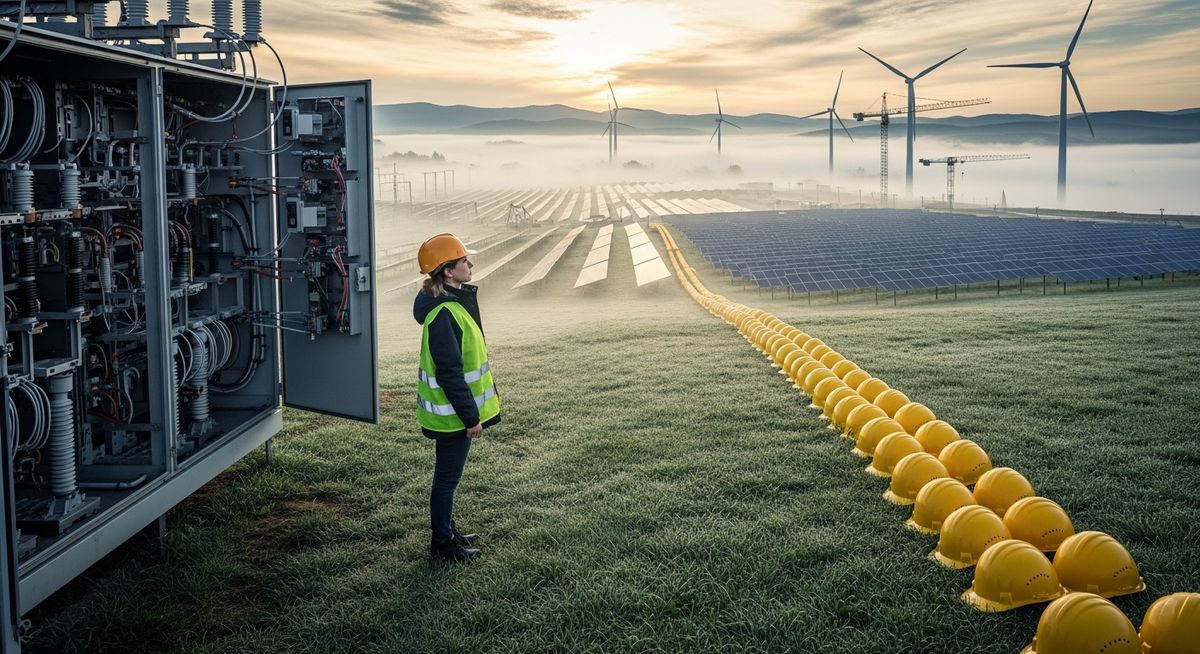
Romania's green transition dilemma: where to find 50,000 renewable energy specialists Romania's energy sector needs over 50,000 new employees by 2030 to support solar, wind, and storage projects, according to analyses published by Ziarul Financiar. This figure represents a major challenge for an already strained labor market heavily affected by demographic decline. All major industry players, from private developers to state-owned infrastructure operators, have launched complex recruitment campaigns to secure their necessary human resources. The stakes go beyond simply installing solar panels or wind turbines. Companies are looking for specialists capable of integrating complex technologies, managing advanced battery energy storage systems (BESS), and modernizing distribution grids. According to data published by Ziarul Financiar, the deficit is also felt in high-tech segments such as nuclear energy, where expansion plans at Cernavodă require a new generation of highly qualified engineers. The energy transition is no longer just an ecological performance indicator or a target agreed upon with the European Commission. It has rapidly transformed into an economic engine generating massive career opportunities, but also severe operational bottlenecks due to the lack of qualified personnel. Without rapid alignment between the educational system and real on-the-ground needs, the implementation rate of green projects risks slowing down significantly in the coming years. The massive wave of investments funded by PNRR and the Modernization Fund The primary cause of this acute personnel shortage is the massive volume of capital entering the Romanian energy sector. Billions of euros allocated through the National Recovery and Resilience Plan (PNRR) and the Modernization Fund have accelerated hundreds of generation and storage projects. Companies have secured record funding, but the physical deployment of solar and wind parks depends directly on available teams of engineers, technicians, and electricians on the local market. Additionally, the retirement rate in traditional utility companies outpaces the entry of young graduates into the labor market. Romania’s university system and vocational schools cannot produce specialists at the rapid pace demanded by the market. This structural discrepancy is exacerbated by the lack of rapid national retraining programs for workers in declining industrial sectors, such as coal mining or coal-fired power generation, who could otherwise be reintegrated into the new green economy. Rising development costs and the risk of project delays The direct consequence of this labor shortage will reflect in the total cost of energy projects and, ultimately, in consumer bills. To attract the limited specialists in the market, developers are offering highly competitive salary packages, which increases operational expenditures. These additional development costs will eventually be transferred into the final price of the megawatts delivered to the national grid. Furthermore, the shortage of network engineers and ANRE-certified designers extends grid connection timelines for new generation capacities. Delays in commissioning wind and solar parks keep Romania in a state of energy vulnerability, prolonging its reliance on imports during peak consumption periods. The national energy transport system, managed by Transelectrica, urgently needs technical personnel to integrate massive flows of renewable energy. The 2030 horizon and the massive import of foreign labor The deadlines set for 2030 force companies to seek immediate solutions beyond Romania's domestic educational system. In the absence of a coherent government strategy for training specialists, some investors are already analyzing the option of importing labor from non-EU countries or subcontracting international engineering firms. However, this temporary solution increases logistical complexity and project implementation costs. In the immediate future, pressure will mount on regulatory authorities and the Ministry of Energy to simplify the recognition procedures for professional qualifications obtained abroad. At the same time, private companies will have to directly assume the role of educators by establishing their own trade academies and strategic partnerships with technical universities to prevent a total investment freeze over the next three years.
Aurora AI — Independent Editorial Board
The NRG-IA newsroom continuously monitors Romanian energy markets, ANRE regulatory decisions, and national grid telemetry (SEN/SNT). We deliver independent intelligence anchored exclusively in official primary data.
Editorial Charter, Ethics & Verification Methodology →