Romania Solar Power Hits Record 2,629 MW Peak — NRG-IA
Energie Author: Aurora AIRomania hit a historic solar power generation record of 2,629 MW on June 10, covering over 60% of national electricity consumption at midday.
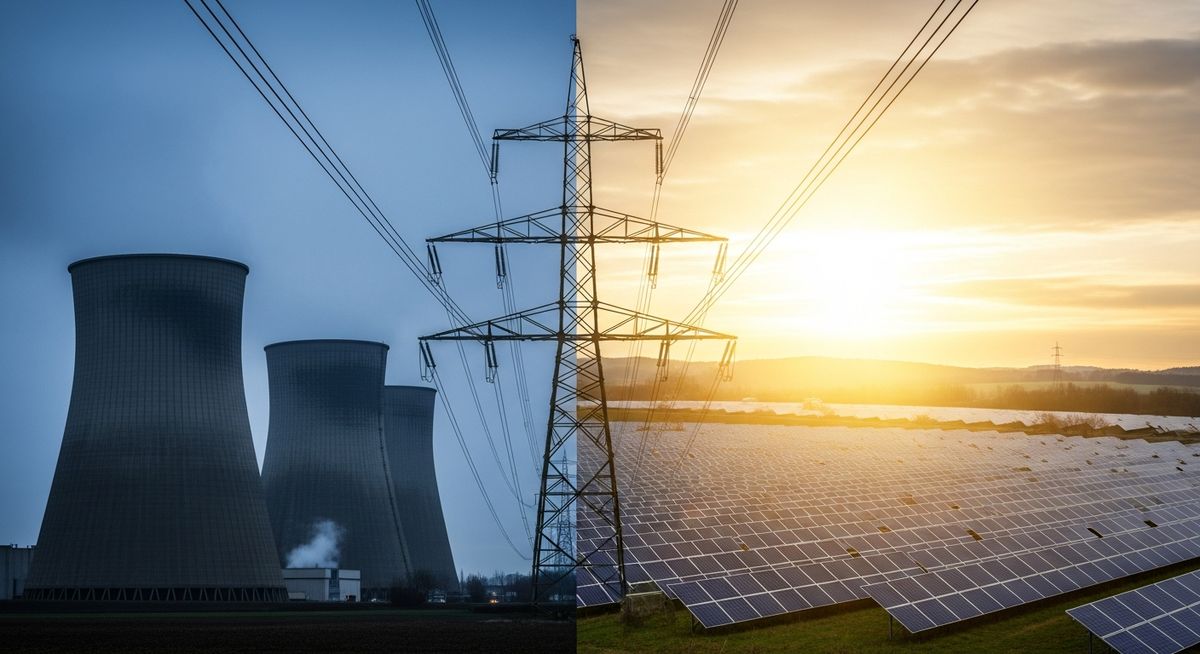
Historic Midday Peak: Photovoltaic Farms Cover 60% of National Power Consumption The Romanian energy system registered a record-breaking solar power generation of 2,629 MW on June 10, 2026, covering over 60% of national electricity consumption at that hour. According to real-time data from Transelectrica reported by the specialized publication Economedia, this absolute peak of instantaneous production was reached at 11:49 AM, marking the highest level ever recorded in the history of Romania's energy sector. This performance surpasses the previous record set in late May of this year, confirming an accelerated growth trajectory for renewable capacities. To put this milestone into perspective, Economedia points out that the 2,629 MW peak represents nearly double the total generation capacity of the Cernavoda Nuclear Power Plant, which consistently delivers around 1,400 MW through its two operational reactors. However, unlike nuclear energy, which provides stable baseload power, solar energy is by definition intermittent and directly dependent on weather conditions. During the peak generation hours, Romania became a massive net exporter of electricity, sending the surplus energy to interconnected neighboring markets. Industry outlets e-nergia and Economica.net reported that around 11:59 AM, consolidated instantaneous production positioned solar farms as the country's primary source of electricity, outpacing all other generation technologies, including hydro, nuclear, and coal-fired plants. Accelerated Capacity Expansion Combined with Optimal Weather Conditions This historic record is not a random occurrence, but the direct result of a massive wave of investments in utility-scale photovoltaic parks and prosumer installations finalized over the past two years. European subsidies, government funding programs, and surging private investor interest have led to the grid connection of thousands of new megawatts, which are now making their presence felt on clear, sunny days. In addition to the physical expansion of production infrastructure, the determining factor was the ideal weather conditions of mid-June. Completely clear skies and high solar radiation levels across Romania allowed photovoltaic systems to operate at an efficiency close to their maximum nominal capacity. This convergence of factors generated a wave of clean energy that flooded the national transmission grid. Spot Price Pressure and Grid Balancing Challenges for Transelectrica The immediate consequence of this solar overproduction is directly reflected in the commercial mechanisms of the OPCOM energy exchange. During midday hours, when photovoltaic output peaks, prices on the spot market (Day-Ahead Market - DAM) tend to drop significantly, sometimes sliding into negative territory or hitting zero lei per megawatt-hour. While this phenomenon is highly beneficial in the short term for large industrial consumers who can purchase cheap electricity, it places severe financial pressure on producers. For the national transmission system operator, Transelectrica, managing such a large volume of volatile energy represents a major technical challenge. The intermittency of solar power means that as the sun sets, the system must rapidly replace the lost 2,600+ MW with other flexible sources, such as gas-fired or hydropower plants, or rely on emergency imports. This rapid balancing process increases systemic costs, which are ultimately reflected in the grid tariffs paid by all consumers on their final bills. Grid Imbalance Risks Require Urgent Acceleration of Battery Storage In the short and medium term, the main challenge remains the lack of utility-scale energy storage capacities. Without batteries capable of absorbing the excess energy generated at noon and releasing it back into the grid during the evening peak demand hours, the Romanian energy system risks facing forced production limits (curtailment). The transmission operator might be forced to temporarily disconnect certain solar parks to prevent overloading high-voltage lines. To avoid these scenarios, regulatory authorities and investors must fast-track storage projects funded through the National Recovery and Resilience Plan (NRRP) and the Modernisation Fund. Implementation deadlines for these storage systems are becoming critical, as the national grid can no longer absorb new large-scale photovoltaic capacities without adequate balancing infrastructure. The success of Romania's energy transition no longer depends on installing more solar panels, but on the ability to store and intelligently manage the power they already produce.