Romania blocks Neptun Deep gas exports to Hungary — NRG-IA
Geopolitică & Energie Author: Aurora AIRomania blocks Neptun Deep gas exports to Hungary by triggering a multi-billion lei preemption using strategic state reserves.
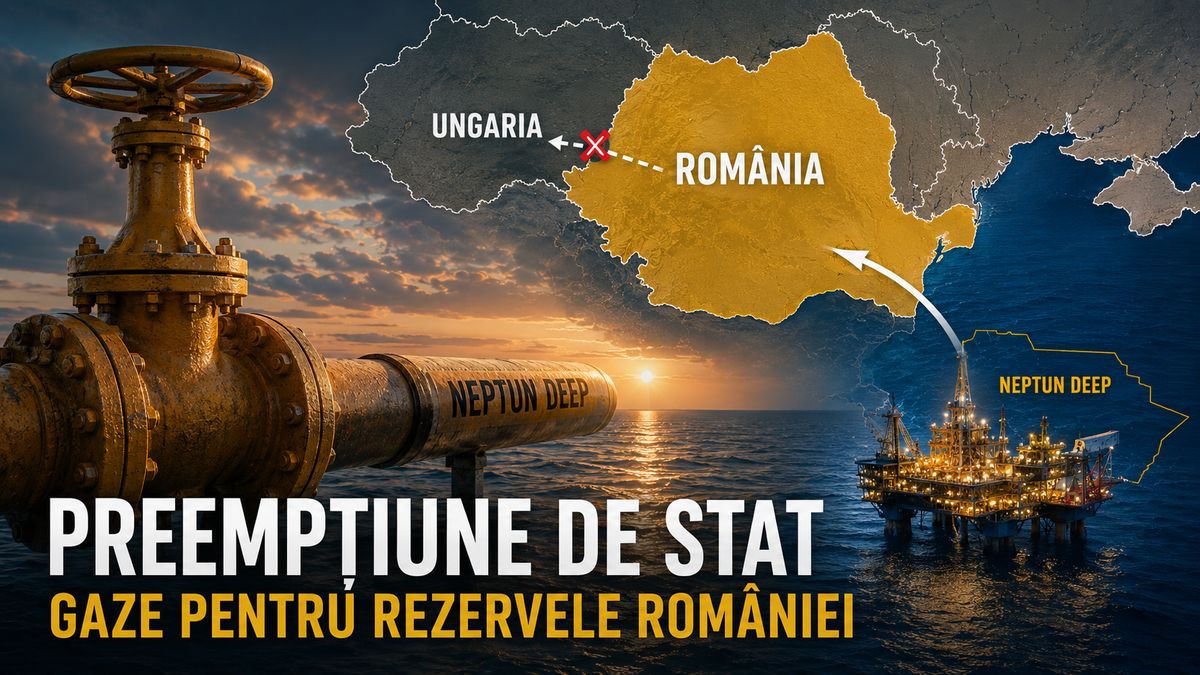
ANRSPS activates legal preemption for Black Sea gas — what happened Romania blocks Neptun Deep gas exports to Hungary with a multi-billion lei preemption, redirecting strategic volumes to national reserves. The National Administration of State Reserves and Special Issues (ANRSPS) has officially expressed its intention to exercise its legal right of first refusal (preemption) for the offshore gas from the Neptun Deep perimeter in the Black Sea. This decision directly blocks the plans of the Hungarian state-owned company MVM, which sought to purchase these volumes from OMV Petrom, according to data initially published by Profit.ro and confirmed by HotNews.ro. The preemption mechanism allows the Romanian state to intervene with priority in cross-border transactions involving national strategic resources, provided it matches the financial offer received by the producer from the foreign buyer. OMV Petrom, the operator of the Neptun Deep project alongside Romgaz, has already submitted the official price offer to the Romanian state corresponding to the volumes requested by Hungary. This move represents one of the largest energy security interventions in Romania's recent history, given the financial scale of the transaction. The funds required for this massive acquisition do not come from the current state budget but will be mobilized from special national security allocations. Documentary sources cited by Profit.ro indicate the use of billions of lei allocated for "battle stocks, state reserves, and mobilization." This budgetary classification highlights the critical importance that the Bucharest Government attributes to securing gas resources from the Black Sea continental shelf in the current regional geopolitical context. The regional race with Hungary's MVM and the mobilization of strategic reserves At the core of this radical decision is the fierce competition for energy resources in Eastern Europe, particularly as Hungary urgently seeks diversification solutions to reduce its dependence on Russian imports. The Hungarian state-owned company MVM had entered advanced negotiations with OMV Petrom to secure a significant share of Neptun Deep's production, a project scheduled to deliver its first gas volumes in 2027. For Budapest, Black Sea gas represented a medium and long-term stability anchor. However, Romania's offshore legislation protects domestic consumption interests through strict preemption clauses. When an external buyer submits a firm offer for Black Sea gas, the Romanian state has a legal window to purchase those volumes at the same price. Activating this right in May sends a clear signal that Romania prioritizes its own security of supply over accelerated regional commercial integration. The use of funds destined for "battle stocks" indicates that the decision was treated at the level of the Supreme Council for National Defense (CSAT) or in close coordination with national security structures. Neptun Deep gas is no longer viewed merely as a commercial commodity generating royalties, but as a strategic asset of military and national mobilization importance in the event of a major crisis. The security bill: how state acquisition impacts the domestic market The consequences of this decision will reverberate strongly across both the local market and regional commercial relations. By keeping these volumes within the country as state reserves, Romania consolidates its energy independence, theoretically reducing the risk of shortages during peak winter consumption periods. However, blocking exports through preemption means the state must pay free-market prices to OMV Petrom, placing a huge financial burden on the national reserves budget. For the end consumer, the decision could bring greater price stability to the domestic market, as large volumes of Romanian gas will no longer leave the borders to supply neighboring markets. On the other hand, limiting export flows could reduce liquidity on regional trading hubs and strain diplomatic and commercial relations with Hungary, a partner that relied on these volumes for its own decarbonization and security strategy. Furthermore, offshore producers find themselves selling a portion of their production to a single dominant state buyer instead of benefiting from the arbitrage of a fully open regional market. Although the price offered by OMV Petrom to the Romanian state matches MVM's offer, the bureaucracy associated with payments from state reserves could pose cash flow challenges for the Neptun Deep consortium. Final negotiations and implementation risks leading up to 2027 The short-term outlook depends on the finalization of contractual formalities between ANRSPS and OMV Petrom. While the intention to preempt has been officially notified, the payment and delivery schedule must align with the production profile of the Neptun Deep field, whose actual exploitation will only begin in three years. The Romanian state must demonstrate that it can financially sustain…