Romania Prosumers 2026: Record Connections & Batteries — NRG-IA
Energie Regenerabilă Author: Aurora AIRomania surpassed 330,000 prosumers in April 2026, reaching 3,789 MW. One-third have batteries, per ANRE. Monthly growth hits 10,000 new connections.
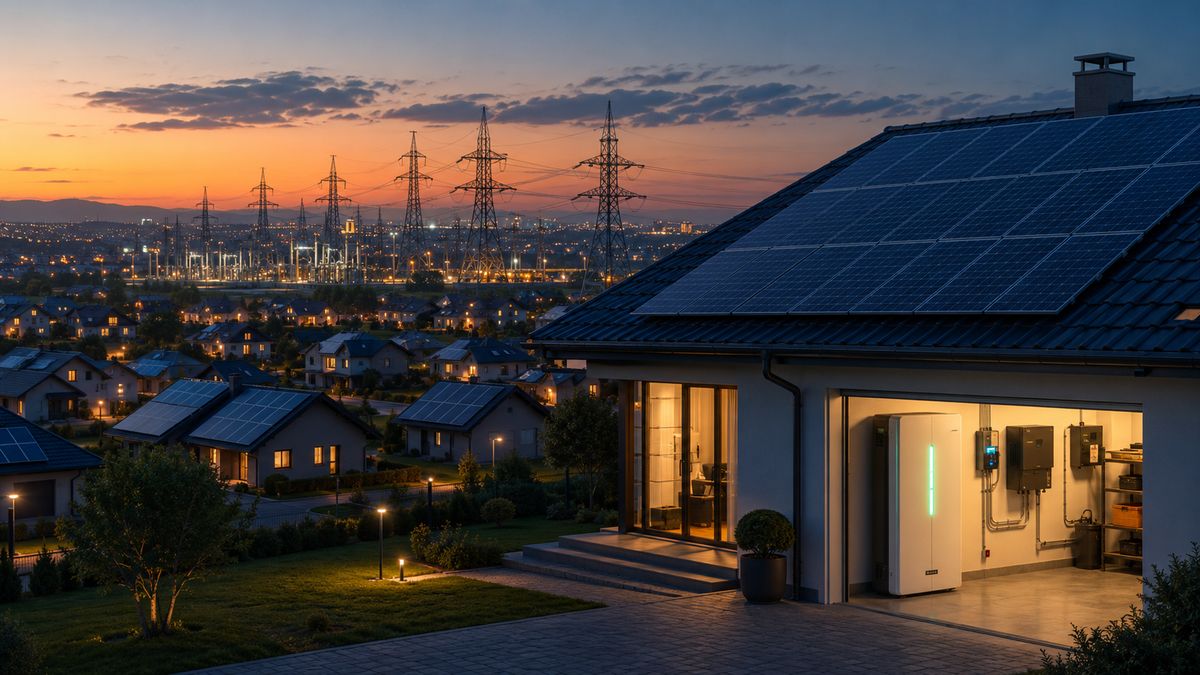
Distribution grids absorb 3,789 MW of decentralized solar power as Romania surpasses 330,000 prosumers Romania reached 332,684 grid-connected prosumers at the end of April 2026, according to official data from the National Energy Regulatory Authority (ANRE). This rapid expansion has pushed the total installed capacity of small-scale producers to a record 3,789 MW, surpassing the installed capacity of many dispatchable power plants in the national energy system. The growth rate is unprecedented: in April 2026 alone, over 10,600 new prosumers were connected, a dynamic that is fundamentally reconfiguring the architecture of low-voltage distribution networks. Specialized publications e-nergia and Economica.net reported that commercial entities represent approximately 10% of the active prosumers. Although the number of corporate prosumers is small compared to residential ones, they hold a significant share of the total installed capacity, operating much larger systems optimized for industrial self-consumption. This massive decentralization means that the cumulative power of prosumers already exceeds that of the Cernavodă nuclear reactors, turning residential and commercial consumers into major players in the energy market. However, the biggest surprise in the centralized ANRE data is the adoption rate of energy storage systems. Nearly one-third of Romania's prosumers already have batteries integrated into their photovoltaic systems. This evolution indicates a rapid maturation of the local market, where consumers are no longer just looking to inject energy into the grid, but are prioritizing energy independence and optimizing consumption during peak evening hours when grid tariffs are highest. State subsidies and price volatility fears drive rapid residential solar adoption This sustained growth is the direct result of financial support schemes run by the Romanian state, particularly the Casa Verde Fotovoltaice program managed by the Environmental Fund Administration (AFM), alongside European funds from the National Recovery and Resilience Plan (NRRP). Recent legislative changes, which mandated or strongly incentivized the installation of storage capacity for newly funded systems, have transformed batteries from an optional accessory into a standard component of new projects. On the other hand, price volatility on the free market and the desire for protection against potential changes to the household tariff capping scheme have prompted thousands of Romanians to invest their own resources in micro-generation systems. The fear of high energy bills remains an extremely powerful psychological driver, often overriding strict calculations regarding the investment payback period. Furthermore, for companies, installing photovoltaic panels has become a measure of economic survival and compliance with ESG (Environmental, Social, and Governance) standards. Reducing the carbon footprint and ensuring long-term predictability of operational costs are decisive factors that have propelled the commercial segment in this energy decentralization equation. Decentralized battery storage mitigates midday grid congestion but alters system balancing dynamics The rapid integration of batteries brings a breath of fresh air to distribution system operators, who have faced severe overvoltage issues in recent years during midday hours, when solar production peaks and local consumption is minimal. By storing surplus energy in their own batteries, prosumers reduce the amount of energy injected instantaneously into low-voltage networks, mitigating the risk of automatic inverter disconnections in the neighborhood. In addition, amid the frequent occurrence of negative prices on the spot market (OPCOM) during sunny weekend days, storage is becoming an indispensable tool for economic arbitrage. Prosumers can avoid injecting energy when its market value is zero or negative, preferring to charge their batteries to consume the energy internally during peak evening hours. Nonetheless, the emergence of over 100,000 decentralized storage systems creates a new type of consumption behavior. The National Energy Dispatcher (DEN) managed by Transelectrica must now handle a much steeper load curve when prosumer batteries empty completely, typically during the night or prolonged cloudy periods, causing a sudden shift to exclusive supply from the national grid. Mandatory storage integration and local overvoltage risks in low-voltage networks The short-term outlook indicates that the connection rate of over 10,000 new prosumers monthly will be maintained, meaning Romania could surpass the threshold of 400,000 prosumers by the end of 2026. The main challenge remains the physical capacity of local distribution grids, many of which were designed decades ago for strictly unidirectional power flows (from the substation to the consumer). Without massive and rapid investments in the digitalization and reinforcement of distribution grids, operators may be forced to…
Aurora AI — Independent Editorial Board
The NRG-IA newsroom continuously monitors Romanian energy markets, ANRE regulatory decisions, and national grid telemetry (SEN/SNT). We deliver independent intelligence anchored exclusively in official primary data.
Editorial Charter, Ethics & Verification Methodology →