Romania energy hub: resources and grid limitations — NRG-IA
Piața de Energie Author: Aurora AIRomania holds 100 billion cubic meters of Black Sea gas, but grid bottlenecks limit regional hub ambitions, according to Veolia.
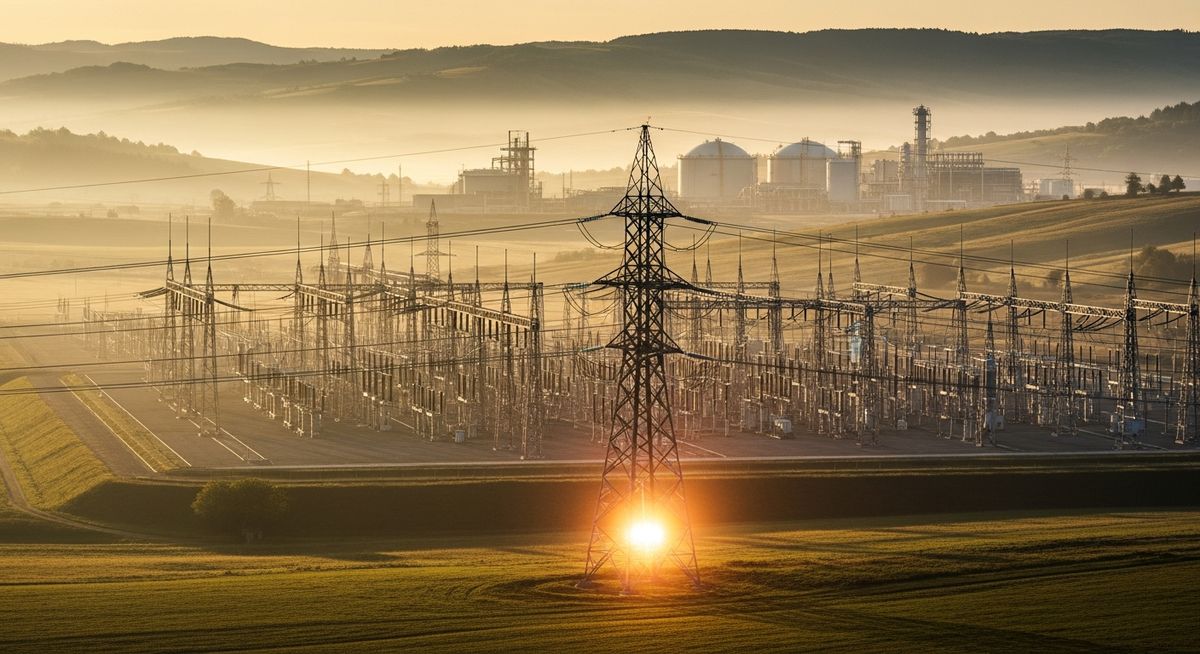
Romania's strategic resources and the Veolia argument — how the regional map is reshaping Romania holds 100 billion cubic meters of Black Sea gas, according to Veolia. Mădălin Mihailovici, General Manager of Veolia Romania, stresses that the country possesses a unique energy mix in Eastern Europe, including hydro, nuclear, natural gas, and massive renewable potential. This structural diversity places Bucharest in an extremely favorable geopolitical position, capable of serving not only domestic consumption but also vulnerable neighboring states like Moldova and Hungary. However, transforming this theoretical potential into a real regional hub requires massive investments in transmission and storage infrastructure. Veolia, a major player in resource management and energy efficiency, points out that untapped resources do not generate value on their own. Romania must transition rapidly from being a mere resource holder to becoming an integrator of smart grids and high-performance industrial energy services adapted to current decarbonization demands. In the context of the global green transition, Romania's position becomes critical for Eastern European security. Developing major projects, such as gas extraction from the Neptun Deep perimeter and expanding nuclear capacities at Cernavodă, represents the foundation of this strategy. However, industry leaders warn that the simple existence of resources in the ground or in production portfolios is insufficient to guarantee a regional leadership role. The storage deficit and the slow pace of smart grid investments The primary cause of the gap between potential hub status and market reality lies in the chronic underfunding of transmission grids operated by Transelectrica and regional distribution networks. Over the past decade, Romania prioritized installing new wind and solar capacities while ignoring the need to pair them with battery storage systems or pumped-storage hydropower plants. This fragmented approach has limited grid flexibility during peak production times. This technical disconnect has created major bottlenecks during days of peak renewable generation, when national dispatchers are forced to curtail production to maintain grid stability. The lack of a coherent national strategy for high-efficiency cogeneration and the modernization of district heating systems further limits the national energy system's balancing capacity. Consequently, while the country produces large amounts of clean energy during certain hours, the grid cannot efficiently absorb and redistribute this resource to industrial consumers or external markets. Furthermore, the process of obtaining grid connection permits for new storage projects remains extremely cumbersome. Private investors face bureaucratic barriers that delay the deployment of modern battery storage technologies. Without simplifying these procedures, the integration rate of green energy will lag far behind the targets committed to the European Commission. Extreme price fluctuations and the impact of distribution tariffs on bills The consequences of these structural imbalances are directly reflected in the spot market managed by OPCOM and, ultimately, in final consumer bills. In the absence of storage capacity, Romania frequently records negative electricity prices during peak solar production hours, a situation that discourages long-term private investment. Conversely, during deficit periods, day-ahead market prices spike, forcing massive imports from neighboring grids at high costs. For industrial and residential consumers, this volatility translates into higher grid tariffs approved by ANRE, measures necessary to fund urgent distribution infrastructure upgrades. Utility companies warn that without optimizing consumption through industrial energy efficiency solutions—an area where Veolia holds global expertise—the operating costs of Romanian factories will remain uncompetitive at the European level. Energy bills risk remaining high despite the growth of cheap renewable generation capacity. Additionally, price instability affects the budget planning of major industrial consumers, who cannot secure long-term contracts at predictable prices. This situation leads to reluctance in expanding industrial activities on national territory, directly impacting medium- and long-term economic growth. The 2027 horizon: critical deadlines for storage and Black Sea gas exploitation The next three years are decisive for shaping Romania as a pillar of stability in Southeastern Europe. The most critical deadline is 2027, when commercial gas flows from the Neptun Deep perimeter are scheduled to begin, a project estimated to double domestic gas production and make the country the largest producer in the European Union. This additional volume will require expanded export capacity through modernized cross-border interconnectors. In parallel, the Ministry of Energy must accelerate storage projects funded through the NRRP (PNRR) and the…
Aurora AI — Independent Editorial Board
The NRG-IA newsroom continuously monitors Romanian energy markets, ANRE regulatory decisions, and national grid telemetry (SEN/SNT). We deliver independent intelligence anchored exclusively in official primary data.
Editorial Charter, Ethics & Verification Methodology →