Romania Enters August with Unit 1 Offline, 1.7GW Imports — NRG-IA
Piața de Energie Author: Ioana BuzoaicaDrought has cut nuclear and hydro output, forcing Romania to import 1,700 MW in the evening. Unit 2 remains online, but Danube levels are key.
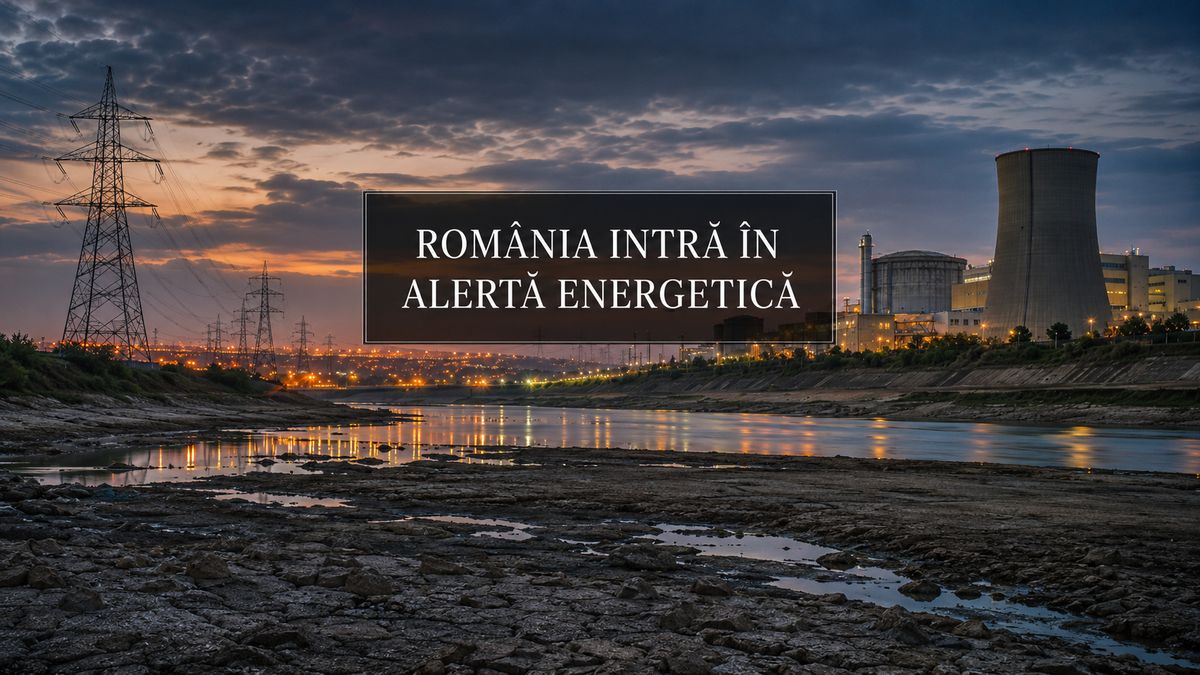
Romania is starting August with Unit 1 of the Cernavoda nuclear power plant offline, hydroelectric generation limited by drought, and approximately 1,700 megawatts imported during evening hours against a consumption of over 7,000 megawatts, according to data presented by Prime Minister Ilie Bolojan. In this configuration, nearly a quarter of the power required at that time of day is covered from abroad. On July 31, the Prime Minister announced a national state of alert for August, amid falling electricity generation caused by the drought and very low river flows, particularly on the Danube. The government is simultaneously trying to keep Cernavoda Unit 2 operational, increase the availability of domestic production, and secure additional power from neighboring countries during the hours when the system is under the greatest stress. The situation does not equate to a permanent electricity deficit or an imminent supply disruption. The European Commission, which monitors Romania, Hungary, and Southeast Europe, did not signal any immediate concern regarding security of supply as of July 31. The pressure stems from the simultaneous reduction of several domestic sources and the need for large imports precisely during the intervals when neighboring states may also require additional power. A single nuclear reactor is currently supporting production at Cernavoda Nuclearelectrica initiated a controlled shutdown of Unit 1 on the morning of July 28, after the very low level of the Danube brought operating conditions close to the limits set out in the plant's procedures. The shutdown was a preventive measure carried out under nuclear safety conditions. The two reactors at Cernavoda have a capacity of approximately 706 megawatts each and, when operating together, provide around one-fifth of Romania's electricity generation. Nuclearelectrica subsequently announced preparations for a potential shutdown of Unit 2 as well, should the Danube's conditions dictate such a measure. However, by the end of July 31, the second reactor remained connected to the grid. Bolojan stated that information received from the company indicated it would remain operational, though the situation can only be assessed on a short-term basis. The difference between Unit 2 operating or being offline is major for the country's power balance. The Prime Minister estimated that if the second reactor also had to be shut down, evening import requirements would exceed 2,500 megawatts . This is a conditional estimate based on the reactor being offline, not the current level of imports. The Danube remains well below its usual level for this period The physical issue underlying the energy situation remains water availability. At the end of July, the Danube's flow at the entry point into Romania, in the Bazias section, was around 1,600 cubic meters per second, compared to a multi-annual average of approximately 4,700 cubic meters per second for July. The National Institute of Hydrology and Water Management forecast a further decline for the first days of August, down to around 1,450 cubic meters per second. The multi-annual average for August is 3,900 cubic meters per second. The flow measured at Bazias does not directly represent the amount of water available at the Cernavoda plant's intake system. Between the Danube's entry into the country and the plant, the water is distributed across several sectors and branches. However, the trend at Bazias indicates the severity of the hydrological deficit and the general direction on the Romanian sector of the river. At the bifurcation between the Bala branch and the Old Danube, water distribution becomes particularly critical for the Cernavoda area. During low-water periods, a larger portion of the flow can be drawn toward Bala, reducing the volume that continues along the Old Danube. Existing technical documentation for this sector aims precisely at correcting the flow distribution so that more water remains on the route serving the Cernavoda area. The government has decided on emergency interventions to redistribute flows at the Bala–Old Danube bifurcation, with the objective of improving the conditions necessary to keep Unit 2 operational. This is not about creating a new water source, but rather about influencing how the existing, very low flow is distributed between the Danube's branches. Reuters reported that the executive is funding the necessary works to keep the second reactor connected to the grid. The evening peak concentrates pressure on the system The issue becomes more challenging after solar generation drops. During the day, solar installations can cover a significant portion of demand, but their contribution declines rapidly toward evening. If nuclear output is reduced, river flows limit the ramp-up of hydro generation, and wind does not compensate for the difference, the system must find other sources precisely when consumption remains high. Bolojan indicated a consumption of over 7,000 megawatts…