Romania: 8,500 MW Nov Peak Demand with Cernavoda Offline — NRG-IA
Piața de Energie Author: Ioana BuzoaicaRomania prepares to extend energy security measures for November as peak power demand could reach 8,500 MW with Cernavoda offline and hydro hit by drought.
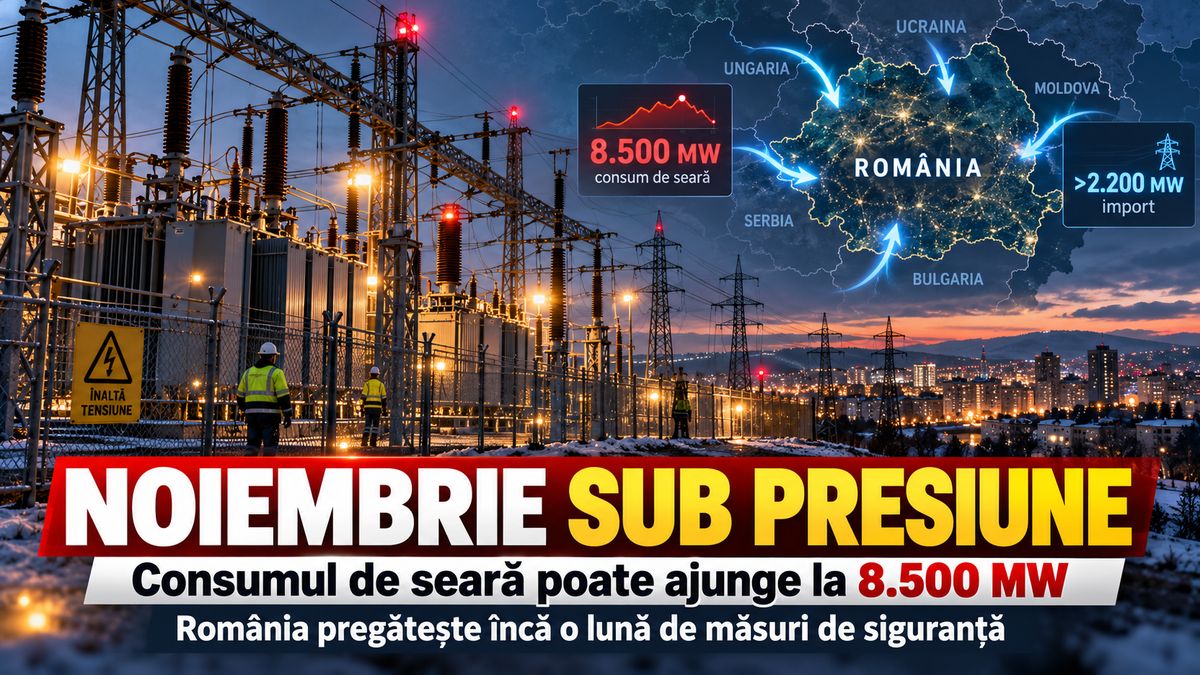
Romania is bracing for a difficult November regarding electricity supply. The Ministry of Energy estimates that peak power demand could reach 8,500 MW, as both nuclear reactors at Cernavoda remain offline, hydropower generation continues to suffer from drought, and imports have become a key pillar in meeting consumption. To maintain security of supply, the ministry proposes extending temporary emergency measures for the power system until November 30. Grid strain is already evident. Over the weekend of October 24–25, around 19:00, Romania was importing over 2,200 MW of electricity against national demand exceeding 6,700 MW, according to data reported by public broadcaster TVR. These figures show imports covering roughly a third of the country's power needs during that timeframe, highlighting the challenge of meeting domestic demand when available output from Romanian power plants drops. For November, the peak demand estimate rises by 500 MW compared to the 8,000 MW baseline considered for October. This 6.25% increase could prove significant in a grid where generation availability, hydrological conditions, and import capacity must continuously balance supply and demand. Two nuclear reactors offline: approximately 1,400 MW missing from available capacity The primary vulnerability of the Romanian power system remains the simultaneous outage of both units at the Cernavoda nuclear power plant. Unit 1 was safely shut down on July 28, 2026, and Unit 2 followed on August 13, driven by low water levels and reduced flow on the Danube River, which compromised the cooling parameters required for plant operations. The two reactors have a combined nominal capacity of approximately 1,411 MW. Under normal operating conditions, they provide a steady baseload supply regardless of time or weather. The loss of this output significantly shrinks domestic available capacity, particularly during peak demand hours. Relative to the estimated peak demand of 8,500 MW, the combined capacity of the reactors accounts for roughly 16.6%. While this comparison illustrates the magnitude of offline capacity rather than an actual energy deficit, real-time power operations must cover the gap through available dispatchable plants, renewable generation, energy storage, and cross-border electricity flows. In an October 11 statement, operator Nuclearelectrica confirmed that both units remain in a safe shutdown state. The company stressed that nuclear safety functions are fully maintained and that it will inform the public when hydrological conditions allow reactor synchronization. Likewise, assessments used by the Ministry of Energy to prepare for November point to ongoing uncertainty regarding the timing of nuclear output resumption in the immediate term. The underlying issue carries a notable structural feature: severe drought is simultaneously impacting two of Romania's major low-carbon generation sources. Low Danube levels forced the nuclear shutdown, while depleted reservoir levels and low river inflows constrain hydropower generation. Consequently, a single adverse weather driver is weakening multiple pillars of national electricity production. The 17:00–21:00 window emerges as the key challenge for the power grid In planning documents prepared for November, the Ministry of Energy identifies the 17:00 to 21:00 window as one of the most critical operational periods for the National Power System. During these hours, residential, commercial, and service sector demand rises while solar photovoltaic generation drops rapidly at sunset. During the cold season, shorter days and cloud cover widen this gap between solar generation and load demand. While wind energy can contribute substantially, wind output remains weather-dependent and volatile across dispatch intervals. Under these conditions, dispatchable power plants and operational reserves become indispensable. The power grid must continuously match generation to load. If demand surges by several hundred megawatts within a short timeframe, the imbalance must be covered by ramping up available dispatchable capacity, discharging battery storage, relying on imports, or deploying balancing market mechanisms. Total installed capacity offers only a partial view; supply security relies strictly on generation that can actually be delivered at any given moment. Imports are a standard element of the European internal electricity market, and Romania benefits from interconnections with neighboring countries. However, vulnerability grows when elevated domestic demand aligns with regional system peaks. In such scenarios, cross-border power available for import becomes costlier, while physical transfer capacity across interconnectors and technical constraints limit cross-border flows. The import surge exceeding 2,200 MW on the October 24–25 weekend illustrates the magnitude of external support needed during specific peak hours. Sustaining such levels over extended periods or increasing import volumes further…
Ioana Buzoaica — Independent Editorial Board
The NRG-IA newsroom continuously monitors Romanian energy markets, ANRE regulatory decisions, and national grid telemetry (SEN/SNT). We deliver independent intelligence anchored exclusively in official primary data.
Editorial Charter, Ethics & Verification Methodology →