Romania and Poland: Regional gas anchors post-Russian gas — NRG-IA
Gaze Naturale Author: Ioana BuzoaicaRomania could become a key Central European gas supplier post-Russian gas, anchored by Neptun Deep offshore volumes and Poland's global LNG access.
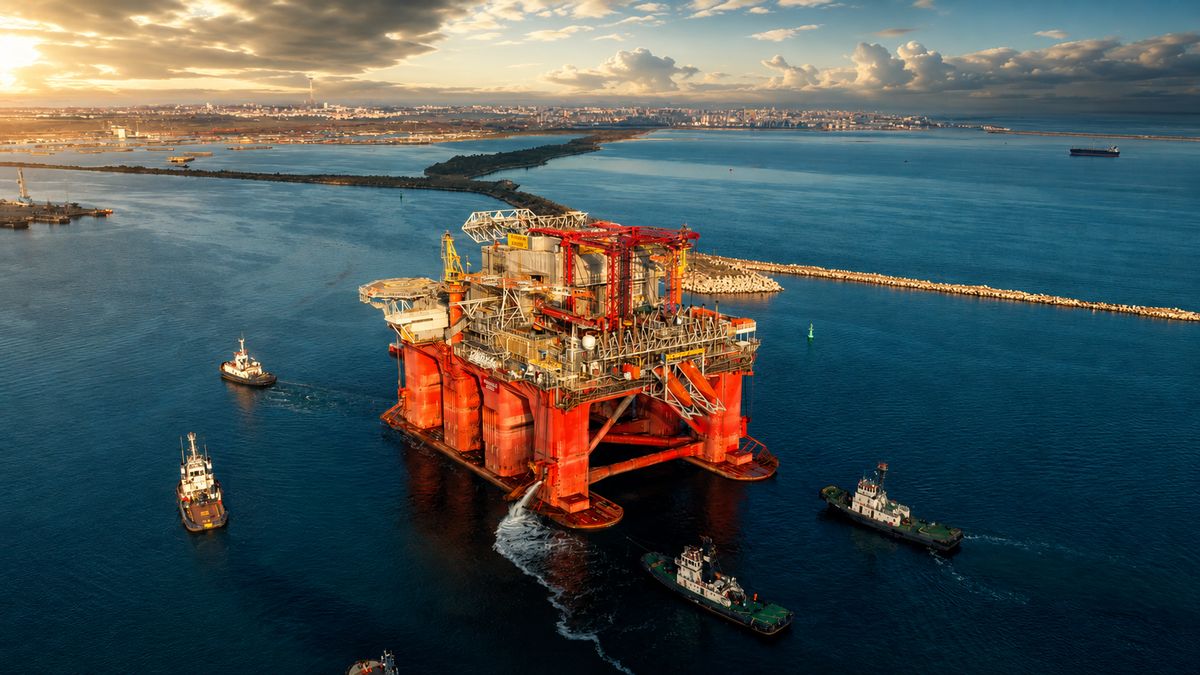
Romania is entering a rare moment of energy repositioning. The gradual phase-out of Russian gas from the European Union opens a window of opportunity in which Black Sea production can become relevant not only for domestic consumption but also for Central Europe's security of supply. An ICIS analysis, cited by Balkan Green Energy News and G4Media, points to Romania and Poland as two potential pillars of the new regional gas architecture. The analyzed region includes Austria, the Czech Republic, Poland, Slovakia, Hungary, and Romania. Together, these six markets represented approximately 602 TWh of gas demand in 2025, about 15% of the European Union's total consumption. Within this space, Romania could reach an annual production surplus of over 60 TWh by 2028, provided Neptun Deep comes online according to schedule and a significant portion of the gas reaches the regional market. The exit from Russian gas changes the logic of regional supply The European Union has transformed reducing dependence on Russia from a political goal into a market timeline. Russian LNG imports are set to be phased out by the beginning of 2027, and pipeline gas by the autumn of the same year, according to the timeline approved at the European level. In parallel, the European Commission shows that the EU's dependence on Russian gas has dropped from 45% of imports at the start of the war to 12% in 2025. For Central Europe, this transition has a direct technical and commercial stake. Slovakia and Hungary have historically been tied to East-West flows, with infrastructure and contracts built around Russian gas. The Czech Republic and Austria hold a more flexible position but remain exposed to regional supply costs. Poland has access to LNG and northern infrastructure. Romania has domestic production and, starting in 2027, can add offshore volumes from Neptun Deep. The new gas map is not built on a single source. It is constructed through a combination of regional production, LNG, interconnections, firm transport capacities, and predictable contracts. Romania can play a key role in this equation precisely because it brings EU-produced gas to a region where many states are seeking stable alternatives to Russia. Neptun Deep offers Romania volume, but influence depends on market access Neptun Deep is the tangible element of this repositioning. Developed by OMV Petrom and Romgaz with equal stakes, the project has estimated recoverable reserves of approximately 100 billion cubic meters (bcm), investments of up to €4 billion, and first gas expected in 2027. At plateau, production could reach approximately 8 bcm per year for nearly a decade. This volume could double Romania's national gas production and transform the country into a net exporter. The regional signal has already emerged through contracts and commercial interest: Moldova has signed up for volumes that would cover about a quarter of its annual consumption, Germany is involved via a 15 TWh contract with Uniper, and Slovakia has expressed interest in Neptun Deep gas as it seeks to reduce its reliance on Russian supplies. The presence of gas does not automatically mean unlimited availability for export. A portion may be used domestically, another part may go to external commercial contracts, and the Romanian state has intervention tools under certain security of supply conditions. Romania's regional role will be decided by this allocation. Tuzla–Podișor links the Black Sea to the BRUA corridor Black Sea gas needs infrastructure to become a regional resource. The Tuzla–Podișor pipeline is the critical link between the offshore production area and the national transmission system. The project spans approximately 308 km and connects Black Sea gas to the BRUA corridor—the infrastructure that can support gas flows to the west of the country and onward to neighboring markets, depending on available capacities and allocation rules. Transgaz includes the expansion and consolidation of the National Transmission System in its 2026–2035 development plans, including interconnections and projects related to the Vertical Corridor, Romania–Bulgaria, Romania–Serbia, and regional capacities. These projects matter because energy influence is measured not only in production but also in the ability to transport gas to where demand and price justify delivery. Romania has the advantage of an existing foundation: domestic production, a national transmission system, interconnections, proximity to import-dependent markets, and access to the Black Sea. The limitation lies in the capacity to transform all these elements into a predictable commercial mechanism. Poland brings LNG, Romania brings offshore production The ICIS analysis places Romania and Poland on the same regional map for a clear reason. The two countries offer different types of energy security. Romania can supply gas produced within the region through Neptun Deep and existing domestic production. Poland can provide additional access to global LNG…