Romania as NATO's Black Sea Fuel Logistics Hub — NRG-IA
Geopolitică & Energie Author: Ioana BuzoaicaExpanding NATO's pipeline network eastward could turn Romania into a strategic Black Sea logistics hub, supplying refined fuel to eastern flank forces.
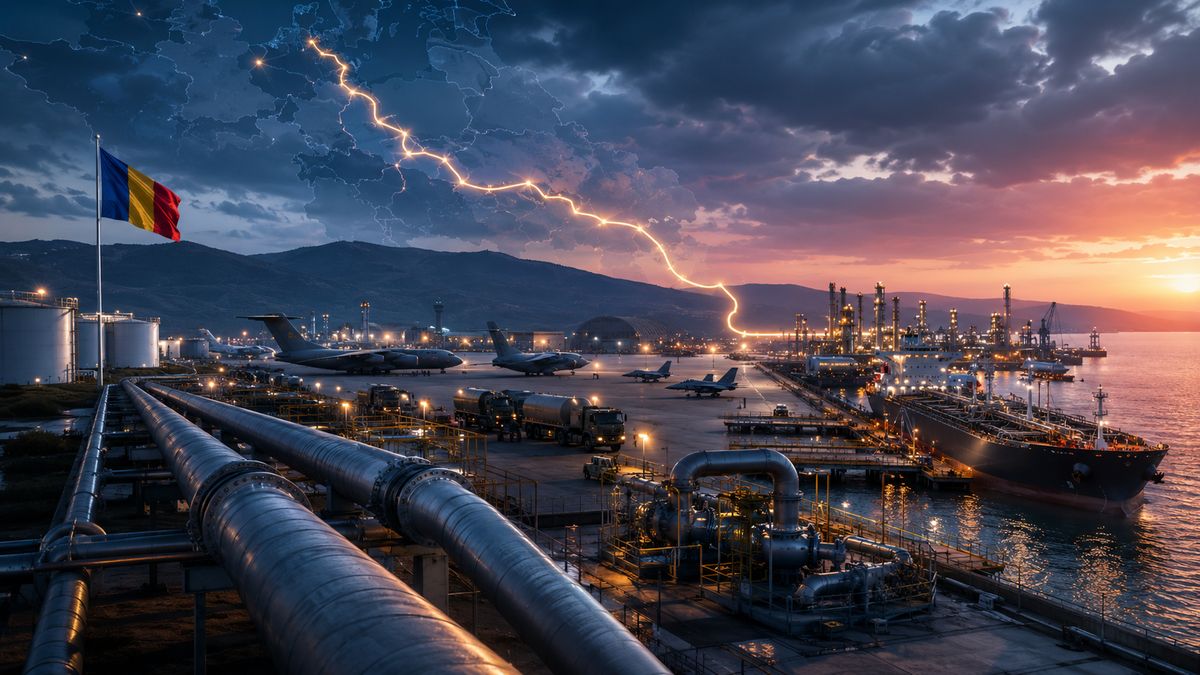
Romania is entering a major strategic NATO initiative: the eastward expansion of the military fuel pipeline network. The Alliance is analyzing how to bring the infrastructure built during the Cold War closer to the eastern flank to rapidly supply bases, aircraft, and military vehicles. In this equation, Romania's value lies in the Port of Constanța, its refineries, existing pipelines, petroleum product storage facilities, and the Mihail Kogălniceanu airbase. Lieutenant General Kai Rohrschneider, head of NATO's Joint Support and Enabling Command, told Reuters that extending the pipeline system further east would make operational sense. The existing NATO network spans approximately 10,000 km, was built during the Cold War, and was primarily designed to supply Western air forces in the event of a conflict with the Soviet Union. Fuel becomes defense infrastructure In a high-intensity conflict, fuel becomes just as critical as ammunition. Aircraft, armored vehicles, military trucks, mobile systems, generators, and forward bases require continuous supply. If supply relies solely on road tankers, trains, or convoys, every bridge, railway junction, congested road, and loading point becomes a vulnerability. NATO views this issue as one of the major logistical challenges on the eastern flank. Rohrschneider stated that the system should clearly be extended toward Poland, that a solution is needed for the Baltic states, and that expansions toward Finland and Romania are necessary. The project is still under political discussion, with no final timeline for a decision. This distinction is essential for Romania. The country is not merely a geographical edge of NATO. It is a space where the Black Sea, the Danube, ports, refineries, transport infrastructure, and military bases can be linked into a logistical system of strategic value. What the NATO network transports The NATO pipeline system is not built for natural gas or crude oil. It carries refined fuels: aviation kerosene (jet fuel), diesel, gasoline, and other petroleum products used by military forces and, under certain conditions, civil infrastructure. The core component, the Central Europe Pipeline System, spans approximately 5,300 km and supplies airbases, airports, depots, ports, and loading points across Western Europe. The system was designed for speed, continuity, and security. The pipeline reduces reliance on road and rail transport for large volumes of fuel, while associated storage depots create reserves close to where the fuel is needed. In defense, this difference can dictate the tempo of an operation. OSW points out that relying exclusively on road and rail tankers can quickly prove insufficient during a major operation, ties up logistical capacity needed for other military requirements, and is easier for an adversary to track. The pipeline and storage network is therefore a key component of military resilience, not just energy infrastructure. Why Romania matters Romania possesses a rare combination of assets. The Port of Constanța can receive maritime flows. Refineries in the Ploiești area and on the Black Sea coast can produce refined fuels. Existing pipelines and storage facilities can be assessed for integration, modernization, or connection. The Mihail Kogălniceanu airbase is becoming one of NATO's most important military hubs in Southeastern Europe. This combination can transform Romania into a fueling hub for the eastern flank. In a crisis scenario, fuel cannot simply be purchased. It must be transported, stored, protected, pumped, and rapidly delivered to bases, airports, and military units. Romania has the geographical position and the baseline infrastructure to play a key role in this architecture. The Port of Constanța is the centerpiece. It can link maritime imports to refineries, pipelines, storage depots, and military bases. In an expanded allied system, Constanța could function as a logistical gateway for NATO fuel in the Black Sea region, with connections to Southeastern Europe and expanding military infrastructure. The Black Sea enters the logic of critical infrastructure The NATO pipeline initiative comes at a time when the Black Sea is gaining increasing importance for infrastructure security. Romania, Bulgaria, and Turkey have agreed to expand the missions of their joint Black Sea mine countermeasures task force to include the protection of critical infrastructure, including energy, telecommunications, and subsea pipelines. This development shows that energy security and military security are increasingly overlapping. Pipelines, ports, terminals, subsea cables, offshore platforms, and military bases can no longer be treated in isolation. In the Black Sea region, they are part of the same risk map. Romania has a direct role here. It shares a border with Ukraine, has access to the Black Sea, hosts offshore energy projects, and accommodates allied military infrastructure. A NATO fuel network would add a new dimension: the operational…
Ioana Buzoaica — Independent Editorial Board
The NRG-IA newsroom continuously monitors Romanian energy markets, ANRE regulatory decisions, and national grid telemetry (SEN/SNT). We deliver independent intelligence anchored exclusively in official primary data.
Editorial Charter, Ethics & Verification Methodology →