Transgaz Plans €1.38B Gas Links to Ukraine and Moldova — NRG-IA
Gaze Naturale Author: Ioana BuzoaicaTransgaz proposes new gas links to Ukraine, Moldova, and Serbia. Shareholders have approved the plan, but final investment decisions are pending.
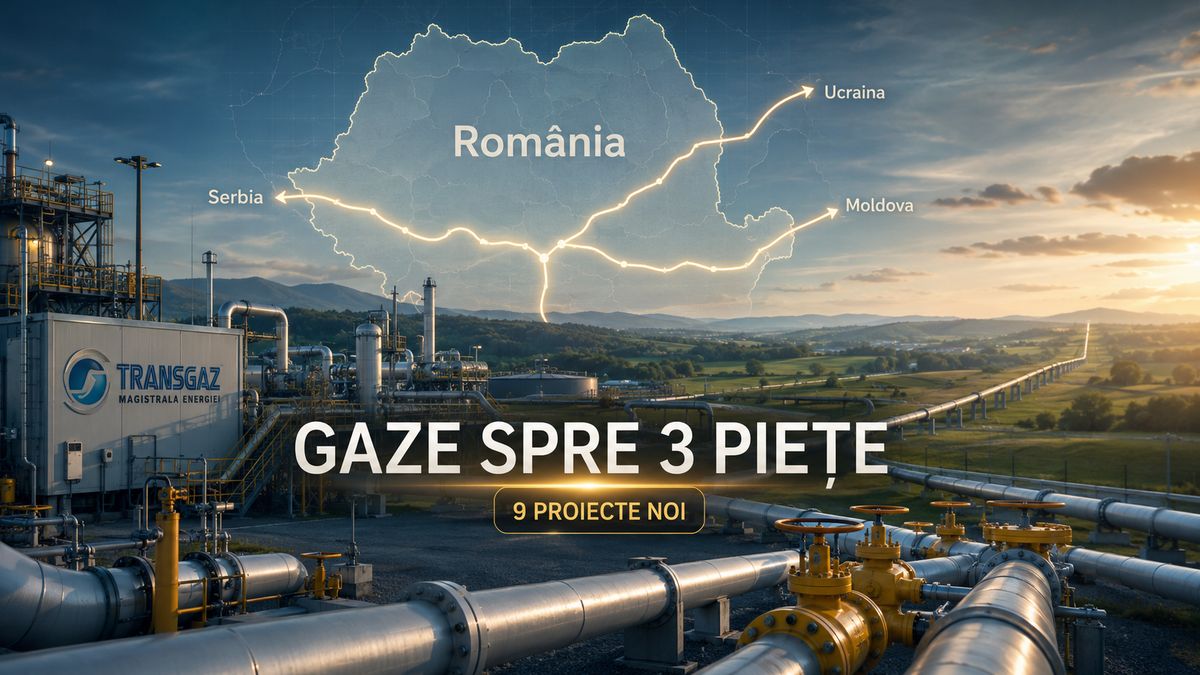
Transgaz is proposing a new interconnection with Ukraine, additional capacity to the Republic of Moldova, and several domestic pipelines required to transport gas to Serbia and Central Europe. The company's shareholders have preliminarily approved the plan, which must be submitted to the regulatory authority, though most projects have not yet secured final funding and construction approvals. Article Content: Romania is preparing a major expansion of its national gas transmission network, built around new connections with Ukraine and the Republic of Moldova, alongside strengthening the route to Serbia. Transgaz's plan for the 2026–2035 period adds nine major projects, collectively valued at approximately €1.376 billion, with estimated completion dates between 2027 and 2032. Transgaz shareholders granted preliminary approval on July 21, 2026, for the document updated following public consultation. The resolution was adopted with 98.29% of the votes cast, allowing the plan to be submitted to the National Energy Regulatory Authority (ANRE) for review and approval. This stage does not equate to construction approval for all included pipelines and stations. Depending on its current stage, each investment must undergo technical studies, environmental procedures, permitting, financing identification, coordination with neighboring system operators, and the adoption of a final investment decision (FID). Nine Investments Redraw Gas Routes The largest new project is the Gherăești–Siret pipeline, which would establish an additional link between the transmission networks of Romania and Ukraine. The investment is estimated at €450 million, with an indicative completion target of 2032. The project includes approximately 130 kilometers of pipeline, a border metering station, and, if technical analyses require it, the expansion of the compressor stations at Onești and Gherăești. Compressor stations maintain the pressure necessary to move gas over long distances. A second investment, valued at €26.4 million and tentatively scheduled for 2032, aims to increase transmission capacity to the Republic of Moldova. The project is currently in the conceptual phase. The plan does not yet specify the route, border crossing point, pipeline length, or the additional volume of gas that could be transported. The other new projects form a sequence of pipelines and stations that could move larger volumes from eastern Romania toward the center and west: the Isaccea–Șendreni pipeline, estimated at €97.5 million; the Onești–Coroi pipeline, estimated at €371 million; the Coroi–Botorca pipeline, estimated at €49 million; the Hațeg–Petrovaselo pipeline, estimated at €175 million; the Hațeg compressor station, estimated at €69 million; the Isaccea compressor station, estimated at €125 million; the modernization of the Negru Vodă 1 metering station, estimated at €12.77 million. The timelines in the plan are estimates, not guaranteed contractual dates. The Onești–Coroi and Coroi–Botorca pipelines are tentatively scheduled for 2029, the Hațeg–Petrovaselo infrastructure and the Hațeg compressor station for 2030, and the Isaccea–Șendreni pipeline and Isaccea compressor station for 2031–2032. A New Link with Ukraine, Reintroduced to the Plan The Gherăești–Siret pipeline reappears after being removed from Transgaz's planning in 2022. The project has now been reintroduced to establish cross-border capacity in the Siret area and to complement developments completed in northeastern Romania. Its importance has grown alongside the changing role of the Ukrainian network. Following the cessation of Russian gas transit to the European Union, Ukraine requires routes to import gas and utilize its underground storage facilities, which are among the largest on the continent. Romania could become one of these supply routes if it simultaneously has gas available, sufficiently robust domestic pipelines, and border capacity. Volumes could come from Romanian domestic production, the Black Sea, or imports brought through Bulgaria and the corridor linking Southeastern Europe to northern markets. The plan does not yet indicate the annual capacity of the future Siret link. Without this figure and a commercial assessment, it is impossible to determine how much gas could actually be exported to Ukraine and under what economic conditions. The Republic of Moldova Seeks a Second Supply Option The Republic of Moldova is already connected to Romania via the Iași–Ungheni–Chișinău infrastructure. The new project aims to expand transport options and reduce dependence on a single route. However, this investment remains the least defined of the nine projects. Transgaz mentions the objective, the preliminary value, and the year 2032, but does not identify the location of the new link. The route, diameter, capacity, and necessary works on the existing network must be determined through subsequent studies. Implementing the project would have broader implications than just covering…
Ioana Buzoaica — Independent Editorial Board
The NRG-IA newsroom continuously monitors Romanian energy markets, ANRE regulatory decisions, and national grid telemetry (SEN/SNT). We deliver independent intelligence anchored exclusively in official primary data.
Editorial Charter, Ethics & Verification Methodology →