Aukera commissions 150 MW / 300 MWh battery in Romania — NRG-IA
Energie Regenerabilă Author: Ioana BuzoaicaRomania transitions from planned storage projects to operational utility-scale batteries. Aukera's 150 MW / 300 MWh Gura Ialomiței project is now online.
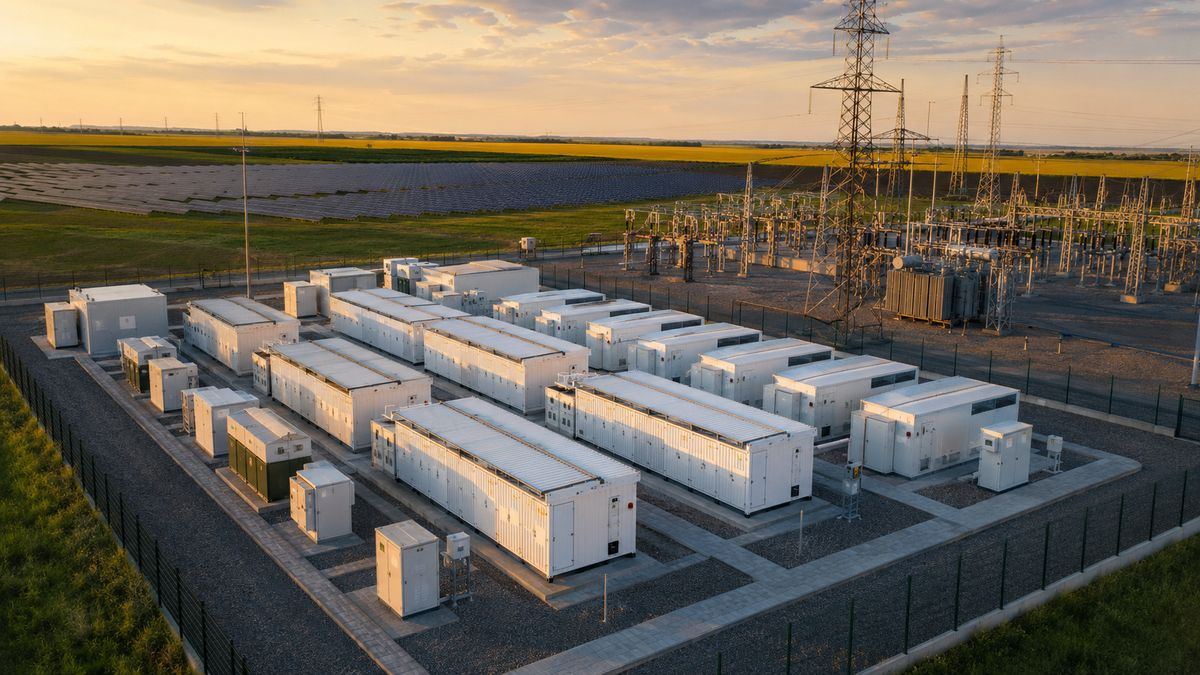
Romania has a new utility-scale battery connected to its grid: the first phase of the Gura Ialomiței BESS project, developed by Aukera Energy, has been commissioned with a capacity of 150 MW / 300 MWh . Located in Ialomița County, the project is part of a larger 250 MW / 500 MWh development, representing one of the largest storage capacities announced in Romania and the wider region. For the Romanian energy market, this milestone matters far beyond the project's sheer size. The Gura Ialomiței battery demonstrates that utility-scale storage is beginning to transition from plans, financing, and permitting into operational assets. In a system with increasingly high solar generation at midday and pressure during evening hours, batteries are becoming essential flexibility infrastructure, rather than a mere accessory to renewables. What 150 MW / 300 MWh means The 150 MW output indicates how much power the battery can charge or discharge at any given moment. The 300 MWh capacity shows how much energy it can store. The ratio between the two indicates a discharge duration of approximately two hours at full power, placing it in the category of batteries useful for energy arbitrage, balancing, and ancillary services. In short, such a battery does not generate energy. Instead, it shifts the time when energy can be used. It can charge when generation is abundant, especially from solar and wind, and discharge when the system requires fast, flexible, and dispatchable power. This is the core value proposition of storage: cheap or abundant energy during a specific interval no longer has to be wasted, curtailed, or sold at rock-bottom prices, provided there is storage capacity and market rules that value it efficiently. Fast-track project delivery, with phase two in the pipeline According to SeeNews, Aukera Energy announced the commissioning of the first phase of the Gura Ialomiței project, with 150 MW installed. The second phase is expected to add another 100 MW / 200 MWh , with delivery estimated by the end of the year. E-nergia notes that the project was executed by Electrogrup, part of the Romanian group E-INFRA, and the first phase was delivered in approximately seven months from the start of construction. Electrogrup stated that, with this project, it reaches 1 GWh of installed, delivered, and commissioned storage capacity across multiple investors. This execution speed is significant for the market. Romania has many announced storage projects, but the real difference is made when a project successfully navigates construction, grid connection, testing, and commissioning. Gura Ialomiței becomes a benchmark precisely because it marks this transition from intention to operation. Why storage is becoming critical for Romania Romania is installing more and more renewable capacity, and solar generation has begun to reshape the market profile. During midday hours, when solar output peaks, the system can experience relative surpluses, low prices, and grid pressure. In the evening, when demand remains high and solar generation drops, the grid requires fast, flexible, and predictable capacity. This is exactly where batteries step in. They can absorb energy when the system has excess generation during a specific interval and deliver it when the grid needs balancing. Their role grows alongside the expansion of solar farms, grid constraints, and hourly price volatility. Gura Ialomiței alone will not solve Romania's flexibility challenges. However, it points to the direction the system is heading: more solar requires more storage, and more storage demands clear rules for operation, balancing, revenue generation, and market integration. A project backed by the NRRP with broader systemic implications SeeNews notes that the project is supported by the National Recovery and Resilience Plan (NRRP) and represents the largest project funded through this program up to the time of the announcement. This detail is important because it demonstrates how public funds and private capital can accelerate storage infrastructure. Utility-scale batteries are market assets, but they also serve a systemic function: they facilitate renewable integration, alleviate pressure during periods of imbalance, and contribute to grid stability. Aukera has significant plans in Romania. The company announced its intention to start construction on an additional 800 MW / 1,600 MWh of storage capacity over the next six to nine months. If this timeline holds, Romania could rapidly transition from isolated projects to a utility-scale BESS market of genuine scale. The second-largest operational battery in an accelerating market E-nergia reports that, based on Transelectrica's data on operational batteries, the 150 MW / 300 MWh facility at Gura Ialomiței is the second-largest in Romania by capacity, following the Florești battery developed by Nova Power and Gas, which stands at 201 MW / 402 MWh . This comparison highlights the market's rapid pace. Just a few years ago,…