Transgaz: Romania Ready for Black Sea Gas via Tuzla-Podișor — NRG-IA
Gaze Naturale Author: Aurora AITransgaz readies Romania's gas grid: Tuzla–Podișor links Black Sea gas to BRUA, while winter consumption is set to rise by up to 1 bcm.
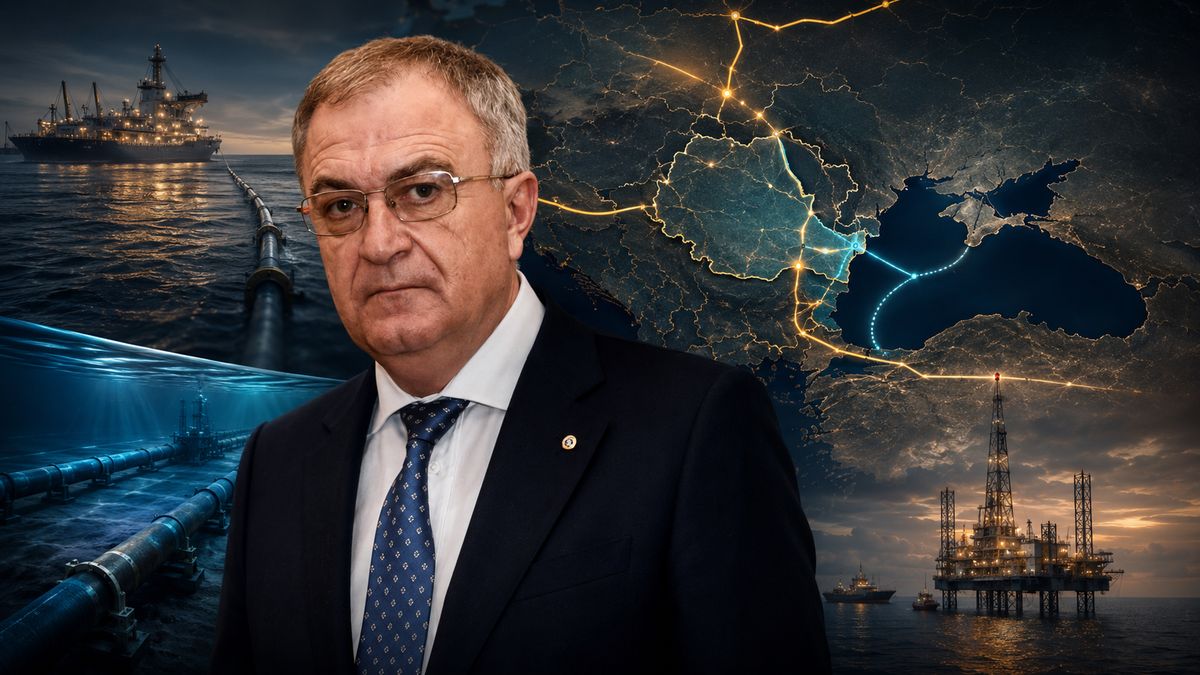
Romania is entering a critical phase for its natural gas market: the infrastructure built by Transgaz is ready to take in Black Sea gas, while new gas-fired power generation capacities could push domestic consumption upward as early as the next cold season. Ion Sterian, Director General of Transgaz, stated at FOREN 2026 that investments made in recent years have prepared the necessary infrastructure to take in offshore production and consolidate Romania's regional role in gas transmission. According to Financial Intelligence, Transgaz's investments over the last seven to eight years have exceeded €3 billion. The Black Sea enters the transmission grid The centerpiece is the Tuzla–Podișor pipeline, the infrastructure designed to link gas extracted from the Neptun Deep perimeter to the BRUA corridor and, further on, to transmission routes toward Bulgaria and Hungary. Sterian summarized the company's position in direct terms: “We are ready to take in the gas from the Black Sea,” according to the statement cited by Financial Intelligence. He specified that the pipeline is operational, taking in gas, and ensuring transit to Hungary and connected localities. The Tuzla–Podișor pipeline carries higher stakes than just transporting future Neptun Deep production. It connects resources from the Black Sea coast to the national grid and the BRUA corridor, enabling natural gas transmission to and from Bulgaria and Hungary via the existing Giurgiu–Ruse and Nădlac–Szeged interconnectors. In Transgaz's documentation, the project is presented as an investment that enhances Romania's security of supply and diversifies gas sources. For Neptun Deep, this infrastructure becomes the link between offshore production and the onshore market. OMV Petrom and Romgaz are partners in the Black Sea perimeter, which holds estimated reserves of approximately 100 billion cubic meters (bcm), with first gas expected starting in 2027, according to information cited in documents aggregated by Transgaz. BRUA takes on a domestic role, not just a regional one Sterian rejected the idea that BRUA is merely a transit route. His statement highlights an important nuance: the infrastructure has a regional role, but also features domestic off-takes, connections, industrial consumers, and grid-connected localities. “BRUA is not and will not be a highway without exits,” said the Director General of Transgaz, according to Financial Intelligence. This phrasing is significant for Romania's positioning. The pipeline is not just a conduit for gas passing to other markets, but an infrastructure that can supply local consumers, support industrial investments, and increase the flexibility of the national system. In the Tuzla–Podișor project area, Transgaz indicates the potential to supply gas to approximately 184,221 residents and 523 public institutions. Thus, Black Sea gas and BRUA are not limited to export or transit. The real stake is Romania's capacity to use offshore gas for domestic consumption, regional security, industry, power plants, and connecting communities to the gas network. Mintia pushes gas to the center of the power system The second major axis is Mintia. Transgaz has completed the pipeline dedicated to supplying gas to the new Mintia power plant, a critical project for the national energy system. Sterian stated that the operator has built the 56 km pipeline that will supply the plant, with a maximum capacity of 2.5 bcm, and that testing and the completion of technical gas metering and regulation components are currently awaited. The Băcia–Mintia pipeline plays a direct role in supplying the new gas-fired generation capacity. According to Transgaz documents, the project facilitates the natural gas supply to the new power generation capacity at Mintia and develops transmission capacity for future industrial consumers or distribution networks connected to the National Transmission System. This connection changes the role of gas in Romania. Gas is no longer just a fuel for domestic consumption or industry; it is becoming a balancing fuel for the electricity system, especially in a market with growing renewable generation and a greater need for dispatchable capacities. Mintia, Iernut, and other gas-fired capacities can increase consumption precisely when the system needs flexible generation. This brings an energy security advantage, but also introduces new pressure on supply, transmission, and peak imports. Consumption could rise by up to 1 bcm during the cold season Transgaz estimates a significant increase in gas consumption between November 1 and March 31. Ion Sterian stated that, according to company analyses, consumption could rise by 800 million to 1 billion cubic meters (bcm), driven by new gas-fired power generation capacities and network expansions under the Anghel Saligny program. This growth must be viewed in direct relation to the new power plants and connections. Gas is returning to the center of energy security just as Romania is trying…