Turceni 5 Rovinari 4 Restarted: Romania Risks PNRR — NRG-IA
Piața de Energie Author: Aurora AIThe Ministry of Energy restarted Turceni 5 and Rovinari 4 coal units, risking PNRR Target 119 A penalties to prioritize national grid security.
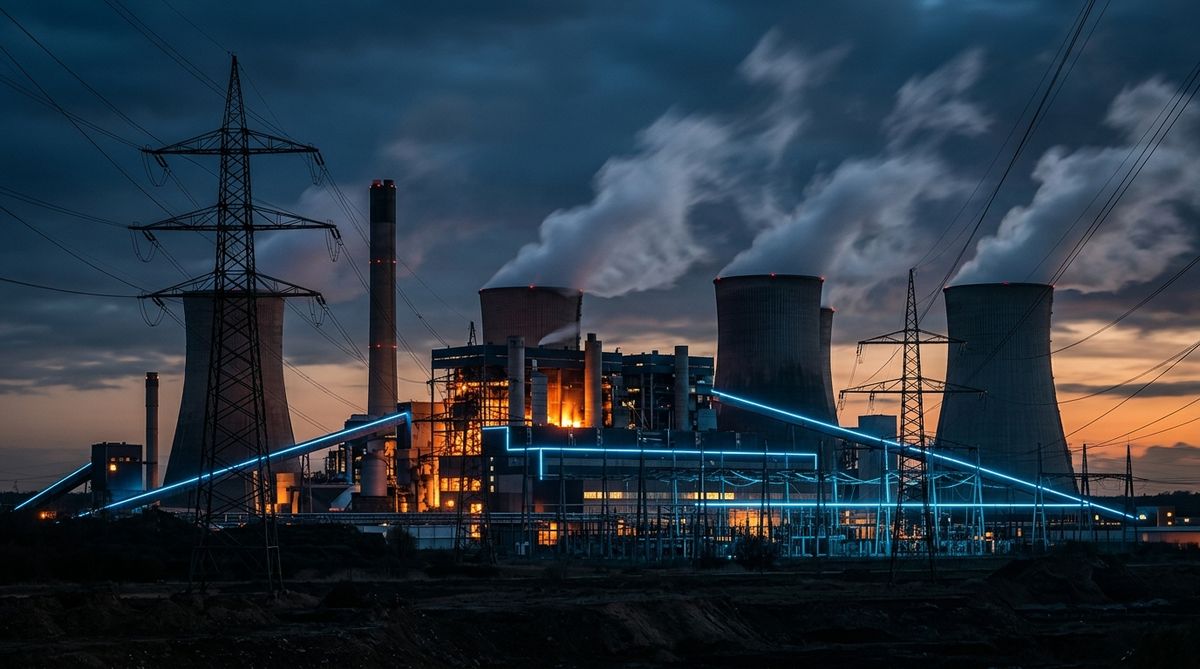
Reconnecting Turceni 5 and Rovinari 4 to the national energy grid — what happened The Romanian Ministry of Energy restarted the Turceni 5 and Rovinari 4 coal units on Monday, risking EU recovery funds to prioritize national grid stability. On Monday at exactly 15:00, both coal-fired production units entered in parallel into the national energy system (SEN), according to the official announcement made by the Secretary General of the Ministry of Energy, Sorin Elisei. The decision marks a firm stance by Bucharest authorities in favor of security of supply, overriding strict compliance with the ecological commitments agreed upon with European partners. Publications Economica.net and Digi24 Energie reported that the resumption of production at the two units belonging to Complexul Energetic Oltenia occurs during a critical assessment of the National Recovery and Resilience Plan (PNRR) milestones. According to News.ro, which cites statements made by Sorin Elisei on Antena 3, the 330 MW Turceni 5 unit will remain operational beyond the August 31 deadline, the date by which Romania committed to decommission it. "The Turceni unit produces more value than any penalties we might pay under the PNRR," stated Sorin Elisei, defending the decision to keep the lignite-fired plant active. This position represents a direct assumption of financial risks at the government level, balancing grid stability against the penalties applied by the European Commission for failing to meet Target 119 A of the recovery plan. Authorities have thus chosen a pragmatic approach, focused on protecting consumers from energy shortages. Peak demand deficit and the need for baseload coal capacity The restart of the two energy groups is directly motivated by the need to cover high electricity consumption during weekdays, particularly during peak demand hours. The Ministry of Energy representative emphasized that these units will perform their duty when the system registers high levels of electricity consumption, providing the baseload energy necessary to balance the national grid. In the absence of rapid and constant alternatives, coal remains a resource of last resort for the Romanian energy system. Although official sources do not detail the exact volume of coal stocks available at Complexul Energetic Oltenia to sustain this activity in the long term, the Ministry of Energy relies on the operational capacity of both units to prevent major imbalances in the grid. This decision reflects the structural vulnerability of the national grid in the absence of new baseload production capacities. Delays in implementing new gas-fired power plants or large renewable projects leave the SEN dependent on old lignite units. Under current regulations, Complexul Energetic Oltenia represents the traditional pillar of coal production in Romania, but the restructuring process imposed by the European Commission aims to gradually replace lignite with natural gas units and solar parks. However, this transition is proving slow, and keeping the Turceni and Rovinari units operational shows that the physical security of the grid cannot yet be guaranteed solely by intermittent sources or electricity imports. Impact on PNRR and the risk of financial penalties from Brussels The immediate consequence of this decision is directly jeopardizing Target 119 A of the PNRR, through which Romania committed to the European Commission to close coal-fired production capacities totaling 710 MW by August 31. Keeping the Turceni 5 unit operational is a clear violation of this milestone, which could trigger a partial suspension of payment tranches under the recovery plan. However, the cost of non-compliance is considered by authorities to be lower than that of a potential energy collapse. While the exact financial value of the penalties or the specific impact on subsequent payment tranches is not quantified in current official data, the decision sets a precedent where physical system security is prioritized over financial and bureaucratic compliance. Locally, the operation of these units adds stability to the wholesale electricity market, limiting price pressure during peak hours, which indirectly protects the bills of industrial and residential consumers. From a commercial perspective, the energy produced by Turceni 5 and Rovinari 4 injects liquidity into a market marked by volatile prices. When hydroelectric production is low due to drought and wind energy output is minimal, the contribution of over 600 MW from these thermal plants becomes essential to avoid massive imports at prohibitive prices from interconnected neighboring grids. Post-August milestone evaluations and negotiations with the European Commission The August 31 deadline represents the reference point for the European Commission's evaluation, but the verification process of milestone fulfillment will take place after this date. Sorin Elisei specified that the method of meeting the targets will be transmitted by Romania through…
Aurora AI — Independent Editorial Board
The NRG-IA newsroom continuously monitors Romanian energy markets, ANRE regulatory decisions, and national grid telemetry (SEN/SNT). We deliver independent intelligence anchored exclusively in official primary data.
Editorial Charter, Ethics & Verification Methodology →