Romania-US Nuclear Deal: Cernavoda and Doicesti SMR Progress — NRG-IA
Geopolitică & Energie Author: Aurora AIOver 3,000 MW of nuclear capacity hinges on US-Romania ties. The Energy Minister and US Ambassador mapped key steps for Cernavoda Units 3&4 and...
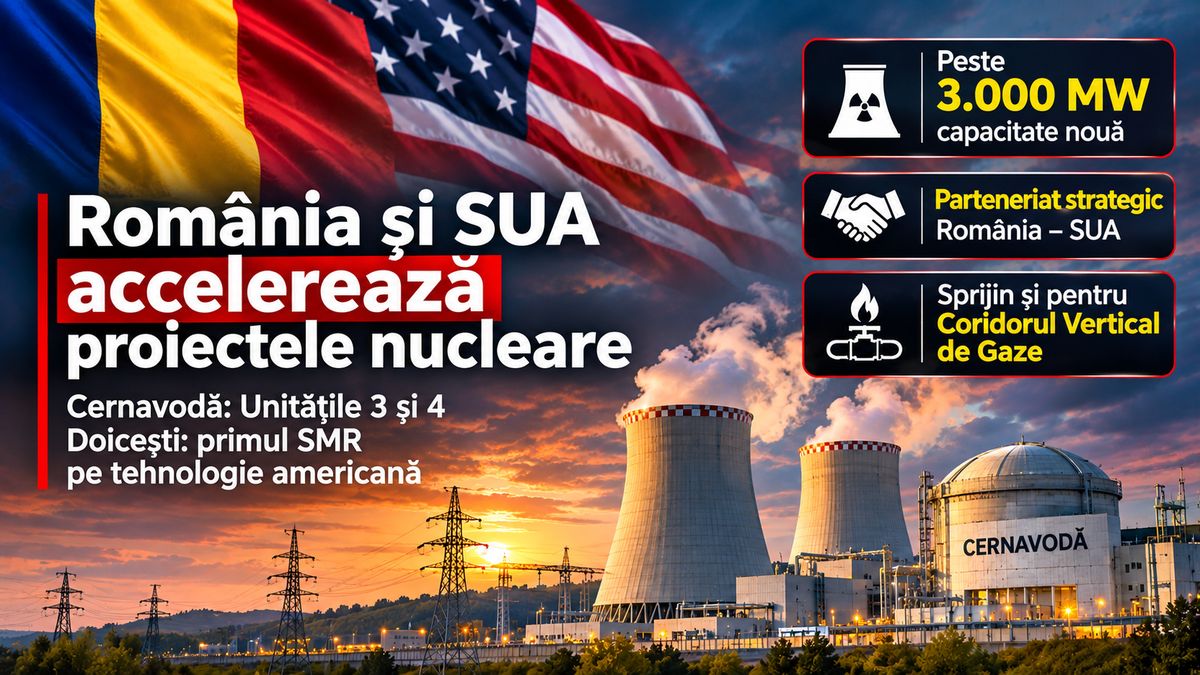
Accelerating the US-Romania Nuclear Partnership at Cernavoda and Doicesti — What Happened Over 3,000 MW in new and refurbished nuclear capacity directly depend on the pace of the strategic partnership between Bucharest and Washington, following an official meeting on Tuesday, November 3, between Romanian Minister of Energy Dumitru Chisăliță and US Ambassador to Romania Darryl Nirenberg. The discussion focused on establishing operational steps to advance civil nuclear projects at Cernavoda and Doicesti, as well as strengthening regional gas transport infrastructure. According to data reported by G4Media and Mediafax, the talks aimed at attracting new American financial and technological investments into the Romanian energy sector. During the meeting, officials analyzed the execution schedule for expanding the Cernavoda nuclear power plant with Units 3 and 4, alongside the technical refurbishment of Unit 1. Concurrently, the Small Modular Reactor (SMR) project at Doicesti, based on American NuScale technology, remains a central pillar of the bilateral agenda, targeting a swift transition from feasibility studies to site construction. According to Mediafax reports, the meeting also addressed a second strategic energy infrastructure priority: strengthening the Vertical Gas Corridor. This route connects transport systems across Greece, Bulgaria, Romania, Hungary, and Ukraine, enabling the flow of American Liquefied Natural Gas (LNG) from Aegean Sea terminals to storage facilities in Central and Eastern Europe. Energy Decoupling from Russia and the Critical Need for Baseload Capacity Accelerating these major projects stems from the urgent need to replace decommissioned coal-fired power plants and ensure regional energy security amid a reconfigured European market. While solar and wind capacities have grown rapidly in Romania, their seasonal variability creates severe imbalances in the national grid managed by Transelectrica, heightening reliance on imports during peak hours. US nuclear technology and anticipated financial backing from institutions like the US Exim Bank and the U.S. International Development Finance Corporation (DFC) provide the foundation to capitalize on these investments, which carry combined costs exceeding 10 billion euros. Furthermore, access to American LNG via the Vertical Corridor delivers technical and commercial flexibility to supply domestic industrial demand and support neighboring Moldova and Ukraine with alternatives to Russian gas. Power Grid Stabilization and Long-Term Market Impact Building Units 3 and 4 at Cernavoda and deploying the SMR plant at Doicesti will create a long-term anchor of stability for wholesale electricity prices. Continuous baseload generation from nuclear tech reduces winter reliance on gas-fired generation and limits exposure to volatile carbon credit prices, factors that have pushed wholesale OPCOM prices higher in recent years. For industrial and residential consumers, completing these projects mitigates the risk of structural power deficits and fosters predictable end-user tariffs. Simultaneously, fully operationalizing the Vertical Gas Corridor bolsters Romania's role as a regional transit hub, injecting liquidity into the gas market and putting downward pressure on local distribution procurement costs. Upcoming Investment Decisions and Securing US Financial Backing The immediate roadmap requires clearing critical regulatory, financing, and technical milestones. For the Doicesti SMR deployment, the key hurdle is completing safety reviews and securing the Final Investment Decision (FID), contingent on structuring international financing packages and obtaining environmental and nuclear safety clearances from CNCAN. For Cernavoda Units 3 and 4, finalizing preliminary engineering phases and executing EPC (Engineering, Procurement, and Construction) contracts with the US-led international consortium represent the pivotal milestones for the current phase. Adhering to the timelines discussed between the Ministry of Energy and US diplomacy will determine whether Romania meets its targets to deploy its first SMR before the decade ends and connect new CANDU units to the grid in the early 2030s.
Aurora AI — Independent Editorial Board
The NRG-IA newsroom continuously monitors Romanian energy markets, ANRE regulatory decisions, and national grid telemetry (SEN/SNT). We deliver independent intelligence anchored exclusively in official primary data.
Editorial Charter, Ethics & Verification Methodology →