Romgaz seeks 140 MW grid connection in first capacity round — NRG-IA
Piața de Energie Author: Ioana BuzoaicaRomgaz and five others seek to connect 491 MW of projects. Transelectrica reports zero grid capacity without upgrades across all zones and years.
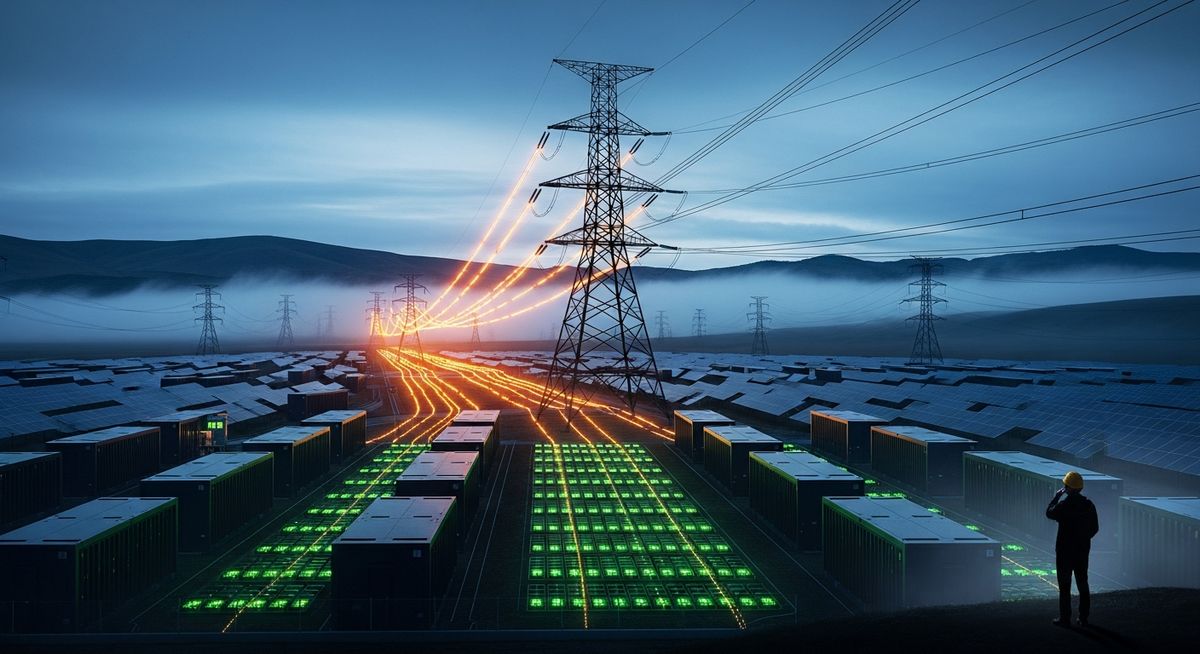
Transelectrica has published the first 12 applications submitted under the new grid capacity allocation mechanism, totaling 491 megawatts. The list includes solar, wind, and storage projects proposed by six companies, including Romgaz, with commissioning dates scheduled between 2028 and 2033. The publication of these applications marks the beginning of the process, not connection approval. Transelectrica must finalize the list of applications with complete documentation by July 24. Subsequently, each project will depend on the technical capacity that can be created in its requested area and, in most cases, on the outcome of an auction. None of the ten zones have available capacity without new grid upgrades The most significant signal from this first round lies not in the number of projects, but in the state of the grid. The map published by Transelectrica indicates zero available megawatts across all ten zones of the country for every year between 2028 and 2037, unless additional grid development work is carried out. This figure does not represent the actual power flowing through lines and substations at any given moment. Instead, it shows that in the operator's planning model—after accounting for existing infrastructure, planned investments, and previously granted connection rights—no secure technical headroom remains for new projects without further grid expansion. Connecting the 491 megawatts remains possible if the updated technical study identifies grid upgrades capable of creating sufficient capacity. This could require new lines, substation upgrades, transformer replacements, or other interventions that allow power transmission without exceeding system safety limits. By October 23, Transelectrica must determine the necessary works in each zone, the additional capacity that can be unlocked, the years it can become available, and the estimated costs. These results will determine both the number of projects that can be connected and the starting prices for the auctions. Romgaz requests 140 megawatts across three projects Romgaz is the largest individual applicant in this first round. The company has registered two solar PV parks with integrated storage at Zagăr and Ogra, each with a requested capacity of 20 megawatts, alongside a 100-megawatt battery at Iernut. All three projects target commissioning in 2028. The total capacity requested by Romgaz is 140 megawatts, equivalent to approximately 28.5% of the entire round. These projects align with the gas producer's strategic goal to develop at least 180 megawatts of solar PV by 2030 and gradually expand into low-emission power generation. The Iernut battery is the largest individual project on the list. The Transelectrica document specifies a power capacity of 100 megawatts, representing the maximum rate at which the facility can charge or discharge electricity at any given moment. The registry does not mention the battery's energy capacity in megawatt-hours. Without this value, it is impossible to determine how long the facility can deliver those 100 megawatts. A battery with the same power output can be designed for one hour, two hours, or longer, serving different functions and carrying different costs. Over 70% of applications include storage The project mix reveals a strong shift toward batteries. Standalone storage facilities total 212 megawatts, while solar PV projects paired with batteries add another 139 megawatts. In total, 351 of the requested 491 megawatts (approximately 71.5%) include a storage component. The remaining 140 megawatts come from wind projects or hybrid wind-solar installations for which the registry does not list battery storage. In addition to Romgaz's three investments, the list includes a 51-megawatt battery proposed by SG Renewables at Oporelu, a 51-megawatt storage facility by Energy Capital Grup, and two 5-megawatt batteries by Hostix Zso. Hessmaier submitted applications for two solar-plus-storage projects at Ghizdaru and Berceni, and two hybrid wind-solar projects at Poarta Albă and Galicea. A separate entity, Hessmaier Zso, registered a 42-megawatt wind farm at Vășcani. The prevalence of storage in most applications reflects shifting project economics. Solar generation is concentrated during daylight hours, whereas demand and prices often spike in the evening. Batteries can store energy during peak production hours for later delivery, respond rapidly to imbalances, and smooth out sudden fluctuations in grid injection. The impact of each project will depend on battery duration, connection location, and operational strategies. The presence of a battery does not automatically eliminate the need for grid reinforcement, especially if it charges or discharges at high capacity in an already congested area. Developers compete for connection rights The new mechanism does not auction off power plants or the energy they will generate. Instead, developers compete for the right to use a specific grid capacity in a specific area and…
Ioana Buzoaica — Independent Editorial Board
The NRG-IA newsroom continuously monitors Romanian energy markets, ANRE regulatory decisions, and national grid telemetry (SEN/SNT). We deliver independent intelligence anchored exclusively in official primary data.
Editorial Charter, Ethics & Verification Methodology →