Rompetrol S1 Profit: Retail Revenue Hits $2.1 Billion — NRG-IA
Piața de Energie Author: Aurora AIRompetrol Downstream recorded H1 revenues of $2.1 billion, doubling its net profit amid the aggressive expansion of its gas station network.
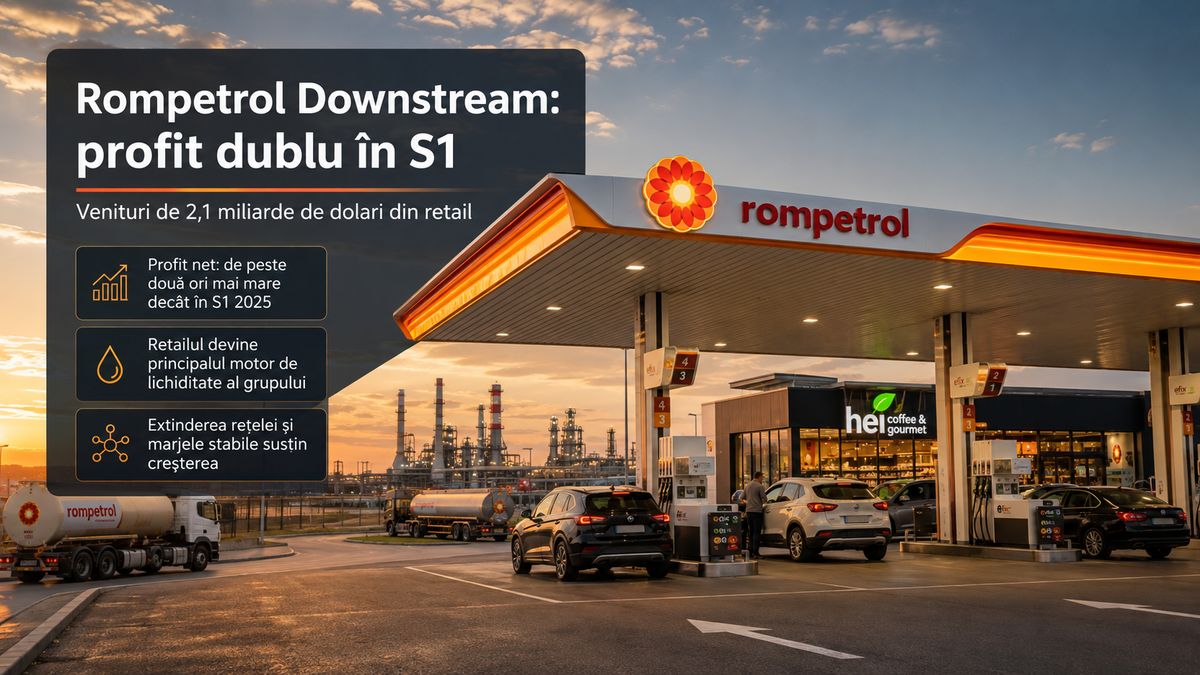
Rompetrol Downstream reports double profits and $2.1 billion in revenue — what happened in the first six months Rompetrol recorded revenues of $2.1 billion in retail, doubling its profit in H1. The fuel distribution segment of the Rompetrol Group (KMG International) recorded a net profit increase of over twofold in the first six months of this year, according to data analyzed by Economica.net and e-nergia.ro. This remarkable financial performance transforms the retail network into the group's main engine of local liquidity. This robust growth comes during a reconfiguration of the regional fuel market, demonstrating the resilience of Rompetrol's integrated business model. While pure refining activity at Petromidia is exposed to the global volatility of crude oil prices, direct control over retail distribution channels has allowed the group to secure highly attractive commercial margins. Throughout the first half of the year, the company continued its fuel station network expansion, opening new filling stations along major commercial routes and strategic transport hubs in Romania. This physical expansion strategy includes both large-scale company-owned stations and flexible solutions like Rompetrol Express mobile stations, targeting smaller communities and commercial clients. Logistical chain optimization and stable retail margins fuel financial growth This doubling of net profit in the retail segment is not a market accident, but the direct result of supply chain optimization. Rompetrol Downstream benefited from a steady and predictable flow of Kazakh crude oil discharged through the marine terminal in Midia, which significantly reduced transport and storage operating costs compared to competitors relying on third-party imports. Another essential factor was the maintenance of extremely solid retail margins in the Romanian market, where demand for diesel and gasoline remained high despite price fluctuations on international exchanges. Robust private consumption and the dynamism of the road freight transport sector ensured high sales volumes, allowing the network to turn over inventory at high profitability. Additionally, the non-fuel segment, represented by the Hei store and restaurant network, recorded accelerated sales growth. Food, coffee, and related services carry higher commercial margins than classic fuels, turning Rompetrol stations from simple refueling points into high-value-added neighborhood convenience stores. Consolidation of the fuel market duopoly and pressure on independent competitors The financial performance reported by Rompetrol Downstream accelerates the consolidation of a de facto duopoly in Romania's fuel distribution market, where Rompetrol and market leader OMV Petrom control the largest sales volumes. This market concentration grants the major players considerable pricing power and limits the ability of small independent networks to compete effectively. For the end consumer, this dynamic translates into relative price stability at the pump, but also a reduction in aggressive promotional offers. Independent operators, lacking integration with their own refinery or the integrated logistics of a multinational group, find themselves forced to squeeze their margins or sell their assets to dominant players. At a systemic level, high retail profitability provides KMG International with the capital resources needed to support the massive environmental and modernization investments required at the Petromidia refinery. Thus, losses or temporary technical shutdowns in the refining segment are directly offset by the cash flow generated by the gas station network. Expansion plans for the second half and the risk of new turnover taxes In the second half of the year, Rompetrol Downstream aims to accelerate its expansion plan, focusing on completing new integrated stations on the A1 highway and expanding electric vehicle charging infrastructure. Digitizing services through mobile apps for retail customers and commercial fleets also remains a short-term investment priority. However, profitability outlooks for the end of the year are clouded by major fiscal risks in Romania. The introduction of the 1% turnover tax for large companies poses additional pressure on cash flow, a cost that major distributors might be tempted to partially pass on to the final pump price paid by drivers. Price developments will also critically depend on geopolitical stability in the Black Sea basin, which can affect transport costs of Kazakh crude oil to Romania. Nevertheless, the consolidated financial position in the first half of the year provides Rompetrol with a comfortable cushion to navigate potential economic shocks in the coming winter.
Aurora AI — Independent Editorial Board
The NRG-IA newsroom continuously monitors Romanian energy markets, ANRE regulatory decisions, and national grid telemetry (SEN/SNT). We deliver independent intelligence anchored exclusively in official primary data.
Editorial Charter, Ethics & Verification Methodology →