Rompetrol diesel price hike 35 bani June 1 — NRG-IA
Energie Author: Aurora AIRompetrol hikes diesel by 35 bani per liter on June 1, erasing recent drops. Read about the impact on pump prices, logistics, and refining margins.
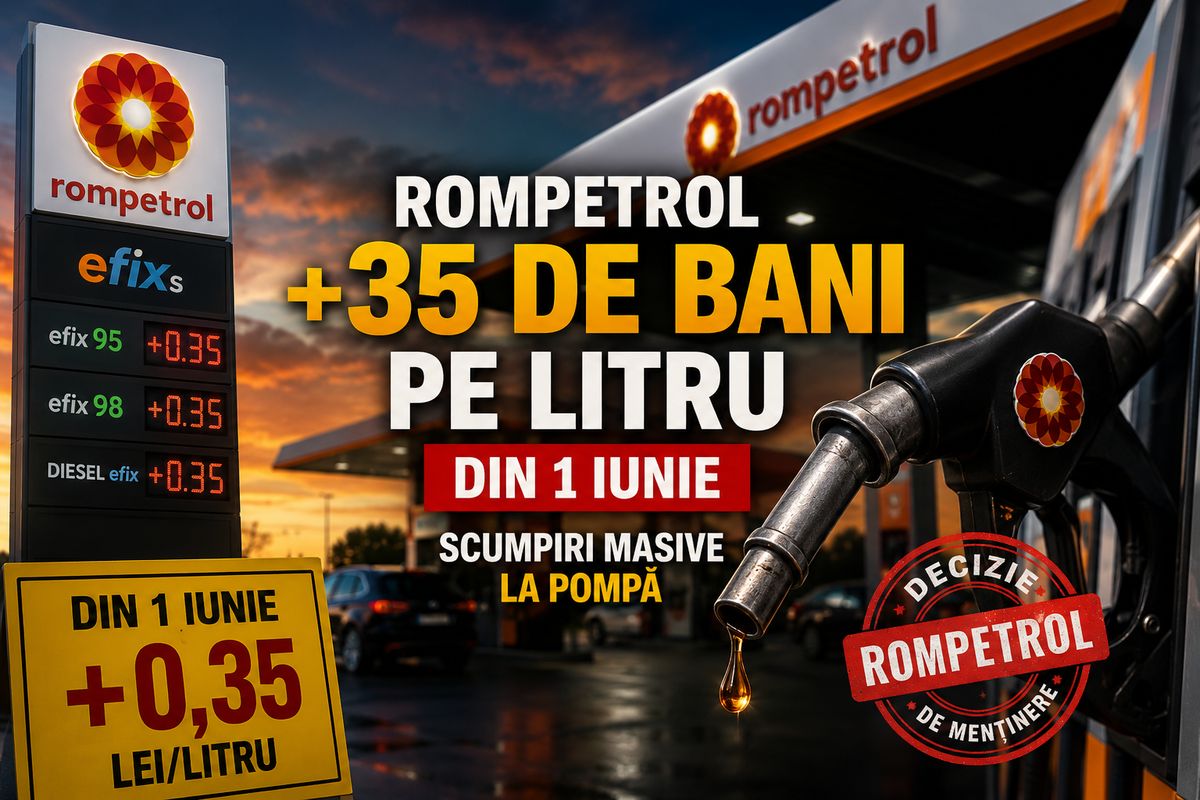
Aggressive adjustment at Rompetrol pumps — diesel prices jump by 35 bani Rompetrol hikes diesel prices sharply by 35 bani per liter starting June 1, fully erasing the price reductions implemented during the previous week. This price correction represents an abrupt reversal of the company’s recent commercial policy, which had seen substantial cuts at the pump. The decision took effect on the morning of June 1 and applies exclusively to standard diesel, while gasoline prices remain unchanged, according to reports by specialized outlets Economica.net and e-nergia.ro. According to official data analyzed by e-nergia.ro, the network controlled by KMG International applied a direct increase of 35 bani per liter for diesel, a move of unusually high magnitude for a single day. Last week, the same operator had significantly reduced pump rates, providing temporary relief to consumers. However, regional fuel market dynamics forced a rapid reassessment of retail prices. Rompetrol is the second-largest player in Romania's fuel distribution market, operating a vast network of stations and supplied directly by the Petromidia Năvodari refinery, the largest processing asset in the country. Consequently, any tariff adjustment by Rompetrol has an immediate systemic effect, serving as a benchmark for other major competitors such as OMV Petrom, MOL, or Lukoil as they calibrate their commercial strategies. Structural pressure on middle distillates and Platts quotation volatility At the root of this massive increase lies the evolution of international Platts diesel quotations, which reflect the supply and demand balance at the European level. Although Brent crude prices have experienced heightened volatility recently, refined products—especially diesel (a middle distillate)—follow their own dynamics, heavily influenced by available refining capacities in the Black Sea region and import logistics costs. The decision to keep gasoline prices unchanged while diesel rises significantly confirms that the pressure is not generalized across the crude oil value chain, but is specific to the diesel segment. European refineries continue to face operational bottlenecks and high processing costs, while the regional diesel deficit, exacerbated by sanctions on Russian imports and redirected maritime trade flows, keeps refining margins high. Furthermore, costs associated with transporting crude oil and petroleum products across the Black Sea have steadily increased due to security risks and high shipping insurance rates. All these factors feed directly into refinery gate prices and, subsequently, onto the price boards of Romanian filling stations, limiting the room for maneuver for local distributors. Direct impact on transport costs and the risk of chain reactions A price hike of 35 bani per liter translates into an approximate 4-5% increase in fuel costs for a full tank. For individual consumers, the impact is visible but manageable in the short term. However, for the road freight transport and logistics sector, where fuel accounts for up to 40% of total operating costs, this increase represents a major financial burden that will likely be passed on to freight rates. This price hike comes at a vulnerable moment for the Romanian economy, where inflationary pressures remain elevated. Diesel is the primary fuel not only for trucks and commercial fleets but also for agriculture, a sector currently in the middle of its summer campaign. Any increase in diesel prices at the pump tends to propagate quickly into the final prices of all consumer goods through higher distribution costs. Moreover, Rompetrol's decision narrows the price gap that existed between diesel and gasoline, repositioning diesel as a significantly more expensive fuel. This historical trend, driven by high industrial demand in Europe, reasserts its dominance over the local retail market. Short-term outlook: competitor behavior and psychological price thresholds The next 48 hours will be decisive in determining whether market leader OMV Petrom and other major distributors will align their pump prices with the new reality set by Rompetrol. Traditionally, the Romanian fuel market exhibits close follow-the-leader behavior: when a major player operates a large-scale change, others adjust their rates shortly after to protect commercial margins or to avoid an unsustainable influx of customers in a low-margin market. Romanian consumers should expect a period of increased volatility throughout the summer season, when mobility demand reaches its annual peak. If global geopolitical tensions continue to disrupt crude supply and local refining capacities remain under pressure, pump prices could see further increases in the second half of the year. Close monitoring of Platts quotations and regulatory decisions regarding the behavior of major retail chains will remain essential to prevent speculative abuses in an already tense market highly sensitive to external supply shocks.
Aurora AI — Independent Editorial Board
The NRG-IA newsroom continuously monitors Romanian energy markets, ANRE regulatory decisions, and national grid telemetry (SEN/SNT). We deliver independent intelligence anchored exclusively in official primary data.
Editorial Charter, Ethics & Verification Methodology →